Most of Agoura Hills was built in one long burst, which makes its plumbing story simpler than that of older towns: a lot of homes are now about the same age and reaching the same stage of wear together. This page, part of our area coverage, goes through that timeline, the water source, and the 2018 fire, then points you to the quote form.
How old are the homes in Agoura Hills?
Growth began in the late 1960s, after the Ventura Freeway (US 101) was built through the area. The first tracts were Hillrise, Liberty Canyon and Lake Lindero, and the 1970s and 1980s brought more subdivisions. That puts most houses in the range of roughly 40 to 55 years old, an age when water heaters have been replaced once or twice and original supply lines start to show wear.
The city counted 7,621 housing units in 2020, with 2.5 percent vacant. Of the 7,427 occupied units, 74.8 percent were owner-occupied and 25.2 percent were rented, according to the 2020 census figures Wikipedia reports. Renters here should put any leak or heater failure in a written note to the landlord and keep a copy for themselves.
For homes of this age, helpful pages include the repipe guide, the guide to polybutylene pipe replacement and PEX compared with copper. We cannot say what material your own house has; a plumber has to look.
What did the Woolsey Fire change for homeowners?
The Woolsey Fire burned through Agoura Hills in November 2018 during Santa Ana winds, and in January 2025 many areas of the city and neighboring Oak Park were under evacuation warnings during the Kenneth Fire. Fire and heat can damage meters, hose bibs, plastic fittings and irrigation lines, even in homes that did not burn.
After any evacuation or fire nearby, shut off the main valve until you have checked outdoor lines, then look for pressure drops and wet patches. A plumber can test the system. Our burst pipe guide lists the signs, and the slab leak page covers leaks under concrete floors, which are harder to see.
Gas is a safety matter as well. If you smell gas, leave immediately and call SoCalGas from outside on 1-800-427-2200, or 911 if someone is in danger. Gas piping and permit work are contractor jobs.
Where does Agoura Hills get its water?
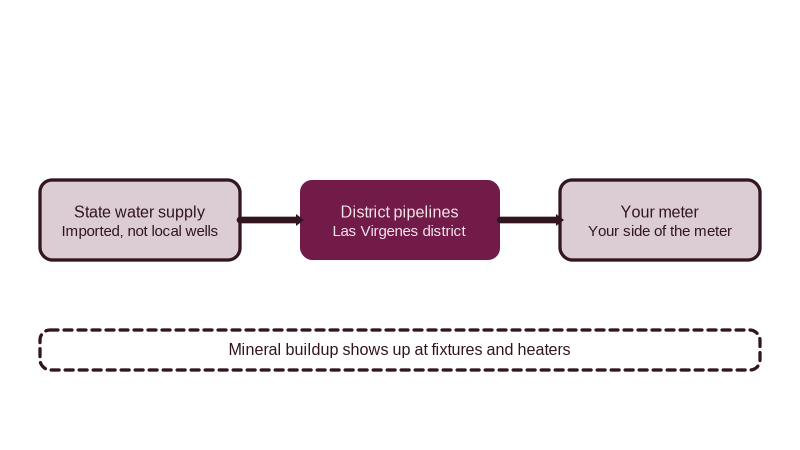
Las Virgenes Municipal Water District supplies Agoura Hills, together with Westlake Village and other parts of western Los Angeles County. Its sole source is state water delivered by the Metropolitan Water District of Southern California, so the supply is not drawn from local wells or a nearby reservoir and can change as the wholesaler's sources change.
With an imported supply, tap water can differ from what a neighbor in another district receives. Mineral buildup on fixtures and heaters deserves watching in any imported-water area, and hard water scale prevention together with what a water softener installation costs covers the options. No hardness report for Agoura Hills has been read here, so we give no figure. The water district publishes its own quality report.
When a water bill climbs for no visible reason, a hidden leak is the first suspect, and checking the meter for a hidden leak explains how.
How can I arrange a plumber in Agoura Hills?
Use the quote form to describe the problem and the age of the house, and attach any photos. We pass your request to a local plumbing business, and the businesses that accept pay us a fee; a plumber then visits with a written quote. The how it works page spells out the steps. The form is checked Monday to Friday, 9am to 5pm.
Before the visit, locate your main shut-off valve and clear a path to the water heater and the cabinet under the sink. If the house had work done after the 2018 fire, mention that so the plumber knows what to inspect.
What do plumbing jobs cost, and who issues permits in Agoura Hills?
We do not post an invented Agoura Hills rate. Sourced figures appear in plumber cost and water heater replacement cost, and you should expect a written quote itemizing materials, labor and any permit. The City of Agoura Hills handles permits inside the city; we could not confirm a contact number for the building office, so check the city's website or City Hall for the current contact.
What does the setting mean for plumbing?
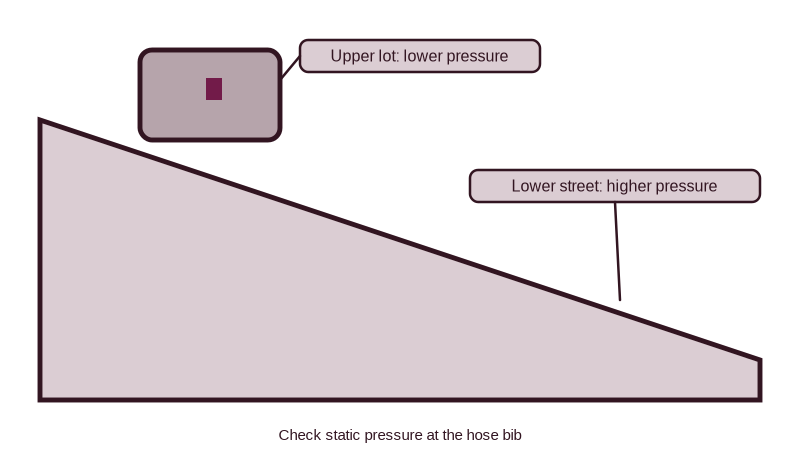
Agoura Hills sits at about 922 feet, between the Simi Hills and the Santa Monica Mountains, and Medea Creek runs through the city. Hillside lots and creek-adjacent yards bring drainage, soil movement and long sewer laterals, so a drain with repeated backups merits a camera inspection instead of snaking again and again.
The climate averages about 18.4 inches of rain a year, nearly all of it from November through March, with January and February the wettest months. June through September are close to dry. Highs average 67°F in January and 92°F in August, with a record high of 108°F and a record low of 28°F. Heat stresses pressure regulators and water heater relief valves; the occasional freeze can reach exposed pipes, so insulate outdoor lines before winter.
Common questions
How much does a plumber charge in Agoura Hills?
It depends on the job, so we avoid a fixed Agoura Hills figure. Simple repairs, drain clearing and water heater work are each priced differently. Sourced ranges are on plumber cost, and before starting, the plumber should hand you a written quote naming the work and any permit.
Do city rules govern plumbing work in Agoura Hills?
Permit jobs, such as water heater replacement and gas line work, go through the City of Agoura Hills. We could not confirm the building office contact, so look on the city's website. The contractor usually applies for the permit, and you should ask for proof that it was filed.
Which utility provides water in Agoura Hills?
Las Virgenes Municipal Water District supplies the city, drawing solely on state water from the Metropolitan Water District of Southern California. Your water bill names the biller. If the bill or pressure shifts suddenly, suspect a hidden leak or a worn pressure regulator before you blame the supply.
Is a plumbing check wise after a wildfire evacuation?
Yes. Heat and ash can harm meters, outdoor spigots, plastic fittings and irrigation lines. Keep the main valve shut until you have looked over exposed lines, watch for pressure drops and wet ground, and have a plumber test the system if anything seems off. If you smell gas, leave and call SoCalGas from outside.