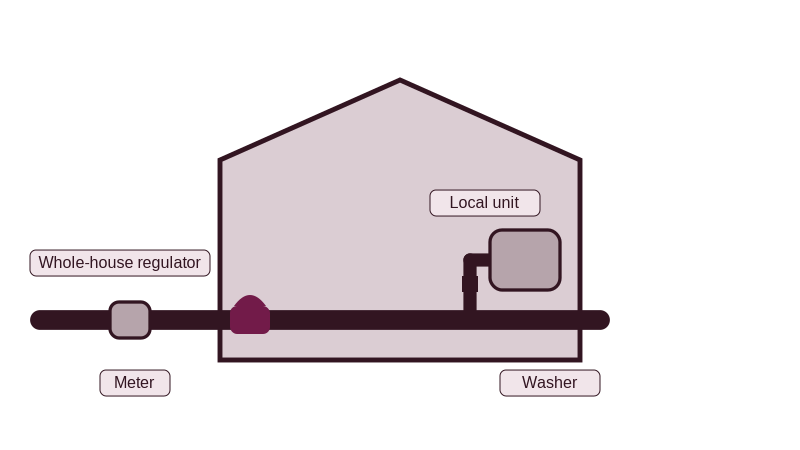
No single regulator is best for every house, so we do not rank brands. What matters is a correct size for your supply pipe, a body that resists corrosion, an adjustable setting, a place to attach a gauge, and a model a plumber can service. It belongs to our broader water pressure and valves guidance, whose first step is working out whether you need one at all.
How do you know a regulator is needed?
You need one when a hose bib gauge reads well above the rating of your fixtures and appliances, or when high pressure shows itself through banging pipes, dripping relief valves, and toilet fill valves and washing machine hoses that wear out early. If pressure is already moderate, a regulator adds cost with no benefit.
Buy a gauge first. Take readings late at night or early morning, when street demand is low, since that is usually when pressure peaks. Compare against the maximum printed on your appliance labels. Many homes already have a regulator, so look before buying another. Our guide to finding the pressure regulator explains how to spot it.
What features make a good home water pressure regulator?
Look for the right pipe size and connection type, a brass or bronze body, an adjustment screw with a lock nut, a gauge port, a replaceable cartridge or an easily serviced bell, and clear documentation. A good model also lists its pressure range and flow capacity, so you can check that it will supply your fixtures at once.
Compare these points:
| Feature | Why it matters |
|---|---|
| Size | Must match the main, such as 1/2, 3/4 or 1 inch, or flow suffers |
| Body | Brass or bronze resists corrosion better than cheap alloys |
| Adjustment | A screw with a lock nut lets a plumber set pressure with a gauge |
| Gauge port | Lets you read pressure without a new tee |
| Strainer | A built-in screen protects the seat from debris |
| Serviceable | A replaceable cartridge avoids cutting the line next time |
| Connection | Union or threaded ends make swapping easier than soldered ends |
Size has its own pages: 3/4 inch, 1 inch, 1/2 inch and 1/4 inch. Choose the size of your supply line, not the size you think sounds right, since an undersized valve starves the house of flow.
Whole-house or point-of-use regulator?
A whole-house unit on the main protects every fixture, so it is the usual choice. A small regulator at one appliance, such as a washing machine, protects only that line, and our page on the washing machine water pressure regulator explains when that helps. A hose-end regulator covers only a hose and does not protect the house.
If your problem is a single high-pressure fixture, a local regulator can help. If you see signs across the house, fit a whole-house valve at the main. For details see whole house water pressure regulator and water main pressure regulator. Showers raise their own concerns, covered on the shower regulator page.
Is an expansion tank needed with a regulator?
Often. A regulator seals the supply, so as the water heater warms and the water expands, the pressure has nowhere to go and can rise until it trips the relief valve. An expansion tank soaks that up. It is often needed with a regulator, but whether you need one depends on the house, so do not assume code requires it. Ask the plumber.
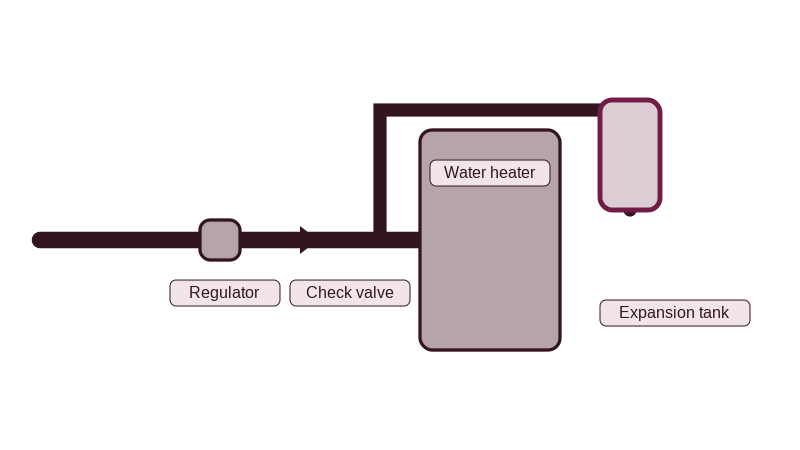
Our page on the water heater expansion tank describes its job. A relief valve dripping on the heater after a regulator goes in is the classic sign the tank is missing or failed. The relief valve replacement guide is also worth reading.
Why leave the regulator fitting to a plumber?
The job means shutting the main, cutting or unscrewing pipe, setting the pressure with a gauge and testing for leaks. A slip can flood the house or leave pressure too high or low. In California, larger plumbing jobs generally call for a contractor with a state license, so request the license number, and check if a permit applies.
In the Conejo Valley, hillside homes in Thousand Oaks and Newbury Park built over four decades, from the 1960s to the late 1990s, frequently sit at very different elevations from the street, so pressure at the meter is not pressure in the kitchen. Homes in Dos Vientos and North Ranch are newer, while Casa Conejo and Wildwood ranch homes may have a regulator that is decades old. Hidden Valley homes on wells use a pressure switch and tank, not a regulator.
What to do next
Take your pressure reading, note your pipe size, and list your symptoms. Then submit those facts on the quote page. A local plumbing business can quote for checking the existing regulator or fitting a new one. For replacement, the pressure regulator replacement guide goes further, and the water line pressure regulator page explains how one works.
Common questions
How long does fitting a regulator take?
It is a short visit for a plumber when the pipe is easy to reach. The pipe type, the use of unions, an added expansion tank and the amount of testing all affect the timing. Expect the water to be shut off while the work goes on, so schedule around that, and have the plumber include a time estimate in the written quote.
What do I need to confirm before booking a regulator installation?
Confirm the pressure setting and how it will be measured, the model and size going in, and whether the price includes unions, a gauge port and testing. Find out who arranges any permit that applies. Also obtain the California contractor license number and have the quote written down.
Must an adult be home while the regulator is installed?
Yes. An adult needs to show where the main shutoff is, sign off on extras like an expansion tank, and look at the final pressure reading. The supply is cut for some time, so fill a few containers and let the household know beforehand.
Are expensive regulators better?
Not always. Price often reflects materials, a serviceable cartridge and a longer warranty, which can justify the cost on a main. Yet a correct size, a proper setting and a clean install count for more than a premium label. Ask the plumber why they recommend a model, and what it will cost to service in future.