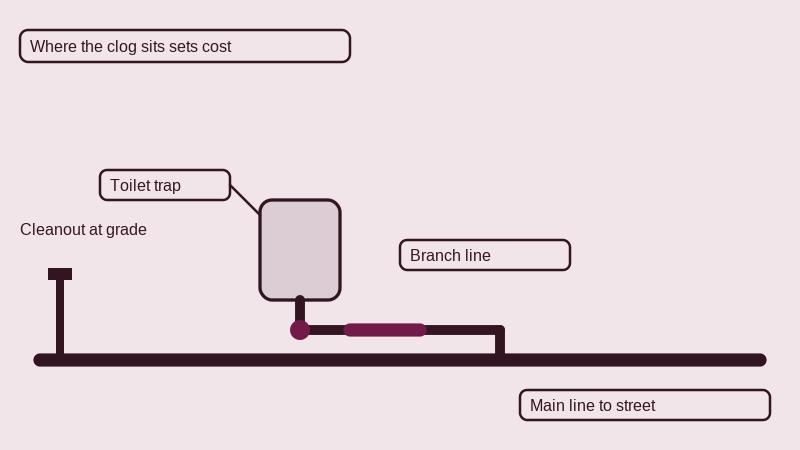
Plumbers who clear a clogged toilet typically bill for time, a call-out and equipment, and the final amount turns on whether the clog is in the toilet itself or deeper in the line. A simple clog at the bowl is the cheapest case; a blockage in the main drain costs more. We do not print a figure we cannot source, so the factors that shift the price are what this page sets out. It sits within our wider guide to plumbers for clogged toilets and drain clogs.
What does unblocking a toilet cost?
No single price applies. A plumber usually charges a call-out or minimum fee plus labor, and the total rises if the clog sits deep, if the toilet must come up off its flange, or if a drain machine is needed. Quotes vary between plumbers, so request either a flat figure or an hourly rate plus an estimate before the visit starts.
The cheapest outcome is a blockage right at the toilet trap that a closet auger reaches. That is a short visit. Next in line is a blockage in the branch pipe behind the toilet, which needs a longer cable. The biggest jobs involve the main line to the street, where roots, grease or a collapsed pipe are possible.
Time of day matters too. After-hours and weekend calls tend to carry higher rates than a booked weekday visit. If water is rising and will not stop, close the toilet's shut-off valve behind the bowl first. The emergency plumber page explains when it counts as urgent.
Why does the price change from one clog to the next?
The price shifts with where the clog sits, how stubborn it is, how easy the toilet is to reach and which tool is needed. A bowl clog is quick. Blockages in the main line call for a cable machine or hydro jet, plus a camera look to find the cause. Pulling a toilet, replacing a wax ring or repairing a pipe all add to the total.
Here is how the main factors line up, from the lowest cost to the highest, without putting prices on them.
| Situation | What is usually needed | Cost effect |
|---|---|---|
| Clog in the toilet trap | Closet auger or plunger | Lowest |
| Clog in the branch line | Drain cable, longer visit | Moderate |
| Several fixtures backing up | Main-line cable or jetting | Higher |
| Repeat clogs, roots or damage | Camera inspection, possible repair | Highest |
Ask the plumber which row you are in and why. A good answer names where the clog was found, not just the machine used.
What can you put in a toilet to unclog the pipes?
Hot water with dish soap, then a flange plunger, are the safest first attempts, and a closet auger reaches deeper. Avoid pouring strong drain chemicals into a toilet: they rarely clear a bowl clog, can damage fittings and are dangerous if a plumber then has to work in standing chemical water. Baking soda and vinegar are mild and seldom enough alone.
Start with a plunger that has a flange, the soft rubber collar that seals the drain. Push gently at first to expel the air, then use firm, steady strokes for about twenty seconds. A clog that gives way will make a gurgle and the bowl will drain.
If the plunger fails after two or three rounds, stop forcing it. Repeated plunging can push water over the rim. The next tool is a closet auger, which is a compact crank-driven cable; feed it in until you feel the blockage. Should other fixtures gurgle or back up as well, the blockage lies deeper, and a plumber is the right call.
What is the most powerful way to clear a toilet?
For a stubborn clog, the most powerful home option is a closet auger, and for deeper blockages a plumber's drain machine or hydro jetting. Chemical cleaners are not the strongest, only the most hazardous. Never mix drain cleaners, and let the plumber know if you used one, because the water in the bowl may burn skin.
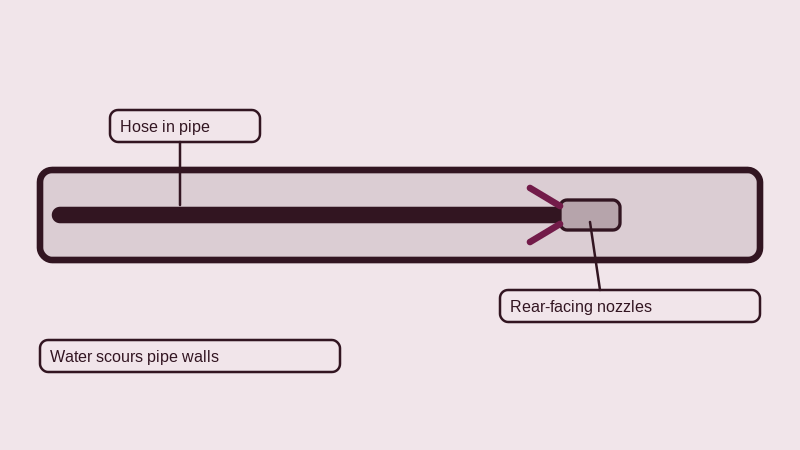
Hydro jetting is the high-pressure end of the range. A hose with a nozzle sends water at high pressure through the pipe, stripping roots, scale and grease from the walls rather than poking a hole through them. It suits main lines and repeat grease problems, but for a simple toilet clog it is not where you begin.
Equipment and the person using it matter. A plumber will often look first with a camera so that high pressure is not sent into a cracked or collapsed line. In older homes with clay or cast iron drain lines, that check helps avoid making a weak pipe worse.
What about renting or buying a hydro jetter?
Rental and consumer jetters exist, but a home hose attachment is much weaker than professional equipment, and a strong machine in untrained hands can damage pipes, so we suggest leaving jetting to a plumber. Used on septic systems or a drain field, jetting can push solids into places they should not go, so ask first.
A few specifics:
- Nozzle and hose: the nozzle pattern and hose length must suit the pipe size. The wrong combination does little or can harm older lines.
- Residential versus commercial: homes have smaller lines, and the pressure that suits a restaurant grease line may be too much for them.
- Septic and drain fields: some larger rural-style lots may use private systems. Ask a septic professional before any jetting.
- Cost: jetting is priced by access, line length and what the camera finds, so a quote after a look is the honest answer.
How should you prepare before the plumber comes?
Close the toilet's shut-off valve if the bowl is rising, move rugs and towels, clear the bathroom, and keep the area dry. Do not flush again. If you tried a plunger, mention it. Photos of where water backs up help a plumber choose equipment. If a second fixture is affected, say so, because that suggests the main line.
When you request a quote, use our quote form to list the affected fixtures, how long the problem has gone on and whether it happened before. A repeat clog calls for different work than a one-off.
Common questions
How much time does unclogging a toilet need?
A simple bowl clog is often cleared within the visit, commonly in under an hour, while a main-line blockage or a toilet that needs lifting can take longer. Camera inspection adds time. Request an estimate at booking; the plumber should confirm it after finding the cause.
What should I ask before booking drain work?
Ask whether the price is flat or by the hour, how much the call-out charge is, what happens if the clog proves deeper than expected, and if a camera inspection comes with it. Get the contractor license number and check it at cslb.ca.gov. The quote should be in writing ahead of any work.
Do I have to be home during the visit?
Generally yes, at least at the start, so the plumber can see the problem, agree the price and reach the toilet and, if needed, a cleanout outside. Some people arrange for an adult to be there. Tell the plumber about pets, locked gates or tight access when you book.
Can a clogged toilet damage the pipes?
Repeated clogs can point to a deeper problem such as roots, a belly in the line or a failing joint. A single clog from too much paper usually does not harm anything. If it happens more than a couple of times, ask the plumber for a camera inspection before it turns into a backup.
Does a running toilet push up the water bill?
Yes. Water escapes silently when a toilet runs on after flushing, and the EPA estimates that household leaks waste over 9,300 gallons yearly. Our running toilet guide shows how to catch a leaking flapper by dropping a little food coloring into the tank.
Everything else we offer is listed on the Conejo Plumbing Pros home page.