A water heater repair is usually a small part and a modest amount of work: a heating element, a thermostat, a gas valve, a pilot assembly or a drain valve. A leaking tank is different, because once the steel shell itself seeps, no patch will hold. Below, you will see how a local plumber tells the two cases apart, and you can begin at the home page or with the quote form.
How many hours does a water heater swap take?
A standard 40 or 50 gallon tank exchanged for an identical model frequently wraps up within a single working day, though the plumber sets the schedule. Relocating the unit, converting from tank to tankless, or correcting venting and gas piping that falls short of code adds time. Permits and inspections are separate from the labor hours.
Where the unit sits changes the answer. Many tract homes in Newbury Park and Thousand Oaks keep the heater in a garage corner with a short flue, which keeps a swap quick. Tight hall closets and attic platforms are slower because the old tank has to be drained and carried out through a small opening. A tankless conversion takes the better part of a day because the water connections, the venting and the gas line all change. The quote should name the time the plumber expects to finish, and hot water will be off until that moment. Prices for replacements are covered in the guide to what a new heater costs.
How long does a gas water heater usually last?
Most gas storage water heaters get replaced somewhere around the decade mark, and many run a few years longer or shorter depending on water quality, how often the tank was flushed and whether the anode rod was ever checked. Age is a hint rather than a ruling. Once a unit passes ten years and develops a fresh leak, replacement is the likely answer.
The rod inside the tank is made to corrode so the steel shell does not. When it is used up, the tank starts to rust from inside. That is why a plumber who sees a corroded rod on a middle-aged tank may suggest replacing the rod, and why a tank with a weeping seam is a different conversation. The anode rod replacement guide covers that repair, and the page on the right replacement interval covers the age question in depth. Hot water that tastes or smells off, rust-colored water from only the hot tap and popping noises from sediment are all clues. Imported water carries minerals, and the amount differs by supplier, so ask for your water quality report if scale is a recurring problem.
Who should fix a broken hot water heater?
A plumber, whenever gas, a sealed burner, the unit's electrical supply, venting or the water connections are involved. You can safely confirm that the breaker is on, that the gas control knob is set to on, and that the cold supply valve is open. Past those checks, leave it to a plumber, because the law regulates gas piping.
Smell gas? Touch no switches and light nothing. Get everyone outside and reach SoCalGas on 1-800-427-2200 from there; if anyone is in danger, emergency services are on 911. A repair request can wait until the next business day only if there is neither a gas smell nor an active leak. In the quote form, mention the fuel type, the brand when known, the age printed on the data plate, and the symptom. Those details let a local plumber bring suitable parts. You can send the form at any hour, and we read requests on weekdays from 9am to 5pm. For urgent cases such as flooding, use the page on urgent water heater repair.
Do plumbers usually work on water heaters?
Yes. Fixing and swapping water heaters is everyday plumbing work in California homes, next to drain, fixture and pipe jobs. Some plumbers also take on tankless units and venting, while a few jobs, such as heat pump models or one manufacturer's warranty work, may be better matched with a plumber familiar with that equipment. Mention the brand and model when you ask.
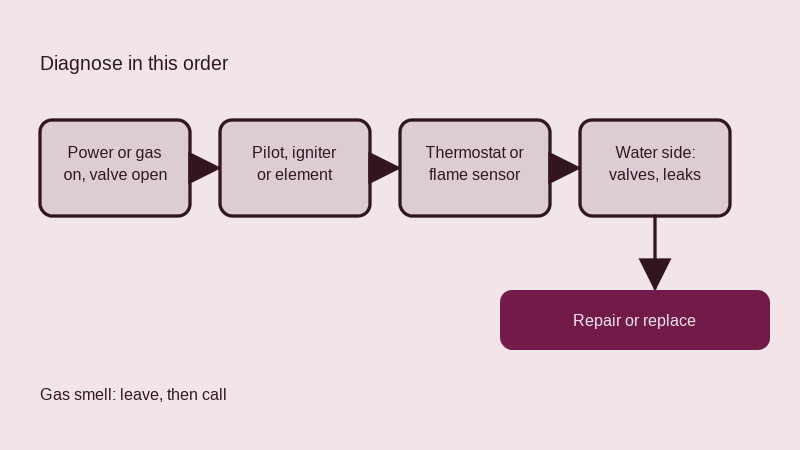
Brands come up often in searches. Rheem, A. O. Smith and Whirlpool-label units are common storage tanks. Navien, Rinnai and Noritz are common tankless names. The parts differ, but the diagnosis follows the same path: power or gas, ignition, thermostat or flame sensing, then the water side. Pages on Navien repair, Rinnai repair, Rheem tankless repair and Noritz repair go into the error-code side of each. Heat pump water heaters add a compressor, a fan and a condensate line, so ask whether the plumber is comfortable working on one before booking.
What goes wrong with water heaters most frequently?
The complaint heard most is cold water, or a supply that runs short. On an electric tank, a burnt-out heating element or a faulty thermostat is typically to blame. A gas tank more typically has trouble with the pilot, thermocouple or igniter, a sooty burner, or the gas control valve. Tankless units tend to suffer from a scaled heat exchanger or a clogged vent or filter.
Sediment is the quiet cause behind many of these. Minerals collect along the tank floor, insulate the burner or element, and make the heater work harder for less hot water. Draining the tank on a schedule slows this down. Leaks come next: a drip from a fitting or the relief valve discharge pipe can be fixed, while water seeping from the tank bottom means the tank is finished. When the symptom is narrower, try the pages on hot water missing at the kitchen sink, a shower that stays cold and a replacement heating element.
Thermostat, igniter and pilot repairs
A thermostat that has drifted or failed leaves water too cool or scalding. A gas tank whose flame keeps dying often needs a new thermocouple, flame sensor or igniter, which are small, inexpensive parts compared with the tank. A plumber will also check venting for blockage and draft problems before replacing anything, because a poorly drawing flue can shut the burner down on its own. Do not bypass a safety device to get hot water faster.
When a repair stops making sense
Replacement is the sensible route when the shell itself leaks, when repeated repairs on an aging unit add up to nearly the price of a new one, or when the manufacturer has stopped making parts for that model. To choose a direction, use the tank versus tankless comparison along with the tankless installation cost guide.
Do permits and strapping apply to a new water heater?
A permit from the local building office is generally required for a replacement, and California sets earthquake bracing rules for water heaters, meaning the new unit must be strapped. Have the plumber confirm both before work begins. A permit is the plumber's task, not yours, but you should hear who is pulling it.
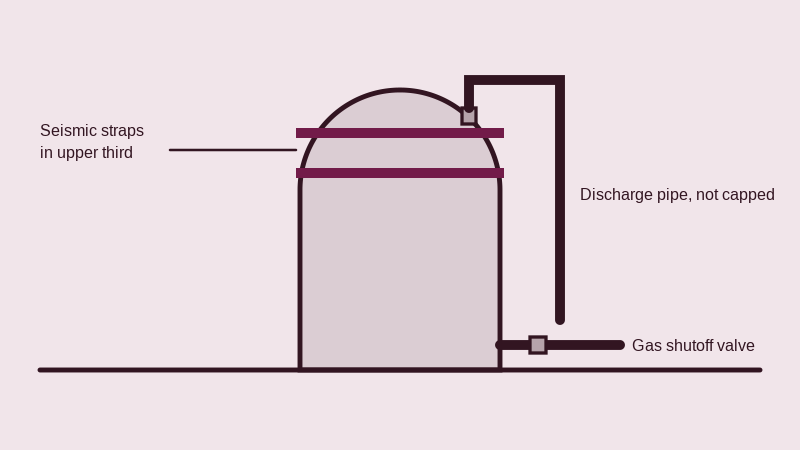
Where you live decides the office. Homes inside Thousand Oaks go through the City of Thousand Oaks Building and Safety. Westlake Village has its own City Hall, and unincorporated pockets such as Lake Sherwood and Hidden Valley fall under the Ventura County Resource Management Agency. Our areas page lists where we arrange visits. Older garages sometimes need the heater raised, or protected from vehicle impact and ignition sources, which changes the scope of a simple swap.
Common questions
What is the normal service life of a hot water heater?
Storage tank heaters often run roughly ten years, give or take, depending on water quality and maintenance. Tankless units are commonly quoted as lasting longer, provided the heat exchanger is descaled on a schedule. These are rough guides. How the tank looks today and what repairs it has had count for more than the label's printed date.
Which element usually goes bad first in a water heater?
On a dual-element electric tank, the lower element tends to fail first because it sits in sediment and works more often. The upper one usually follows. When the lower element dies, the tank empties of hot water fast. A plumber can test both elements with a meter, and replacing one often prompts a check of the other.
Can I supply the water heater myself for a plumber to fit?
Often yes, but ask first. Some plumbers fit customer-supplied units, others decline, and the installer may not stand behind the unit itself if they did not source it. Check the model suits your fuel type, capacity and venting, and that it meets current California efficiency rules before you buy. Quotes for installation only are normal to request.
Is a tankless water heater easy to install?
Not as a straight swap. Typically a tankless unit needs a larger gas line, new venting, a power outlet at times, and on condensing models a condensate drain. Hanging it on the wall is the easy part. California regulates gas piping, so a contractor and a permit come into it. See the gas tankless installation page for the steps.
How long will a 20lb propane tank last on a tankless water heater?
No single figure applies; how long it lasts depends on the heater's input rating and how much hot water you use each day. A high-input tankless heater can empty a small cylinder quickly. Check the heater's BTU rating in the manual and divide the propane's heat content by that rate, or ask the installer to calculate it. Most homes here use natural gas where it is available.
Can a plumber fix a tankless water heater?
Yes, for most faults: error codes, ignition and flame-sensing problems, a scaled-up heat exchanger, and a blocked inlet filter. Flushing the exchanger with descaling solution is a common repair in areas with mineral-heavy water. Parts for specific brands may need ordering, so ask whether the plumber has them or must wait for delivery.