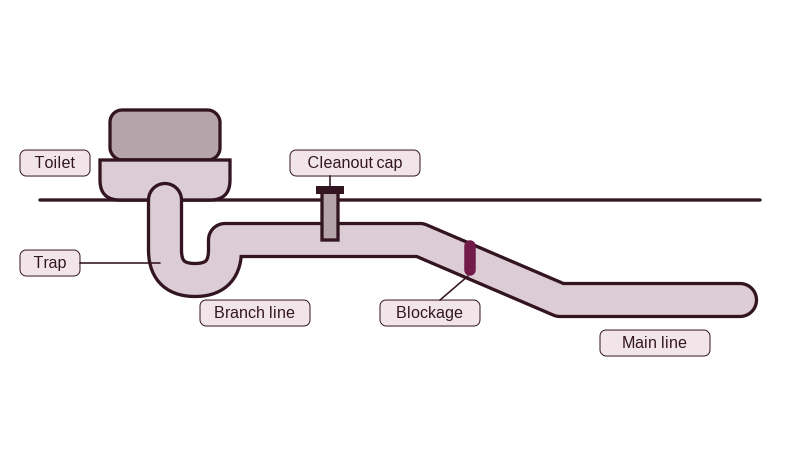
A toilet that holds water and refuses to drain has a blockage you can often clear yourself with a flange plunger. If the water level rises to the rim once more, other drains gurgle, or several minutes of plunging changes nothing, the obstruction lies beyond the trap and a plumber with a closet auger or drain machine should take over. At Conejo Plumbing Pros, you describe the problem on the quote form, we hand it to a local plumber, and that plumber visits you. Below you will find what to try, what never to pour in, and what the plumber will do.
When does a blocked toilet need a plumber?
Call one in when a few minutes of plunging achieves nothing, when the water rises again after each flush, or when several fixtures run slow or gurgle. Those signs point at the line beyond the toilet. Also stop if the toilet overflows with anything other than clean water, or if this keeps happening every few weeks.
A single stubborn clog in a home with otherwise normal drains is usually local to the toilet. Repeating clogs, or a toilet and a shower that back up together, suggest the branch or main line. In the older hillside tract homes around Thousand Oaks and Newbury Park, roots and old pipe joints are common suspects in a line that keeps slowing down, though only a camera look can tell you that for sure.
Do not keep flushing to see whether it has cleared. Each flush adds water to a bowl that cannot drain, and the next one is what spills onto the bathroom floor. If the bowl is rising, close the valve on the wall behind the toilet by turning it clockwise.
What steps does a plumber take on a clogged toilet?
A plumber begins with a flange plunger and escalates to a closet auger, a compact toilet cable that does not scratch the porcelain. If the obstruction is further down, a drain machine runs a longer cable into the branch line. A camera shows what is there. Hydro jetting, high pressure water scouring the pipe wall, is for grease, scale and heavy buildup, not for most toilet clogs.
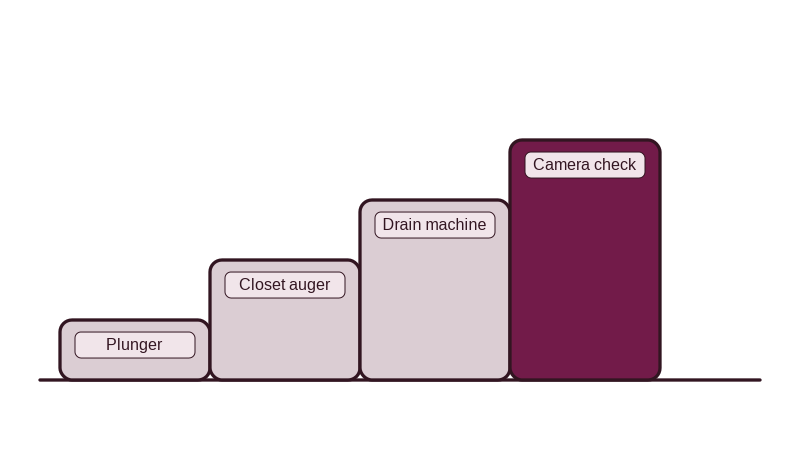
The usual order of escalation is simple:
- Plunger with a flange seal, used for a full minute with the bowl at least half covered in water.
- Closet auger, fed in gently until it meets the blockage and breaks it up or hooks it.
- Drain machine through the cleanout, when the problem is in the branch or the main and not the toilet itself.
- Camera inspection, to see a belly in the line, a crack, or roots, and decide whether cleaning is enough.
If an object is stuck, such as a toy or a wipe wad, the plumber may lift the toilet away from its flange and reach the object from underneath. That is routine work, and a new wax ring seals the toilet back down.
What can I put in my toilet to unclog it, and what should I avoid?
Start safe: hot (not boiling) tap water, a squirt of dish soap and a flange plunger. Skip chemical drain openers: they sit in a bowl that cannot drain, can splash, and can harm porcelain finishes and the plumber who works on it next. Boiling water can crack a toilet bowl.
The reason the dish soap trick sometimes works is that it lubricates the blockage and the trap so it slides along. Pour in a generous squirt, then add a bucket of hot water from waist height. Wait ten or fifteen minutes and try again.
You may hear that plumbers put salt in a toilet, or that you should add dish soap at night. We have no evidence that salt does anything useful for a blockage. Dish soap left overnight is harmless and may soften a soft clog, but it will not move a solid object. If an overnight soak does not work, move on to the plunger or auger rather than repeating it.
Baking soda and vinegar fizz dramatically, yet achieve little on a genuine blockage. Regard them as optional, never as grounds for delay.
Is a running toilet the same problem as a clogged one?
No. A toilet that keeps running has a leaky flapper, a worn fill valve or an over-raised float. That is a water waste issue, not a blockage, and it is fixed with parts inside the tank. A clogged toilet fails to empty. The two can appear together when a tank refills slowly after a clog or when a sagging flapper hides in a muddy tank.
Treat running toilets promptly. The EPA says leaks in a typical home waste over 9,300 gallons of water a year, and a toilet that never stops is among the commonest causes. If yours hisses or refills unprompted, see our page on a toilet that keeps running and the tips on a toilet that runs nonstop.
To have the plumber deal with both together, say so in the quote form. A visit that clears the blockage and swaps a flapper costs little extra time on site.
What causes a toilet and its drain to clog?
Most toilet clogs are too much paper, wipes sold as flushable, feminine products, paper towels or small objects. A low flow toilet with a partial vent or a partly blocked trap clogs more easily. Slow or repeating blockages usually come from the line itself: roots, grease, scale, or a sag where waste settles.
Causes by pattern:
- One clog after something unusual went down: an object or a wad of paper.
- Slow flushing every time, bowl rises then drops: a partial clog in the trap or a vent problem.
- Bathtub or sink gurgles when the toilet flushes: the branch line is restricted.
- Everything backs up at once, including the lowest drain: the main line, which can mean roots or a failure in the pipe.
Roots are a particular concern in older neighborhoods with mature trees. The City of Thousand Oaks has rules about oak trees, so if a plumber says a root is in the line and a tree sits nearby, ask what the repair involves before any digging is planned. That is a conversation for the plumber and the city, not a reason to cut anything yourself.
Does a mobile home toilet clog differently?
In a mobile home the toilet sits over a thin floor and a drain that runs a short distance under the home, so overflow reaches the subfloor fast and the pitch of the line matters. The same steps apply, but go gently with the plunger and the auger, and shut the supply valve first if the bowl rises.
Mobile homes also tend to have plastic drain pipe in a belly under the floor. A line that sags holds waste and clogs repeatedly, and clearing it is only a temporary answer. If a plumber finds a belly, the lasting fix is rework of that section. Tell the plumber in the form that the home is a mobile home so the right tools and access are planned for.
How much does it cost to unclog a toilet?
Price turns on how deep the blockage lies, which tools are needed, and whether the toilet has to come off. A plunger or closet auger job sits at the low end. Running a drain machine into a branch or main line, adding a camera, or setting the toilet back on a fresh wax ring all raise it.
We give no figures here that we cannot source, and the plumber who visits states the actual price before starting. The breakdown of each cost driver sits in toilet unclogging fees in Thousand Oaks. For related problems, see clearing a household drain, reasons a sink drains slowly and clearing a blocked toilet.
Common questions
Is boiling water a good way to clear a blocked drain?
Hot water from the tap helps against grease and soap in a kitchen or bathroom sink. Boiling water is risky: it can crack a porcelain toilet, soften PVC joints and scald you on splashback. Never use it on toilets. For a sink, dish soap in very hot tap water is the safer choice and works about as well.
Is Dawn dish soap good for clogged drains?
Dish soap helps with greasy or soft clogs because it coats and lubricates the blockage. It will not dissolve paper, hair or a toy. Pour a good squirt in, add hot tap water, wait ten minutes and plunge. If nothing moves after two tries, the blockage needs a tool, not more soap.
Which methods do plumbers advise for clearing drains?
Plumbers typically begin with a plunger, move on to a hand auger or a drain machine, and steer clear of chemical openers. The right tool depends on the fixture: a flange plunger and closet auger for toilets, a cable or hair catcher for tubs and showers. Repeated clogs call for a camera look rather than another round of liquid cleaner.
What is the standard drain pipe for a kitchen sink?
Kitchen sink drains are usually 1.5 inch pipe from the trap into a larger branch line. The tailpiece under the sink is often 1.5 inch, and the trap arm connects to the wall. If you plan to swap the drain assembly only, the plumber measures the existing pipe first so the new parts fit.
Can you replace just the drain on a sink?
Yes. The strainer or drain body can be replaced without replacing the sink itself, though it takes removing the old drain, cleaning the sink opening, and setting the new drain in plumber's putty or on a gasket. A cracked sink, or damaged pipe behind it, calls for a larger repair instead.