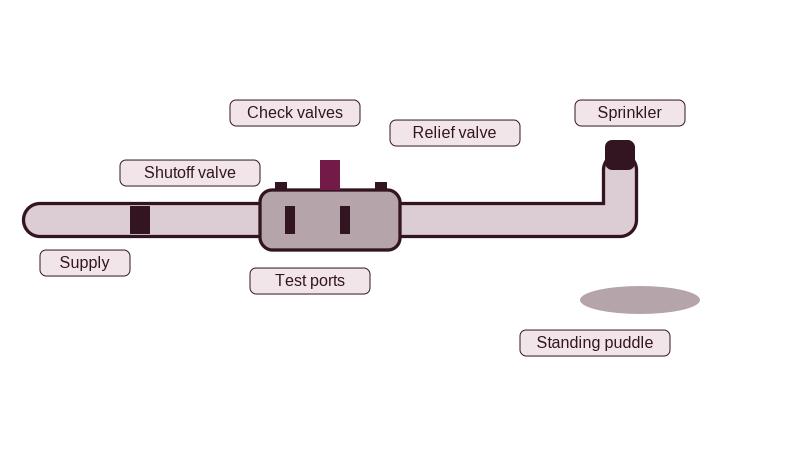
Backflow prevention testing confirms that a valve assembly on your water line still prevents water from running back into the public supply. You most often meet one on a lawn sprinkler system, a fire line, a pool filling line or a commercial connection. A notice from your water provider usually triggers the test, and a tester who works on these assemblies runs it in a single short visit. To arrange one, send the details via the quote form at Conejo Plumbing Pros, and we hand them to a local plumber.
What is a backflow prevention device, and why is it tested?
A backflow device is a one-way safeguard fitted where a pipe could carry contaminated water, such as irrigation, back toward the drinking supply. Springs and check valves inside wear, stick or foul with debris, so the device is tested on a schedule to confirm it still closes. The test is a safety check for the whole neighborhood's water, not just your house.
The risk is real in simple ways: a sprinkler head sits under a puddle holding fertilizer, the water main drops pressure after a break, and the system could pull that puddle water back through the line. A working assembly stops it. A failed one can pass a visual check and still leak, which is why only a pressure test shows the truth.
Hillside lots across Thousand Oaks and Newbury Park, with large irrigated slopes, are exactly the setups where an irrigation backflow device is likely. Estate lots around Lake Sherwood and Hidden Valley may have more than one, so ask the plumber to find every assembly on the property.
Who requires the test, and how often?
Your water provider generally decides, and it sends the notice. Testing is commonly asked for each year on assemblies protecting the public supply, and sometimes after a repair or relocation. We cannot name your schedule without seeing your notice, because rules differ by provider and by type of device. Read the due date on the notice and the form it asks the tester to file.
Which provider applies depends on your street. Conejo Valley homes are served by different providers, with Westlake Village and Agoura Hills reportedly in the Las Virgenes Municipal Water District area, so your bill is the quickest way to know, and many Hidden Valley homes rely on wells and may not have the same program. Unsure who bills you? Look at the top of your water bill first.
The notice names who receives the test report. Many programs want the paperwork filed by the tester, not by you, so have the plumber confirm that filing is included. The California Plumbing Code sets installation rules for these assemblies, and a plumber should know the one that applies to your device. The backflow testing walkthrough and the page about backflow testing services give more detail.
How does a backflow test work?
Using test ports on the assembly, the tester connects a gauge kit, shuts the supply valves one after another, and measures whether the relief valve and both check valves hold at their set pressures. The visit is usually short. Water to the irrigation line is briefly off, and the house supply is normally unaffected.
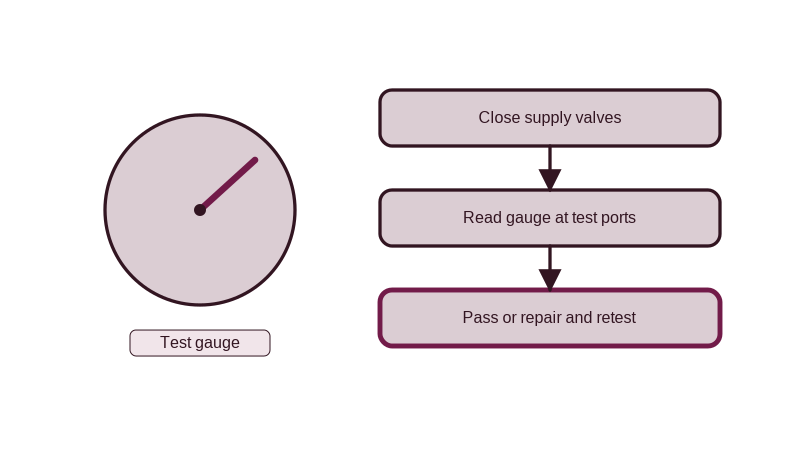
If the assembly passes, the tester records the readings and signs the report. If it fails, a repair is the next step: new rubber seals, springs or a replacement of internal parts is typical, followed by a retest. In some cases the whole assembly is replaced, because parts for an old model are no longer made.
Preparing is simple. Clear the area around the assembly, trim plants that hide it, and make sure the test ports are reachable. Note the make, model and serial number on the device. If it is in a box, unlock it. Water that sprays during testing is normal, but it should not fall on an electrical box or a nearby structure.
How much does a backflow test run?
Cost depends on the number and size of the assemblies, how easy they are to reach, and whether repair parts are needed. A simple test is a short visit. A failed assembly costs more because parts and a retest follow. We do not publish a figure here without a source.
The plumber gives the price up front. Ask whether the test fee includes filing the report, and whether a retest after repair is included or billed separately. For related inspection pricing, see plumber inspection cost. Comparing two quotes only makes sense if both cover the same number of assemblies.
If more than one assembly sits on the property, bundle them into one visit to avoid a second trip. A good plumber will walk the lot first and count them.
Does the test apply to mobile homes and older properties?
Mobile home parks and older properties can have backflow devices on irrigation, shared meters or a park's common lines, but the person responsible varies. In a park, management may own the main assembly while you own only your own. A mobile home plumbing inspection can include a look at the supply connection, shut-off valves and any device attached to your line.
An inspection differs from a backflow test. The inspection looks for leaks, corrosion, poorly supported lines and missing valves. The test is a specific pressure check on one device. If you are buying or selling, ask for both if there is a device present. For mobile home pipework see plumbing under a mobile home.
According to the EPA, a typical household can lose over 9,300 gallons of water a year to leaks. An inspection that turns up a dripping valve or a hidden irrigation leak can therefore pay for itself in water saved.
Common questions
Do sprinkler systems need a backflow test?
Often yes, though it depends on your water provider and the type of device. Irrigation systems are among the most common places for backflow assemblies. Look for a notice from your provider or ask them directly. Not sure? A plumber can identify whether an assembly is present and what kind it is.
What happens if my backflow device fails the test?
It needs repair or replacement before it can be accepted. The plumber replaces worn seals and springs or swaps the assembly, then retests. Your water provider may set a deadline in the notice, so act promptly. Keep the failed and passed reports together in one folder.
Is a homeowner allowed to test a backflow preventer?
Generally no. The test needs calibrated gauges and a person the provider recognizes to file the results. You can clear the area, note the model and keep the device free from debris, but the test itself is work for a plumber or tester who handles these assemblies.
How do I know which water provider to ask?
Check your water bill for the provider name. The Las Virgenes Municipal Water District covers parts of the western valley, but we cannot say which provider serves your street, so go by who bills you. If you rely on a private well, ask Ventura County rather than a water district.