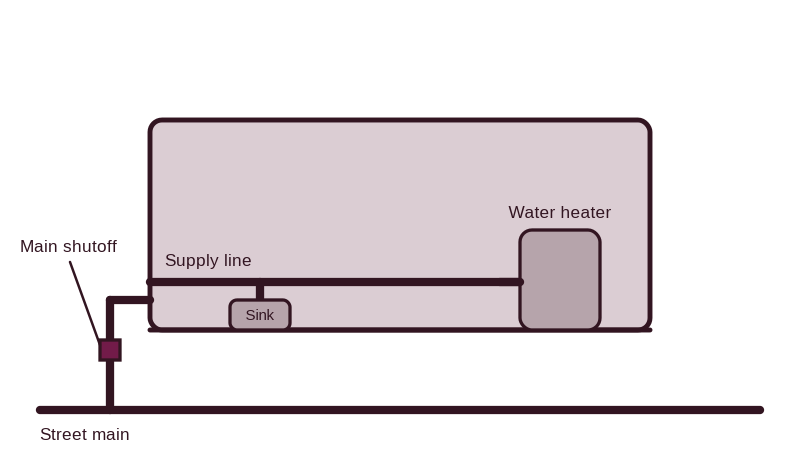
A repipe replaces the pressurized water lines from the meter or main shutoff out to each faucet, toilet supply, appliance and water heater in the house. Drains and sewer lines are a different job. Homeowners repipe over pinhole leaks, brown water, dropping pressure or a pipe material with a poor record. The decision is rarely urgent, so you have time to compare quotes, beginning at our home page or with the quote form.
Does insurance pay for a house repipe?
Typically no, not for the pipes themselves. Standard homeowners policies tend to cover sudden, accidental water damage, such as a ceiling and floor ruined by a burst pipe, yet exclude the cost of replacing pipes that are worn, corroded or defective. Terms differ between policies and insurers, so read yours and check with the insurer first.
A few habits help when you ask. State the facts plainly: what failed, when you noticed, and how you stopped the water. Keep the photos, along with whatever the plumber writes up after inspecting. Many policies treat the failed pipe and the damage it caused as separate items, so the damage can be covered even when the pipe is not. Tell the insurer the truth about repeat leaks, since claim history affects renewals. A claim is walked through in more detail in our explainer on burst pipe coverage. We cannot advise on a specific policy.
Does homeowners insurance cover plumbing pipe replacement?
Swapping pipes as a maintenance upgrade is not normally covered. When a covered event, such as a sudden break, forces a repair, the insurer may pay to open walls and fix that break, though not to replace every pipe in the house. Some insurers also scrutinize the age of the plumbing at renewal, so ask about it.
That last point matters for older homes. Insurers in California sometimes ask for the pipe material at application, and certain materials can lead to higher premiums or a request for replacement. Whether that applies to you depends on the insurer and the material. Having a plumber write down what pipe is in the house, and where, gives you an answer you can bring to the conversation.
How much should a whole house repipe cost?
What a whole-house repipe costs turns on the home's square footage, how many fixtures it has, the pipe material, and how much wall and ceiling has to be opened up and restored afterward. It is a big project and totals swing widely between houses, so expect the plumber to produce a written, itemized quote after seeing the property, rather than a number over a form.
Price drivers include a second story, a slab foundation compared with a raised floor, finished walls needing patch and paint, permit and inspection fees, and whether new shutoff valves and a pressure regulator come with the job. Bids from different plumbers can differ a lot, so ask each to price an identical scope. Our repipe pricing guide itemizes the charges and what to compare. In the quote form, give the house size, the year built and the pipe material if you know it.
How is plumbing replaced in a house?
The crew closes the water, opens access holes in the drywall, installs new lines from the main out to every fixture, makes the connections, pressure-tests the whole system and then closes the openings. Most whole-house jobs last a few days. Often water is restored at the end of each day, though the plumber ought to explain the plan beforehand.
Routes vary by house. Single-story homes with attic access often let lines run overhead with fewer wall cuts. Slab homes can be piped through the attic or walls instead of breaking concrete. Repiping normally needs a permit, with inspection by the local building office, which for most of Thousand Oaks is the City of Thousand Oaks Building and Safety. For homeowners who want to know what each day looks like, the step by step repipe guide covers the sequence.
Which pipe is best: copper, PEX or something else?
Copper and PEX are the two common choices. Copper is rigid, long established and handles heat well. PEX, a flexible plastic tubing, needs fewer joints and goes in faster. California accepts both for home supply lines, though code and local rules apply, so verify with the plumber as well as the building office.
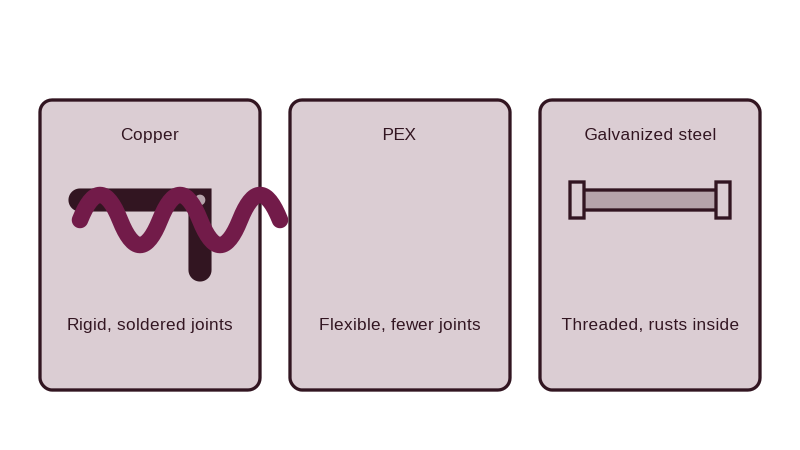
Cost, noise, water chemistry and personal preference decide it. PEX tends to go in faster and cost less in labor. Copper can suffer pinhole corrosion in some water conditions, which is part of why homeowners ask about alternatives. The PEX versus copper comparison sets the trade-offs next to each other. Either way, have the plumber write the exact pipe grade and fittings into the quote.
Is repiping my house necessary, and does it pay off?
Think about it when pipes keep springing leaks in new places, the material is on the known-problem list, or water pressure and color have worsened. It pays off when repeated repairs, water damage and hassle add up to more than one planned project. An isolated leak in an otherwise healthy system is normally a repair, not a repipe.
Material and age are the strongest signals. Galvanized steel corrodes from within and restricts flow as time passes; see galvanized pipe replacement. Polybutylene, a gray plastic pipe fitted in many houses during the decades before it was discontinued, is known for failing at fittings; see polybutylene replacement. According to the EPA, a typical household can waste over 9,300 gallons of water annually through leaks, so a system that keeps weeping also costs you water. For fuller reasoning, see the reasons to repipe and the guide to repipe timing by house age.
Could I repipe my own house, and what is the cheapest route?
California lets you do some plumbing in your own home, but a whole-house repipe makes a poor DIY project. It involves permits, inspections, pressure testing and hours inside walls and ceilings, and a mistake shows up as water damage. The cheapest sound approach is to keep scope tight and compare itemized quotes.
Ways to hold costs down legitimately: choose the pipe material that suits your house, let the plumber work in one pass rather than in phases, make attic and wall access easy, and move furniture before the crew arrives. Be wary of any bid far below the rest. It may skip permits, shutoff valves or wall patching. Ask each quote to state what is included.
Common questions
Which plumbing pipe is the most recent type?
PEX is a popular choice for new home supply lines today, and copper remains common. Both have decades of track record. Newer products do appear, but novelty is no reason to pick one. Ask the plumber which product they have been installing in the area for years, and whether it is approved where you live.
How long does repiping a home take?
Most single-family homes need a few working days once materials arrive, with extra days for a large two-story house or heavy drywall repair. Paint and texture finishing after the plumbing is complete can add more. Request a schedule from the plumber that keeps plumbing, inspection and patching as separate steps.
What do I ask a plumber before a repipe?
Ask who takes out the permit, what pipe and fittings will be installed, how the walls get patched, whether shutoff valves and a pressure regulator are part of the price, and how the work is scheduled day by day. A job this size belongs with a contractor, so get the license number and look it up on the state board's site.
Will a repipe disrupt my household routine?
Yes, for several days. Expect the water to be shut off for part of each day, dust from opened walls, and furniture to be shifted. Arrange bathing and cooking elsewhere on the toughest days. A good schedule limits water outages to hours, not days, and the plumber ought to name which rooms get touched first.