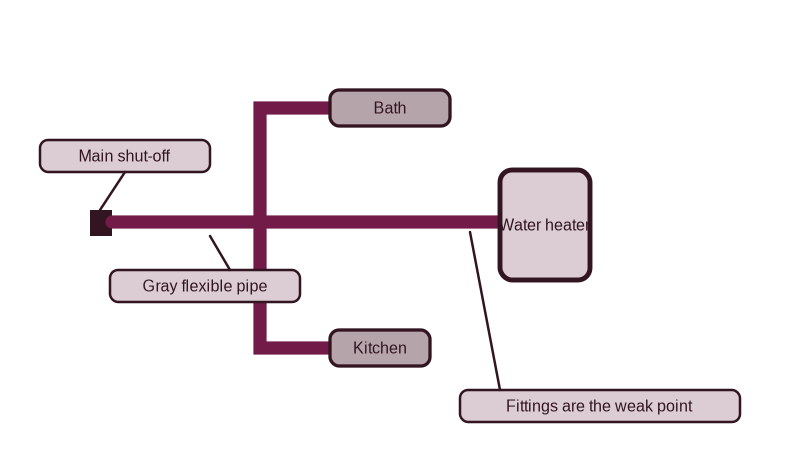
Polybutylene is a gray, blue or black flexible plastic pipe that went into many American homes between roughly the late 1970s and the mid 1990s. It has a poor record for sudden failure, so most plumbers advise swapping it for PEX or copper. It is not a pipe to patch and forget. Read on to learn how to recognize it, what the work entails and how to get ready. For the wider job, see our repiping page, which covers whole-house pipe replacement in Thousand Oaks and the Conejo Valley.
How do I spot polybutylene pipe in my house?
Look for flexible plastic pipe in gray, silver, blue or black, often stamped with the letters PB and a number such as 2110, at the water heater, under sinks, near the main shut-off and in the attic or crawl space. The fittings are often gray plastic or copper or brass crimp rings. If you see this, ask a plumber to confirm.
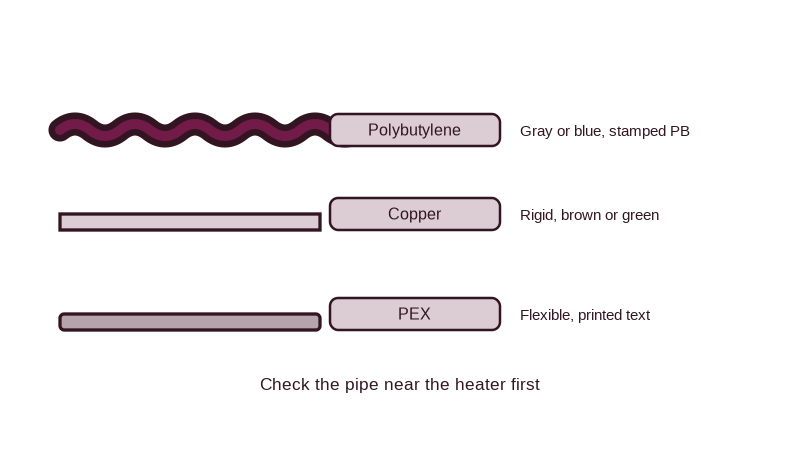
Copper is rigid and brown or green, galvanized is dull gray metal and magnetic, and PEX, the modern flexible tubing, is red, blue or white with printed text. Polybutylene looks a bit like PEX in shape, which is why people confuse them. Printing and color are the giveaways, and a plumber can verify within a minute.
Check the age of the house first. Homes in Thousand Oaks and Newbury Park were built across many decades, and some fall in the late 1970s to mid 1990s window when polybutylene was used. That does not mean yours has it. We have not surveyed any development, so treat the era as a cue to inspect, not a finding.
What does a polybutylene replacement involve?
A plumber closes the water off, opens walls and ceilings where needed, runs fresh PEX or copper to each fixture, reconnects the water heater and appliances, pressure tests the system and patches the access holes. Most houses need one to several days, with the taps dry for a portion of every day, and a permit and inspection are generally part of the job.
The work goes room by room. The plumber runs new lines to each bathroom, the kitchen, the laundry and outdoor taps. Appliances such as the dishwasher, washing machine and ice maker are disconnected and reconnected. Plan to be without water at times, and request a daily schedule from the plumber.
Permits go through the building office for your address. In the city of Thousand Oaks that is City of Thousand Oaks Building and Safety. Unincorporated areas go through the Ventura County Resource Management Agency. Ask who is taking out the permit, and which inspection comes after. We have not confirmed fees or hours for either office.
Which is better for the replacement, PEX or copper?
Both are accepted replacements, and the decision rests on cost, access and preference. PEX is generally cheaper and quicker, and it threads through finished walls with less demolition. Copper is rigid and has a longer track record, and it copes better with heat and sunlight. Our PEX vs copper page compares them in detail.
For a polybutylene replacement the upgrade is also a chance to add a new pressure regulator, a shut-off valve at every fixture and a new main shut-off. Doing these while walls are open costs little extra. Ask the plumber to list what is included.
Buying a house with polybutylene? Factor replacement into the price and ask the seller about records. A plumber inspection before purchase can confirm the pipe and its condition. See the plumber inspection cost guide.
How do you hire someone for the job?
Gather at least two written bids covering the same scope, look up the contractor's license at cslb.ca.gov, and check what is included: materials, permit, wall repair, appliance hookups and testing. Ask who patches drywall and paints, since that is often a separate trade. Do not pay a large amount up front.
We do not do plumbing ourselves. Conejo Plumbing Pros arranges for a local plumber to visit and quote the job, and you decide. The state board's site lets you check the contractor's license. Use our quote form and tell us the house age, the pipe color and any leaks you have had. Our repipe cost guide explains what goes into bids.
Is galvanized pipe the same problem?
No. Galvanized steel is a different material with a different failure mode: it corrodes from the inside and restricts flow over decades, so low pressure and brown water are the signs. Both are replaced by repiping. Galvanized pipe replacement covers that case.
Older ranch homes, like some in Casa Conejo and Wildwood, may have galvanized or aging copper rather than polybutylene. Again, we have not confirmed what any neighborhood has, so check your own pipes. The question of age is covered in repiping frequency by house age.
Why is polybutylene replaced and not repaired?
Polybutylene can fail without warning, from the inside out, as chlorine and other oxidants in water are believed to attack the pipe and its fittings. The failures often come as leaks at fittings or sudden splits, sometimes inside walls. Repairing one spot does not fix the pipe, so the usual advice is to replace the system.
Plumbers have seen a pattern of leaks in these homes, and many recommend replacement even when nothing is leaking yet. Not every house will fail, and a few systems run for decades, yet the risk of a leak hidden in a wall drives the advice. Water damage inside walls can be costly. A failing pipe can release far more than the roughly 9,300 gallons that the EPA says leaks waste in a household each year.
Insurance can come into it. Some insurers ask about polybutylene or adjust terms for houses that have it, and policies differ. Ask your insurer, and see insurance cover for burst pipes.
Common questions
How many days does a polybutylene replacement take?
Most houses take one to several working days, depending on size, floors and wall access. PEX is usually quicker than copper. Drywall patching and painting often follow as separate steps and may take longer. Request a schedule from the plumber showing when the water will be off and when it returns.
What should I ask before hiring someone for a repipe?
Get the contractor license number and look it up at cslb.ca.gov, plus an itemized written quote. Ask how the system gets tested, who takes out the permit, who repairs walls and what happens to the old pipe. Compare bids for like work, and ask about timing and water shut-offs.
Do I need to stay home while the work goes on?
An adult should be there at the start and the end to open every room, the water heater and the shut-offs, and to approve the work. Many people stay out during the day. Shift furniture and valuables clear of any wall that will be opened before the work starts.
Can I leave polybutylene in place if it has not leaked?
Many people do for a while, but the risk of a sudden hidden leak remains. A plumber can pressure test and inspect fittings to judge condition. If you choose to wait, locate the main shut-off, check for damp spots, and plan the replacement.
Does replacing polybutylene need a permit?
Generally yes. A repipe is usually permitted and inspected, and the plumber normally handles it. Learn who is responsible for the permit, and keep the paperwork, since it helps when selling the house or dealing with insurance. The inspection step is also a second set of eyes on the finished work, which gives you more confidence in the new pipe.