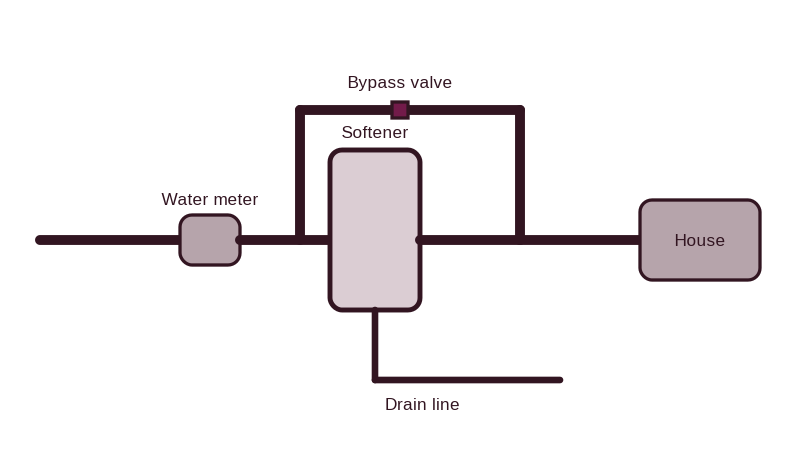
A softener working as designed does add some water use, but not enough to double a bill. When the bill jumps, the softener is worth checking, along with sprinklers, toilets and hidden leaks. This guide belongs to the wider help on our home page for Thousand Oaks and Conejo Valley households, and it starts with the softener and then widens to the other usual causes.
The aim is to give you a short test you can run in one evening, so you know whether the cause is the softener, the irrigation, a fixture or a leak in the ground.
Does a softener add much to the water bill?
Only a little when it works properly. A softener cleans itself in cycles called regeneration, which sends brine and rinse water to the drain. Each cycle adds a modest amount of water use. A big jump in your bill usually means the unit regenerates too often or cannot stop.
Hard water is the reason you own a softener, and fighting it costs some water. Settings matter: a unit set to regenerate on a tight schedule, or sized wrongly for your household, will cycle more than needed. A sticking control valve can send water to the drain nonstop, and you may hear running water near the unit at odd hours. Such faults are rare next to leaks elsewhere, but they are quick to rule in or out.
How can you tell if the softener is the problem?
Stand near the softener and listen, then inspect the drain line. Water running through the drain tube while nobody uses water and the unit is outside a scheduled cycle suggests a stuck valve. Also see whether the display shows a cycle stuck in rinse or backwash.
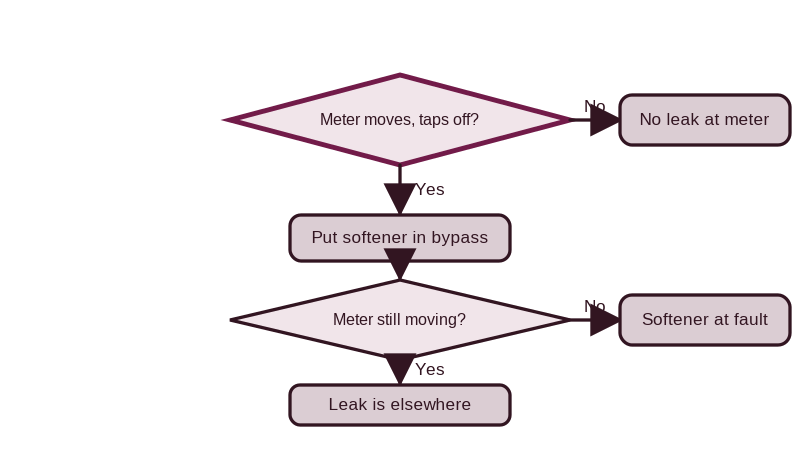
Next, read the water meter. Switch off everything that uses water, locate the small leak indicator on the meter and see whether it is moving. Movement with all taps closed means water is leaking somewhere. Then put the softener in bypass, using the bypass valve or lever on the unit, and watch the indicator again. If the movement stops, the softener is the source and needs service. If it carries on, the cause lies elsewhere. The page on finding the cause of a high bill without a visible leak extends this test.
Can a broken sprinkler head push up the bill?
Yes, and it ranks among the commonest hidden causes. A broken or stuck sprinkler head can pour water for hours each time the system runs, and you may never see it if the spray lands on a slope, a bed or a drain. A cracked irrigation line underground does the same.
Check your irrigation by running each zone and walking the yard. Look for geysers, soggy patches, low spots with standing water and zones that seem to run without greening the lawn. Switch the irrigation controller off for a billing cycle if you can, and compare the next bill. Hillside lots around Thousand Oaks and Newbury Park hide runoff well, so leaks can run a long time before anyone notices. Where you find a cracked line near the water supply, bring in a plumber, since that part sits near the main.
What else can make a water bill too high?
Causes include a toilet that runs, a faucet that drips, a leaking water heater, a failed pressure regulator, a buried line leak, a new irrigation schedule, extra guests or a pool top-up. The usual cause is a leak you cannot see, with toilets leading the list.
Work through the likely ones in order. Toilets first: put food coloring in each tank and wait. Then faucets and hose bibs, and look under sinks. Check the water heater base for damp, and listen for hissing. High pressure makes everything leak faster and can be a cause by itself, so read our guide to the water main pressure regulator. Also check if the billing period was longer than usual, whether the rate changed, and whether the meter is being read correctly. Our guide to a toilet that keeps running shows how much a silent leak can waste.
What is the next step?
Run the meter test with all taps off, then repeat it with the softener in bypass. If the softener is the cause, leave it in bypass until serviced. If not, check toilets, irrigation and the water heater, then look for damp ground between the street and the house.
While you are there, note the date and meter reading, so you can compare a day later. Compare the softener settings with your household size, as many units are set once at installation and never revisited. If you are considering fitting one, our guides to water softener installation and preventing hard water scale cover sizing and the alternatives. Keep the last year of bills together, because a pattern helps a plumber trace the cause.
At what point should you bring in a plumber?
Bring one in if the meter keeps turning with all fixtures off and the softener bypassed, damp ground shows up near the line, the softener drain runs constantly, or you hear water in a wall. These point to a leak or faulty valve that needs tools and testing.
A plumber can pressure test the supply line, listen for leaks with a leak detector, and say whether the softener valve needs repair or replacement. See leak detection costs for how that work is priced. Send the details through the quote form and we pass your request to a local plumbing business, whose plumber visits. Say what the meter test showed, because that speeds up diagnosis.
Common questions
How much time does a plumber need for a high water bill visit?
A leak check is often a short visit: the plumber reads the meter, tests the supply line, inspects fixtures and the softener, and may use listening equipment. A buried leak takes longer to locate and repair. On site, the plumber can say how much work remains and provide a written quote.
What should I ask a plumber who is tracing a high bill?
Ask how the leak search works, whether the quote covers locating only or repair as well, what happens if nothing turns up, and whether the plumber will test the softener and irrigation too. Get the price in writing and check which business will do the work.
Must I be home for a leak investigation?
Yes. The plumber needs access to the meter, the main shutoff, the softener, the water heater and the fixtures, and you can describe when the bill rose. If you cannot be there, name an adult and say so when you send your request.
What amount of water does a softener use?
That varies by model and settings, so consult the manual for your unit. Water goes to the drain during regeneration and rinse. A well-set unit adds a modest amount, and a household seeing a large rise should suspect a fault or a leak rather than the normal cycle.
Does hard water itself raise a water bill?
Not directly, since you pay for volume, not hardness. But hard water leaves scale that can clog aerators, reduce heater efficiency and make valves stick, which can lead to leaks and waste. Fixing the scale and any leaks matters more than the water type for the bill.