Water arrives at a house under pressure set by the supplier's system, and that pressure can be higher than household plumbing is happy with. A pressure regulator sits on the main line and steps it down to a steadier level for the pipes, heater and fixtures. It belongs to the pressure and valves section for homes in Thousand Oaks and the Conejo Valley. You will see what the regulator does, what follows when it fails, and how to check it before spending money.
Hillside neighborhoods can have large differences in elevation, which affects pressure, so the right setting depends on your street and house.
What does a water main pressure regulator do?
A water main pressure regulator is a valve on the incoming water line that reduces the supply pressure to a lower, steady level for the house. It protects pipes, the water heater, appliances and fixtures from the strain and noise of high pressure, and it keeps flow consistent when the street pressure changes.
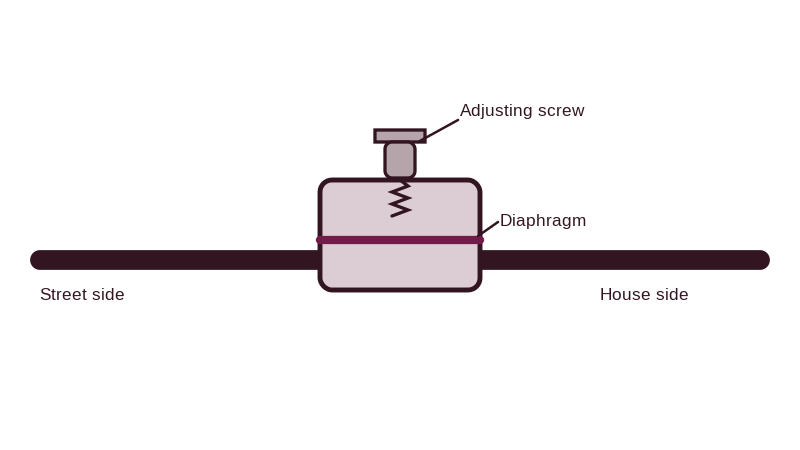
Inside the bell-shaped body, a spring-loaded diaphragm opens and closes as pressure rises and falls. A screw on top sets the spring, and so the outlet pressure. With time the diaphragm wears and the seat collects mineral debris, so the regulator may pass too much or choke flow. Some houses have none, while others have one the previous owner never mentioned. Our page on what a pressure regulator looks like helps you recognize it.
Where can I find the regulator in my house?
Check near the spot where the water line enters the house, usually right after the main shutoff valve. Likely places are a front yard box by the meter, an outside wall near a hose bib, the garage wall, a basement or a utility closet. The fitting is brass, bell-shaped and about the size of a large grapefruit.
With the main shutoff in the garage, follow the pipe a short way. In some homes the regulator sits in the meter box alongside the supplier's equipment, and you should ask before touching it. No bell-shaped fitting may simply mean you have none. Finding the regulator on your property shows typical spots in more detail.
How can I tell a pressure regulator is failing?
Failing regulators show up as banging pipes, a water hammer sound when taps close, dripping faucets, toilets that start running, a relief valve on the heater that keeps discharging, sudden bursts of high flow, or weak, fading flow at every fixture. Several of these together point to the regulator.
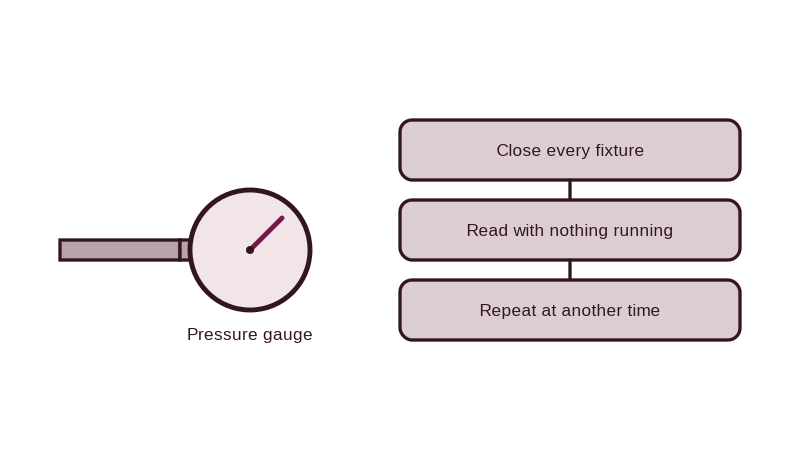
Hammering and leaks come from excess pressure, while weak flow comes from the valve choking down. Measuring is the only certain test. Screw a pressure gauge onto an outside hose bib, shut every fixture and read the dial. Check at different times of the day, since street pressure changes. If the reading is steady and reasonable for household use but still seems off, the problem may be elsewhere. If the dial creeps upward while nothing is running, the regulator may be letting pressure build. One common symptom is described in banging pipes: the water hammer sound and its cure.
Is it possible to adjust a regulator myself?
Some regulators carry an adjusting screw and locknut, and a careful owner with a gauge can make small changes. Loosen the locknut, adjust the screw a little at a time, watch the gauge and tighten the nut again. A worn regulator that will not stay at its setting needs replacing.
Adjustment is a fine-tuning step, not a fix for a failed valve. Make changes slowly and never exceed the limits in the maker's instructions or the fixture ratings. If your supplier owns equipment near the meter, do not touch it. If the house has a thermal expansion tank, a pressure change can affect it, so ask the plumber. An adjustment that makes water hammer worse or leaves pressure unstable is a sign to stop and replace the unit.
What is involved in replacing a regulator?
Replacement means shutting off the main, relieving pressure, cutting out or unscrewing the old valve, fitting a new one of the right size and connection type, and testing with a gauge. It can be a simple swap or a pipe-modification job, depending on what the old regulator was fitted with.
Sizes matter: homes commonly have regulators sized for the service line, and a plumber will match pipe size and thread or sweat connections. Our pages on regulator replacement and the best home regulator go through the options. Check with the City of Thousand Oaks Building and Safety office whether a permit applies to the work where you live. A plumber also sets the pressure, checks the expansion tank and tests for leaks, which is why most owners hire the job out.
What should I do next?
Locate the regulator, attach a gauge to an outside faucet and read the pressure with everything off. Record the reading at two times of day. If it runs far above what your fixtures are rated for, creeps upward, or you have the symptoms above, plan a replacement before something leaks.
Note the reading, the symptoms and the valve's location, since a plumber will want all three. Make sure the main shutoff works, because a seized main valve complicates any repair and deserves fixing first. Weak flow throughout the house is a different case, and pressure that suddenly drops indoors takes another route through the causes.
Which situations call for hiring a plumbing business?
Hire one when the gauge reads well above normal, when pipes hammer or relief valves discharge, when the regulator is old, leaking or stuck, when you cannot find it, or when the main shutoff refuses to close. Main line work is not a casual DIY job.
Send the details on the quote form, and the request is handed to a local plumbing business. Add your gauge reading, the symptoms and a photo of the regulator if you can find it. Ask if the quote includes the valve, labor, a permit if one applies, and testing afterward. The plumber sets the real price in a written quote.
Common questions
How much time does replacing a water main pressure regulator take?
A straightforward swap usually runs one to two hours once the plumber has the right valve, covering shutting the water, swapping the unit, setting pressure and testing. A cramped or buried location, corroded pipe or changed fittings stretch that. After viewing the existing setup, the plumber gives an estimate.
What should I check before hiring for a regulator replacement?
Make sure the quote includes the valve, labor, any permit and a gauge test afterward. Also ask what pressure will be set and why, whether the expansion tank gets checked, and how corroded pipe would be handled. Get the price in writing, and confirm which business will do the work.
Do I have to be home during the regulator replacement?
Yes. Water is off for part of the visit, the plumber has to get to the main and the regulator, and you should approve the work. If you cannot attend, name a trusted adult and say so when you send the request.
How long does a pressure regulator usually last?
It depends on water quality and usage, but regulators are wear parts and eventually fail. Many serve a good number of years before the diaphragm or seat wears. Test pressure with a gauge now and then, and replace the unit when readings drift or symptoms appear.
Does low pressure always mean a bad regulator?
No. A partly closed main valve, a clogged line, a leak or a local fixture problem can all cause low pressure. Test several fixtures first, and measure at the hose bib. When only one faucet is weak, our guide on weak pressure at the kitchen faucet is the better starting point.