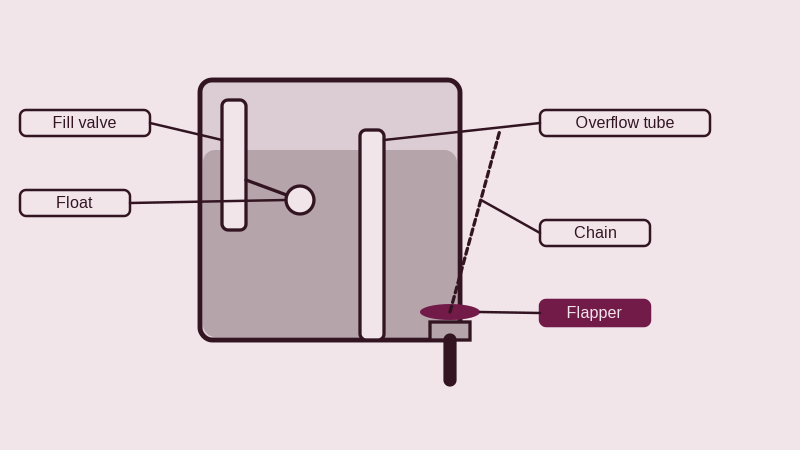
A toilet that runs on has either a leak or a valve that never gets told to stop. The three usual suspects are a worn flapper, a failed fill valve and a float riding too high. Food coloring and a look beneath the lid will test each one in minutes. Below, the checks come in that order, with notes on which repairs are best left to a plumber. To have one visit, Conejo Plumbing Pros accepts your request via the quote form.
How can I work out what keeps the toilet running?
Take the lid off the tank and watch the water. A trickle running down the tall overflow tube points to the fill valve or float. When the level sits below that tube but the tank tops itself up every few minutes, the flapper is leaking. Put a few drops of food coloring in without flushing; if the flapper is the problem, the bowl shows color within fifteen minutes.
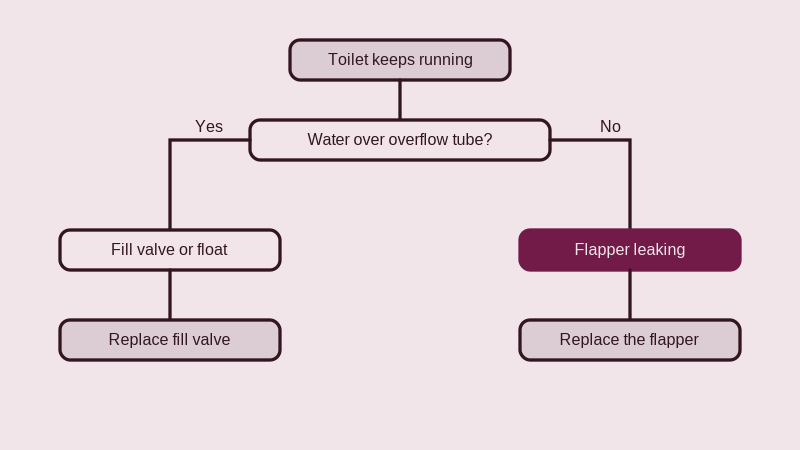
Leave the lid off and keep a hand flat on the supply valve during testing, ready to close it if needed. Write down the water's position against the overflow tube, whether refilling is slow or constant, and whether you hear a hiss or a dribble. A plumber will find those notes useful too.
If the tank level never changes yet the bowl keeps gurgling, the noise may come from another fixture or the vent, not the toilet.
Why does a toilet flush weakly or only part way?
A toilet that fails to flush fully usually has a flapper dropping too soon, a tank not filling to the proper level, or a partial blockage in the trap or the rim jets. A short flush from a weak flapper chain often looks like a clog but is just a tank problem.
The tank's water line should rest about one inch beneath the overflow tube's rim, and a lower level gives a weak flush. Lengthen the chain slightly or adjust the float. If the water level is right and flush strength is still poor, the rim holes may be clogged with mineral deposit, which a small mirror and a stiff wire show. A deeper clog is a plumber's job, outlined in plumber for clogged toilet.
A flush that gets weaker over weeks and a bowl that fills slowly in between often point to scale. Vinegar left in the tank overnight can soften light buildup, but do not pour acid cleaners into a toilet.
When is a running toilet a job for a plumber?
Bring one in if the toilet still runs after both the flapper and the fill valve are new, if water reaches the floor, if the shutoff will not seal, or if lifting the tank could crack the porcelain. A soft bathroom floor or stains showing up below are further reasons for a visit.
A running toilet wastes water without any fuss. The EPA estimates that over 9,300 gallons go to waste every year in the average household because of leaks, with toilets ranking among the most common sources. Fixing one is worth the time even before the water bill changes.
Whether to do it yourself or book a visit depends on how comfortable you are closing off water and lifting a tank. Handing it over is nothing to be embarrassed about. Tell us about the toilet in the quote form and we pass the request to a local plumbing business. We dispatch nothing around the clock: requests are read on weekdays between 9am and 5pm. Once you send it, the thank-you page explains what happens next. Another checklist is at toilet won't stop running, and flush problems are in toilet flush repair.
What if the fill valve or float is at fault?
When water runs down the overflow tube, the fill valve is not shutting off. Common causes are a float set too high, worn washers inside the valve, or trapped debris. Lower the float and watch what happens. If the valve keeps running, replace it. Swapping one is a common home repair that takes about half an hour with basic tools.
Close the supply, flush the tank empty, and detach the supply line along with the nut beneath the tank. A new valve drops through the same hole. Set its height to suit the tank. A walk-through is in repair toilet fill valve, and a similar issue at the incoming connection is covered in repair toilet inlet valve.
Check the valve on the wall behind the toilet too. If it will not close fully or leaks at the stem, replace it, as shown in toilet repair shut-off valve. A weak valve becomes a problem just when you replace the fill valve and need the water stopped.
Does adding salt or dish soap to a toilet fix any of this?
No. Neither affects a running toilet, because the problem is a leak or a valve, not a blockage. Salt and dish soap are folk remedies for clogs, not tested repairs. Dish soap lubricates a soft clog and is harmless in small amounts, but it will not reseat a flapper.
If you have heard that a plumber puts salt in a toilet or that dish soap should sit overnight, the honest answer is that those are home tricks for stubborn blockages, not repairs. For a toilet that runs, spend the same ten minutes on the tank test above. When the trouble is a blockage, the walkthrough on clearing a blocked toilet applies.
Is a bad flapper behind a running toilet?
Often, yes, and it is the leading cause. On the tank floor, a rubber seal called the flapper lifts every time you flush. Over the years it warps, hardens or picks up mineral buildup and stops sealing, so water seeps into the bowl and the tank refills to compensate. A chain with too much slack, or one pulled too tight, can do the same.
Check the chain first. It needs a little slack, without hanging beneath the flapper. Next, push the flapper down by hand with the tank shut off: if the running stops, the seal is to blame. A replacement flapper is cheap, and our page on toilet flapper repair shows how to match the right size and style.
Mineral scale from the water supply can crust rubber and metal, and in older Conejo Valley homes built in the 1970s and 1980s a flapper often fails from that film rather than age alone. With a water softener in the house, the guide to clearing hard water scale may explain the white film.
Common questions
How long does it take to fix a running toilet?
A fill valve takes roughly half an hour, a little longer when the shutoff valve is seized. A flapper goes in within ten to fifteen minutes. If the plumber also has to replace the valve behind the toilet, plan on around an hour. A reset with a new wax ring takes longer still.
What questions should I ask before a running toilet repair?
Ask whether the quote includes both parts and labor, whether the fill valve and flapper are replaced as a pair, and whether the shutoff valve gets tested. Also ask if a repair will likely cure the problem or if the toilet is old enough to justify replacement. Get the answers in writing.
Does someone need to be home during the repair?
Yes, an adult should be there to let the plumber in, show the way to the bathroom and agree to the price. A running toilet visit is short, so you need not stay in the room, but stay reachable in case the plumber finds a cracked tank or a shutoff valve that needs replacing.
Does a running toilet raise the water bill?
It can. A silent leak into the bowl may run day and night, so a bill that climbs with no other change is a clue. Test it by closing the toilet supply and watching whether the meter dial slows. See why high water bills happen.