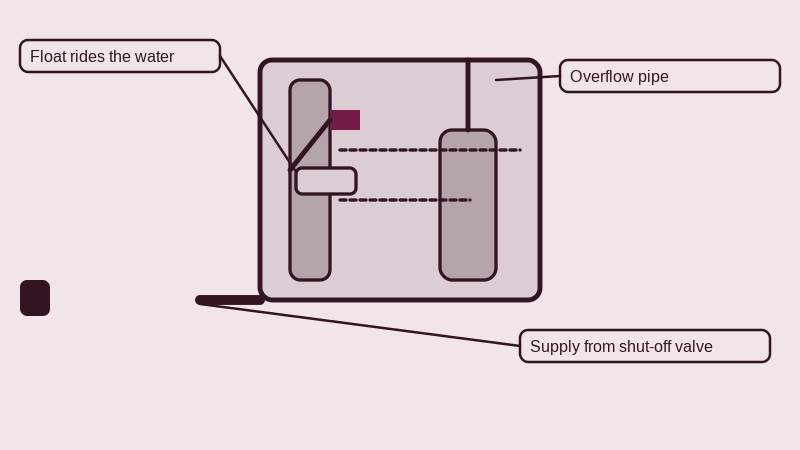
Open the lid of your toilet tank and the tall part on the left, with a float on it and a thin tube leading to the overflow pipe, is the inlet valve. It is a small, cheap part that has a big effect on your water bill. This guide from Conejo Plumbing Pros shows the signs of failure, a swap done with a few hand tools, and the point where the repair stops being a home job. It also covers the adjustments that fix many toilets without any new parts.
What is a toilet inlet valve and what does it do?
Most people call the inlet valve a fill valve. Inside the tank, it opens at the flush and shuts once the water hits the proper level, with a float signaling when to stop. Its other job is to refill the bowl through a small tube that runs to the overflow pipe.
Modern fill valves come in a few styles. A float-cup valve slides up and down a shaft, a floatless valve senses pressure at the base and an older ballcock uses a metal arm and a floating ball. All do the same thing, and a universal replacement kit will fit most standard toilets.
Water arrives through a supply line from the wall shut-off valve, usually below the tank. That small valve is your friend: turn it clockwise to stop water to this toilet alone, and flush the tank empty before work begins.
How can I tell the inlet valve is going bad?
Look for hissing or trickling after the tank is full, a toilet that cycles every few minutes, a tank that fills slowly or noisily, water running over the overflow tube and a handle that has to be held down. The valve may not be closing fully, or debris may be stuck in it.
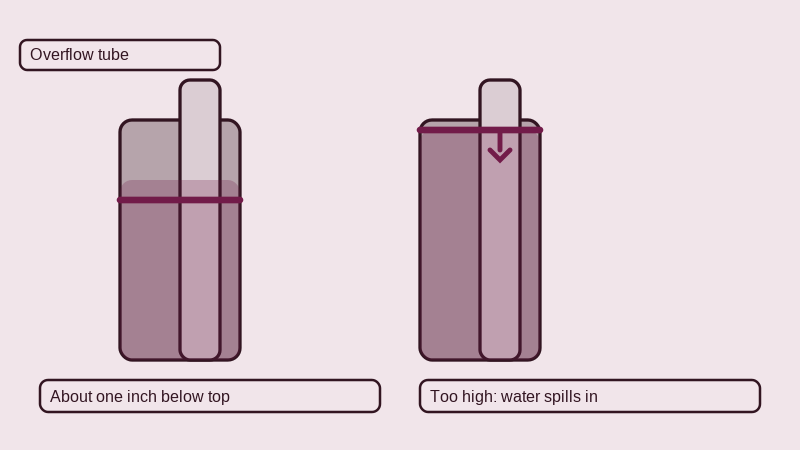
Begin with the easy test. Lift the lid and observe the water. Water standing higher than the tube's rim means the valve cannot shut off, so the excess drains down the tube. A level that is too low means the float needs adjusting. Dye tablets, or a little food coloring in the tank, show whether water leaks into the bowl past the flapper, which is a different part.
A running toilet wastes plenty, and the cost shows in your bill. The EPA estimates that an average home loses over 9,300 gallons of water a year to leaks, with toilets a common source. Our page on a toilet that runs on helps tell the flapper from the fill valve.
Should the supply line and shut-off valve be replaced too?
Swap the flexible supply line when it is old, kinked, rusty or bulging, because a failed line floods the bathroom. Braided stainless lines are common and cheap. A shut-off valve that fails to close completely, or drips when turned, needs replacing as well, and that edges toward plumber work.
Try the shut-off valve before anything else, though many homeowners find it stuck. Forcing a stiff valve can break it, and then the whole house supply has to go off. If it is jammed, close the main valve instead and ask for a plumber to replace the shutoff.
Around Thousand Oaks and Newbury Park, the original angle stops in houses put up between 1960 and 1999 are often well past their best. Replacing them while the tank is open saves a second visit. For general guidance on what to expect, read what a plumber costs.
At what point does a plumber make more sense?
A plumber makes more sense if the shut-off valve fails, the tank or bowl has a crack, water leaks at the base or floor, the toilet is loose, or the fix does not stop the running. The same goes when water has already damaged the floor, or when the fitting below the toilet is not yours to disturb.
Water at the toilet base can be a failed wax ring, which means lifting the toilet, and water under the floor needs a closer look. Should water show up through the ceiling under the bathroom, turn to handling a ceiling leak.
Tell us about the toilet and the problem through the quote form, so that a local plumbing business can reply. We read requests on weekdays from 9am until 5pm, and we do not answer outside those hours.
How is a toilet inlet valve swapped?
Shut the supply, flush, sponge the tank dry and disconnect the supply line from underneath. Loosen the large plastic nut beneath the tank that holds the valve, then lift the old one out. Drop in the new valve, tighten the nut as the instructions direct, reattach the line, set the height and open the water slowly.
Follow the printed instructions on the new valve for height, since each model has a mark. Clip the refill tube onto the overflow pipe, pointing it into the pipe rather than below the water level, which prevents siphoning back. Open the water and watch the first fill for drips at the connection.
Do not overtighten. Plastic nuts crack, and a cracked tank is the end of the toilet. If the old valve will not come loose, or the nut is corroded, stop and ask for help. For other toilet faults, our guide to clogged toilet help covers that side.
Can a fill valve be repaired rather than replaced?
Sometimes. Adjust the float so water stops at the level marked on the valve or in the manual, below the rim of the overflow tube, clean sediment from the valve by flushing it with the cap removed, and check that the refill tube is clipped to the overflow and not pushed below the water line. A cracked seal or worn gasket usually means a new valve.
To flush debris, turn off the supply, remove the cap on the valve by twisting it, hold a cup over the top and turn the water on briefly to wash out grit. If the water level adjusts but still creeps up, the seal inside is worn. Replacing the whole valve is easy and costs little, so most people choose that rather than a new seal.
Old brass ballcocks are well worth replacing. The replacement kit is made for a range of tanks and takes around the same time as the cleaning would.
Common questions
How long does a toilet fill valve usually last?
Many last for years, some far longer, but hard water, grit and chlorine tablets in the tank cut that short. When the valve is several years old and the toilet is misbehaving, replacing it beats another repair. The part is inexpensive.
Do I need special tools for the swap?
Usually just adjustable pliers or a wrench, a bucket, a sponge and a towel. A basin wrench helps when the nut under the tank is hard to reach. Bring the old valve to the store if unsure, or buy a universal kit and follow its sizing guide.
Why is my toilet still running after I fitted a new valve?
The flapper at the tank bottom may be letting water leak into the bowl. Other possible causes are a water level set too high, a refill tube pushed under the water line, or a chain with too little length. Test each in turn with a few drops of dye.
Can a bad fill valve raise my water bill?
Yes. If water trickles over the overflow tube all day or the tank refills often, the cost can add up without any visible mess. Check the tank for movement when nobody has flushed, and read why a water bill goes up to track the leak.