A stain or drip on the ceiling means water is already in the structure above, and it will keep spreading until the supply is off. This guide from Conejo Plumbing Pros gives the order to work in: contain, shut off, find, fix, dry and repair. It also answers the follow-up questions people ask, from sealants to mold to what applies in an apartment, and where the cause is a pipe, a roof or a fixture upstairs.
What should I do first when water is coming through the ceiling?
Start by closing the main water valve. Cut power to the room at the breaker, provided you can reach it safely, then clear belongings from below and catch drips in a bucket. A bulging ceiling can be relieved by poking a small hole with a screwdriver so the water runs into a bucket instead of the ceiling collapsing. Then find the source.
A sagging ceiling can hold a surprising amount of water, and weight matters. Stay out from under it. Water in light fixtures is a shock risk, so do not touch switches near wet fittings. If the breaker panel sits in a wet area, keep away, and leave the building if it is unsafe.
Take photos before moving things, because they help with an insurance claim. Note the time and what you did. If gas is ever noticeable, leave and contact SoCalGas at 1-800-427-2200 once you are outside; 911 covers any danger to people.
How much time should a burst pipe repair need?
A burst on an accessible pipe is often mended within a few hours. Damage inside a wall or ceiling, or spread over several rooms, takes longer, and drying and drywall repair add days. The plumber's work and the restoration are separate, and the second often takes longer than the first.
Expect the plumber to shut off water, locate the break, replace the section and pressure-test the line. Drying out the structure is a different trade, with fans and dehumidifiers running for days. Drywall is then patched and painted.
A break beneath a slab, or deep in a wall that is hard to reach, means more work. The first steps are in urgent steps for a burst pipe, and the causes are explained on the burst water pipe page. A flooded house after a burst pipe needs water extraction quickly, and a plumber can point you towards drying specialists.
What about mold on the ceiling after a leak?
Dry the area quickly: mold may start growing on soaked drywall and insulation after just one or two days. Small patches on a hard surface can be cleaned with detergent and water, but if the ceiling was soaked, the patch is large, or anyone has asthma or allergies, treat the drywall as damaged and ask a restoration specialist.
Drywall and insulation that stay damp often need to be removed and replaced. Painting over a stain without fixing the cause, and without drying, just hides it. A musty smell after the leak is stopped means moisture is still there.
The plumber's job is stopping the water; mold and drying work belong to another trade. Health advice is outside what we offer, so ask a doctor when anyone in the home has symptoms.
Who fixes it in a basement, an apartment or a second story?
The source decides. In a house you own, the repair falls to you, so have a plumber trace the pipe and fix it. In an apartment, tell the landlord or manager about a leak from the unit above or from building plumbing straight away, in writing and with photos; keep a copy.
When the water comes from a fixture of your own above a basement ceiling, the repair is yours. If it is from a neighbor's unit, the managing party usually coordinates repairs. Rules for rental repairs are set by state and local law, so ask the city or a tenant resource if the repair is not made.
Whichever situation you are in, document the damage and the dates. For homes, an unpermitted fix can cause trouble later, so ask the building office if the repair needs a permit. To request a visit, describe the leak in the quote form; we pass the details to local plumbing businesses.
If the ceiling shows stains but nothing is dripping, read about ceiling stains with no active leak before you open anything up.
How do I trace a ceiling leak to its source?
Start with whatever sits above the stain. A bathroom, laundry, kitchen, water heater or air handler overhead usually points to the source, and so does the roof after rain. If the leak stops when the water is off, it is a supply pipe, and if it continues, it may be a drain, a roof leak or an HVAC drain.
Check whether the leak is constant or only when something runs. A drip only when the shower is on, for example, points to a shower pan, drain or the tile above. A leak that appears solely after rain suggests the roof or flashing, which is a roofer's problem and not a plumber's.
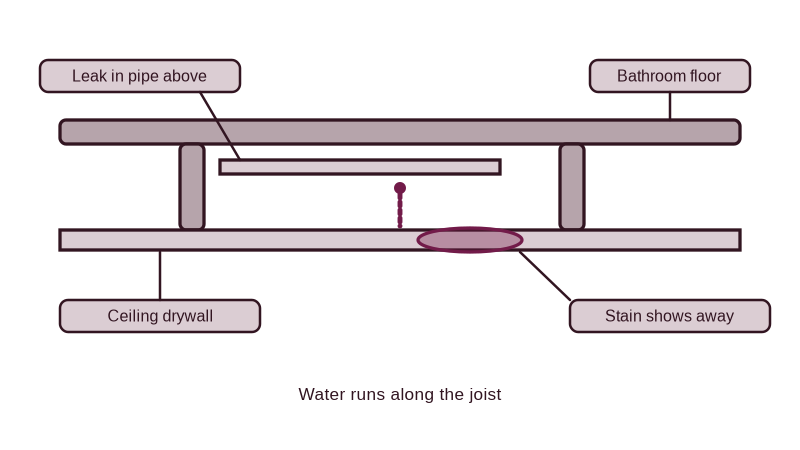
Water follows joists and pipes, so a stain can sit a few feet from the real leak. A plumber can trace it with a moisture meter, thermal camera or other leak detection gear, avoiding random holes. Our page on leak detection costs explains what that service involves.
How is a leaking pipe repaired properly?
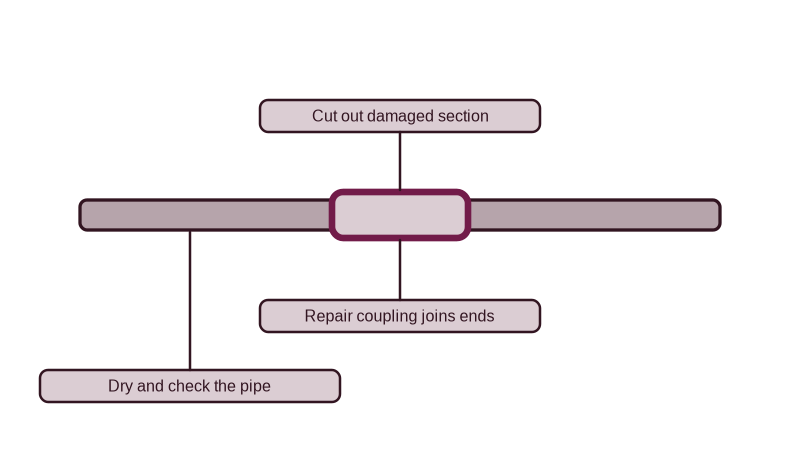
Close the supply, drain the line, cut away the damaged section and replace it with new pipe joined by couplings that suit the pipe type. Clamps and tape are stop-gaps, not repairs. A leaking joint is usually redone with a new fitting. Pipe type decides the right parts and tools, whether copper, PEX, CPVC or galvanized.
Copper joints are soldered or made with push-fit or press fittings; PEX uses crimp, clamp or expansion fittings. A mismatched part is a second leak waiting to happen. For gas piping, never repair it yourself, since gas work belongs to a qualified contractor with a permit where required.
If the pipe runs within a wall or a ceiling you cannot reach, the repair means opening the drywall, which is a plumber's task. To learn more about hidden leaks, read spotting a burst pipe.
What sealant can I use on a leaking pipe?
For a temporary fix on a dry pipe, try a rubber and clamp patch, self-fusing silicone tape or a stainless repair sleeve. A small pinhole may be held by epoxy putty if the pipe is dry and clean. No patch is a substitute for removing the damaged section, and none should be trusted behind a closed ceiling or on hot lines.
Thread sealant tape or pipe dope seals threaded joints and does not belong on a cracked pipe. Plumber's putty is for fixtures, not pipes. Matching the product to the pipe and the pressure is the key, and a label that says it works on wet pipes is worth reading skeptically.
If a stopgap holds, use the time to book a repair, not to forget about it. A patch behind a ceiling that is only checked when it fails can soak insulation and framing quietly. According to EPA estimates, a typical household loses upwards of 9,300 gallons of water annually to leaks, and a hidden drip adds that waste to your bill.
Common questions
Is it fine to paint straight over a ceiling stain?
Not before the cause is fixed and the ceiling has dried. Painting over a damp stain traps moisture, and the stain usually bleeds through. After the repair and full drying, seal the mark with a stain-blocking primer before repainting. If the drywall is soft or sagging, replace it first.
Is a ceiling water leak an emergency?
Treat it as one until the source is known. Close the water supply if you can, protect the room and electrical fittings, and have a plumber trace it the same day if possible. A slow stain with no active drip is less urgent, though it still needs finding before it spreads.
Does home insurance pay for a leaking ceiling?
It depends on your policy and what caused the leak. Insurers often treat sudden, accidental damage differently from slow leaks or wear, and what your policy covers is not something we can say. Photograph the damage, stop the water, confirm with your insurer what is included before repairs begin, and keep receipts for emergency steps.
Should I be at home when the plumber arrives?
Yes, an adult should be there to show the stain, explain how long it has existed and where the main shut-off valve is. Clear furniture from under the leak, and mention any pets and alarm systems to the plumber. If you are unable to attend, ask a trusted adult to give access.