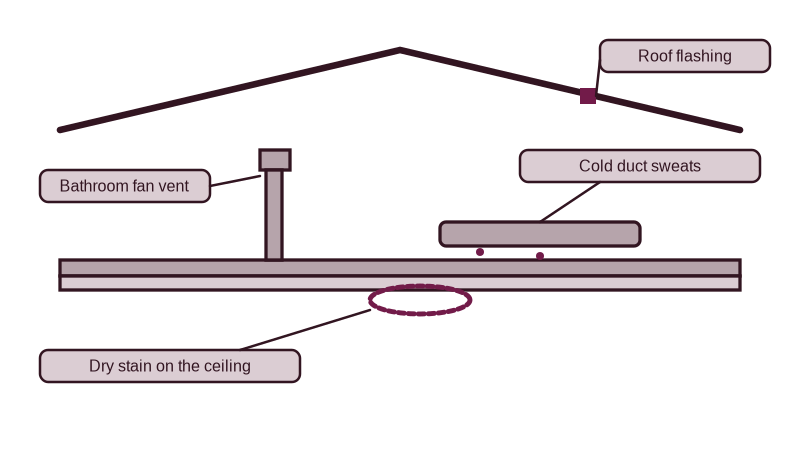
A dry stain may come from an old leak that stopped, from condensation, from a roof leak visible only after rain, or from a slow plumbing leak that wets the ceiling in bursts. Trace the edge in pencil, look again after rain and after showers, and read your water meter. A stain that grows or turns soft should be treated as active. The jobs we arrange are listed on our home page.
This guide is meant for homeowners in Thousand Oaks, Newbury Park and nearby, where ceilings pick up stains from roofs, attic ducts and upstairs bathrooms. It shows how to sort the cause by where the spot sits and when it appears, and when a plumber with leak detection gear is the right call. For other ceiling problems, read about the early indicators of a leaking ceiling.
Why is there a stain if nothing is leaking at the moment?
The usual culprits are a leak from the past that has dried, sweating from a cold duct or the ceiling surface, or a slow leak that wets the ceiling only in bursts. Roof leaks that appear after rain, and an upstairs bathroom that leaks only while the shower runs, also leave dry looking marks between events.
Common causes:
- A past leak. A one time roof, pipe or appliance leak left a stain and was fixed.
- Condensation. A cold air duct in a warm attic sweats and drips onto the drywall.
- Weeping joint. A drop of water at a pipe fitting or drain joint that leaks only under use.
- Roof flashing. A leak at a vent, chimney or skylight that shows after heavy rain.
- Bathroom fan. A fan that pushes moist air into the attic and not outdoors.
- Insulation. Wet or compressed insulation holds moisture against the ceiling.
California has dry weather for most of the year, so a rain related stain can sit dry for months and then appear again after the first storm.
How can you tell if the stain is still active?
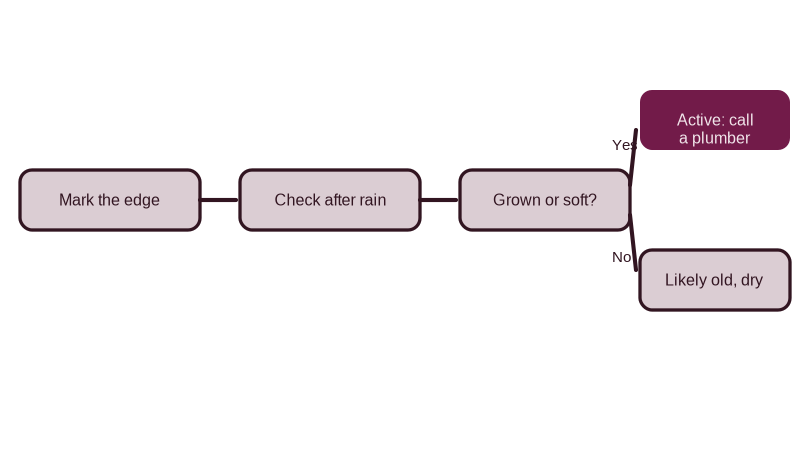
Outline the edge in pencil and date it. Look at it daily for a week and after any rain or shower. Press gently: drywall that feels soft or cool is holding moisture. Watch for a growing ring, a brown edge or peeling paint. After that, try the meter test. Shut off every water use, and if the meter keeps turning, a supply line is leaking.
The meter test is the EPA's household method. Write down the meter reading, use no water for two hours, then read it a second time. A change suggests a leak. It misses a drain leak, which runs only while water flows, so also run the upstairs shower for ten minutes and watch the ceiling below.
A moisture meter from a hardware store shows whether drywall is wet. A thermal camera can reveal the same, and some plumbers carry one. A hot water line could be leaking if a warm spot appears in the middle of a cold wall. The process is explained in our page on the cost of a leak detection visit.
Could the spot come from a pipe above?
Yes. A supply pipe pinhole, a drain joint above a bathroom or a washing machine pan can wet the ceiling only when in use. In a two story home the stain often sits under a bath, a laundry room or a kitchen. If the stain is under a bathroom, run each fixture alone to find which one makes it grow.
Test one fixture at a time:
- Run the sink for five minutes, then check the ceiling.
- Run the shower, with the tub plugged for ten minutes, then check.
- Flush the toilet several times and check.
- Run the washing machine through a drain cycle and check.
A wet spot after only one fixture identifies the line. Take photos, and tell the plumber which fixture caused it. Our page on a ceiling water leak covers what to do while the leak is active, and water in a ceiling light covers electrical risk.
Water in a light fixture or near wiring means turning off that circuit at the breaker panel, staying clear and leaving the light unused.
Could the roof, the air conditioner or condensation be responsible?
Rule these out before blaming plumbing. When a stain appears only after rain, suspect the roof, the flashing, or a vent. A summer stain under the air handler points to a clogged condensate line or a wet duct. A stain near a bathroom fan points to moist air venting into the attic. Take a flashlight into the attic if that is safe for you.
For an AC condensate line, switch the unit off, find the access tee at the indoor unit, and clear the line with a wet vacuum at the outside end. For a roof leak, a roofer is the right trade, not a plumber. For a bathroom fan, a short duct run to the roof or a wall is the standard fix.
Hillside homes with long sloped roofs can funnel rain to a valley, so stains often appear along the same line below a valley. Mention the roof age if you ask for help.
If you are unsure which trade to hire, a leak detection visit helps. It checks pipes first, and if the pipes are dry, you can move on to the roof or the AC.
When should a ceiling stain go to a plumber?
Ask for one if the meter moves with all water off, the stain grows, the drywall is soft, the spot is under a bathroom or kitchen, or you hear dripping in the wall. A water bill that climbs without any change in use is another reason. Using listening gear or pressure tests, a plumber can locate the leak without opening walls.
A sagging or bulging ceiling may be holding a lot of water and can fall without warning. Do not stand beneath it. Leave it alone, because poking it releases the water all at once, and keep power off to any light in it. Then send the request.
In the quote form, say where the spot is, how big it is, whether it changes after rain or showers, and what your meter showed. Staff send requests on to local plumbing businesses, which pay us a fee, during weekday hours of 9am to 5pm, and no response time is promised. A high bill could point to a leak you cannot see, as the page on why a water bill runs so high explains.
Common questions
How long does finding a hidden leak take?
Expect an hour or two in many cases, depending on the house, the number of fixtures and whether the plumber must open a surface to confirm the spot. Get an estimate along with the quote, and ask whether the price includes a written report you could give your insurer.
What do I ask someone hired to find a hidden leak?
Ask about the method, what the visit price covers, whether opening a wall or ceiling is included and what happens when no leak turns up. Get a short written report with photos. Ask whether repairs are quoted separately, and settle all of this before the visit.
Does an adult need to be home?
Yes, an adult should show the stain, open the attic and the bathrooms above, and answer questions about when the spot appears. Clear space beneath the stain and around the main valve. Staying in each room while the plumber works is not required.
Can I repaint the stain straight away?
Wait until you know it is dry and the cause is fixed. Paint over a wet ceiling can trap moisture and hide the next sign. Only after the drywall tests dry should you cover the stain with a stain-blocking primer, and watch it again after the next rain.