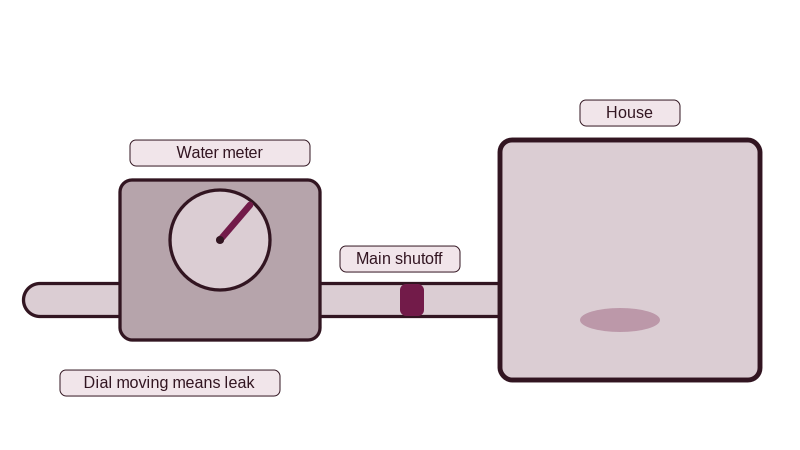
A pipe has burst if water shows up in the wrong place, if the meter creeps along while every tap is closed, or if a quiet house has the sound of a running tap. Shut the main valve before searching for the source. For a full plan on emergencies see Conejo Plumbing Pros, or read our page on urgent help for a burst pipe when damage is already under way.
How do I recognize a burst pipe inside the house?
The clearest clues are a trickling sound while every fixture is off, a sudden pressure drop, damp or stained drywall, a musty odor, and a meter that keeps spinning. Any one is worth checking. Two or three together almost always point to a failed pipe behind a wall, ceiling or floor.
Walk the house and use your senses:
- Listen at walls near bathrooms and the kitchen in silence, with the dishwasher and washer off.
- Look for bubbling paint, a soft patch, a dark stain that spreads, or a warm spot on a floor.
- Check the ceilings under upstairs bathrooms and the ceiling beneath a water heater closet.
- Smell for damp or a sour odor in a cabinet or closet.
- Compare your latest bill with earlier ones; a big water bill but no leak in sight explains an unexplained jump.
A pinhole leak does not look like a burst. It sprays a thin jet or beads along a seam, often in copper that is decades old. That is a leak, not a rupture, yet it behaves similarly and needs the same quick response.
How can you tell whether a wall pipe has burst?
Close every tap and appliance, then read the water meter. A moving dial or low-flow indicator means water is escaping somewhere. Press on the wall for dampness or softness, and hold a glass to it to listen. Many plumbers use a thermal camera, which reveals cold patches from leaking water without opening the drywall.
The meter test is the cleanest check. Note the reading, leave everything off, and look once more. The EPA's own meter test uses a two-hour wait, and if the number has moved, you have a leak. Then close the main valve at the house and read the meter again. A dial that still turns places the leak between the meter and that valve, meaning the line outside or underground.
If the meter halts after the main is shut, the problem is inside the house; closing the individual shutoffs under sinks and by the water heater helps narrow it down. Our guide to ceiling water leaks covers the signs from above.
What are the first five minutes for?
Close the main water supply, power down the water heater, and keep people and electronics clear of wet areas. Open the lowest tap to empty the lines. If water is near outlets, a light fixture or the panel, touch nothing electrical while standing in water, and turn off power at the breaker only when you can reach it with dry feet.
The sequence:
- Close the main valve. In many homes you will find it by the front wall or next to the garage.
- Shut the heater's cold supply, and switch off its gas or breaker if the pipe is nearby.
- Move belongings, lift rugs and mop up standing water.
- Take photographs for your insurance claim before you clean up.
- Arrange a plumber. Our price request page is open any time, though weekday reading only happens between 9am and 5pm.
If gas is ever the smell, go outside first, then contact SoCalGas on 1-800-427-2200, or 911 if someone is at risk.
How should a ceiling be dried after a leak?
Deal with the source first. After that, let trapped water out, expose the area to air, and keep fans and a dehumidifier going for several days. Drywall that has sagged, stayed damp beyond a day or two, or smells musty normally must be cut out and replaced. Letting a bulging ceiling dry slowly without opening it risks mold behind the surface.
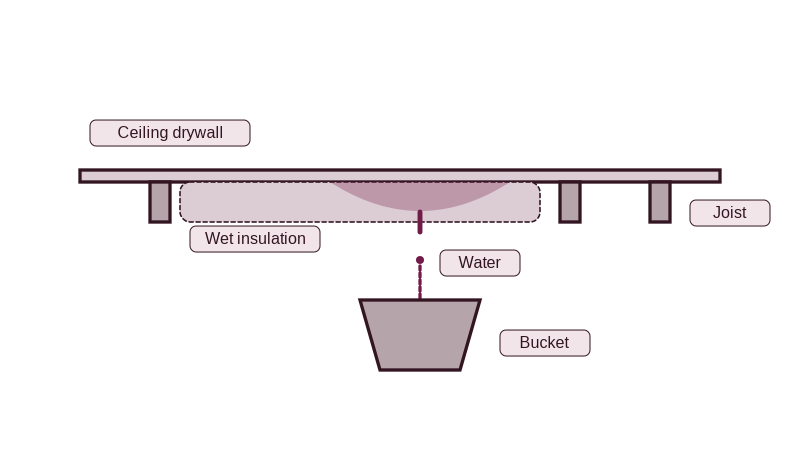
When a ceiling bulges with water, set a bucket beneath and pierce the bulge at its lowest point with a screwdriver so it drains in a controlled way. Wear eye protection. The risk comes from older textured ceilings. Popcorn or spray texture in houses built before the 1980s may hold asbestos, so never scrape or sand it. Ask a plumber or a testing lab how to check, and look up the California rules through official channels before disturbing it.
Dry out the area with air movement. Pull back insulation if it is soaked. Wait until the framing reads dry before closing it up, or the paint will blister again. A damp meter, which many hardware stores rent, tells you when it is safe to close up. For stain signs, read clues that the ceiling is leaking.
Is there a temporary way to stop a leaking pipe?
Yes, briefly and only once the water is off. Typical temporary stops include a pipe repair clamp, self-fusing silicone tape, an epoxy putty made for pipes, or a push-fit coupler. These buy hours or days. They are not repairs, and a plumber ought to replace the damaged length soon.
How each works:
- Repair clamp: a rubber pad and a metal band that tighten around a pinhole or short split.
- Silicone tape: wrap tightly with overlap, stretching it as you go, on a dry pipe.
- Epoxy putty: knead, press on a dry pipe and let cure per the label.
- Push-fit coupler: remove the damaged copper section and slide the coupler on. This is a long-lasting fix in many cases, but it is a plumbing repair.
Temporary measures fail under pressure, so keep the main off until the fix has cured. For small copper leaks see pinhole leaks in copper. Copper pipe in older homes can develop pinholes from the inside out, and one pinhole often means more to come.
How is a leaking PVC pipe joint fixed?
A leaking PVC joint cannot be fixed by tightening. Dry the pipe, cut out the leaking fitting, and glue in a new fitting with primer and solvent cement, or use a slip coupler. PVC used for drain and irrigation lines is not under mains pressure in most places, but a leak still makes a mess, so shut off the supply first.
Do not rely on caulk or tape for a long-term fix on PVC. Give the glue the full cure time on the can before restoring pressure. If the joint is on a supply line in a wall, or the plastic is old and brittle, hire out. See stopping a leak from a plastic pipe for more.
What if a pipe bursts outside the house?
Outdoors, watch for a boggy lawn patch in dry weather, a trench full of water, running water heard near the meter, and weak pressure inside. Shut the main at the house and check the meter. A break between meter and house is usually the owner's repair, while one on the utility's side is usually theirs, so ask your water provider where its responsibility ends.
Before anyone digs, remember that California law generally expects a notice to 811 for underground utilities, and that the City of Thousand Oaks has rules about oak trees that may limit digging near roots. Large estate lots may have long private lines, and many Hidden Valley homes rely on wells, so a leak can be far from the house. Our page on how to spot a pipe burst underground goes into the signs and tests.
Common questions
How fast does a burst pipe do damage?
Quickly. A split in a pressurized line can pour out plenty of water in minutes, soaking drywall, flooring and insulation. Harm grows the longer water sits, since mold can begin inside a day or two when conditions are warm and damp. Close the main at the first sight of water, then request a plumber and photograph everything.
Is a burst pipe covered by my insurance?
Often it covers sudden water damage but not the cost of fixing a pipe that failed from wear, and policies differ. Read the policy documents or ask your agent. Take photos and keep receipts for emergency steps. The usual distinctions are explained in insurance and burst pipe damage.
Is a spinning water meter always a burst pipe?
No. A running toilet, a dripping tap or an irrigation timer can turn the meter as well. Close every fixture, switch off the sprinklers, and test again. If the dial keeps moving, there is a leak, though possibly a small one. A slow-turning low-flow indicator suggests a minor leak and not a burst.
Can I repair a burst copper pipe myself?
Small repairs with push-fit couplers are within reach of a confident owner, but soldering near wood framing needs care and fire safety. A wall full of water, a pipe in a ceiling or a main line break is for a plumber. If the house has old pipe, expect more failures soon, and consider a repipe discussion.
What does the plumber need from me?
Tell them where the water is, when it started, whether the main is off, and what type of pipe you have if known. Photos of the stain and the meter help. Send those with the price request. No response time is promised, so keep the main closed while you wait.