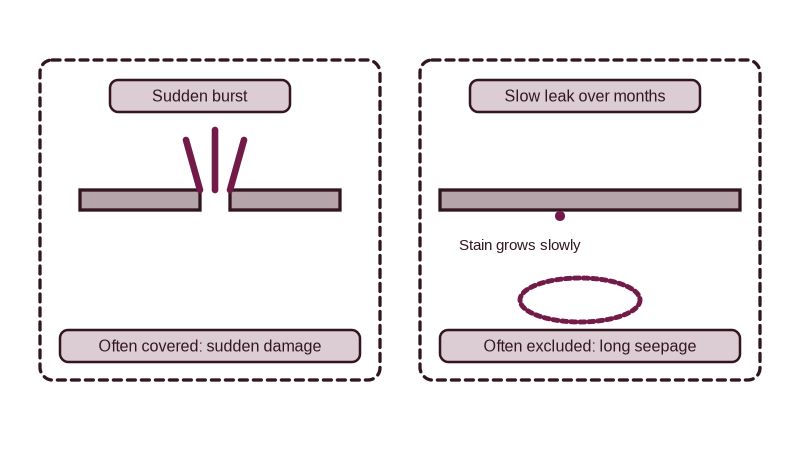
A standard homeowners policy generally pays when a pipe suddenly and accidentally bursts and ruins flooring and drywall. It often does not pay to replace the worn pipe itself, and it usually excludes harm from leaks that went on for weeks or months. Your own policy decides, and we cannot read it for you. Written for homeowners in Thousand Oaks and around the Conejo Valley, this page explains what to do first. On the plumbing side, see how Conejo Plumbing Pros arranges a local plumber.
Is a burst pipe covered under a homeowners policy?
Most policies pay for harm from a sudden, accidental burst, such as soaked walls, floors and belongings, less your deductible. They commonly exclude the failed pipe's cost, plus damage from an ongoing leak or from wear and corrosion. Read the policy or ask the insurer, since wording and limits differ.
The words that matter are "sudden and accidental" versus "continuous or repeated seepage." A pipe that splits overnight and floods a kitchen falls on one side. A pinhole that has dripped inside a wall for a year falls on the other. Insurers look for evidence of how long water was escaping, such as staining, mold or corrosion at the leak.
We are not an insurer and cannot say what your policy pays. For rules and consumer help, the California Department of Insurance at insurance.ca.gov has guidance on claims. Ask your agent for the water damage section in writing.
How does a plumber help with an insurance claim?
A plumber can stop the leak, record the cause in writing, photograph the failed pipe and issue an invoice that separates repair from other work. Coverage is not the plumber's call. Request a written description of what failed and why, since adjusters often ask for it, and keep every receipt.
We do not do plumbing ourselves. Your request goes from us to a local plumbing business, which bills you directly, not us. For jobs of $1,000 or more, California generally requires a contractor license. Look the license up at cslb.ca.gov, and have the quote written down. To start a quote, use the quote form.
If your insurer sends its own mitigation company to dry the house, that work is separate from the plumbing repair. Clarify who handles each step so you do not pay twice for the same work.
Does the insurer pay for the repair itself, or only the damage?
Often a policy pays for the resulting damage and for reaching the leak, called tear-out, but not for replacing the pipe. Some policies cover tear-out and access, others do not, and limits vary. That makes it worth asking for your coverage in writing before the plumber opens walls.
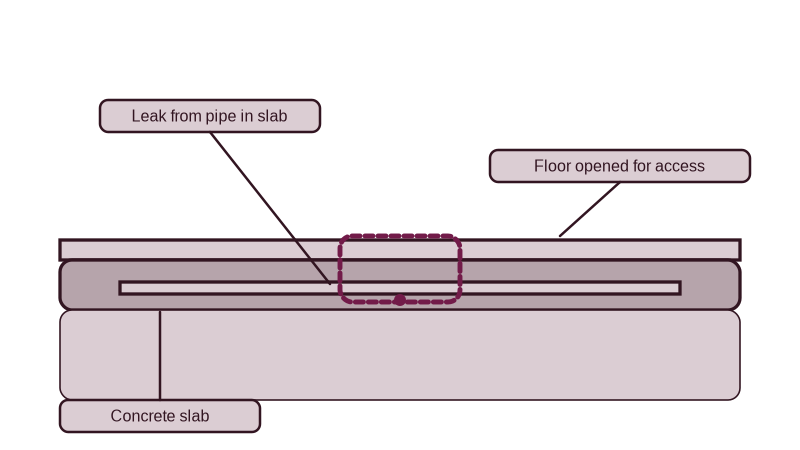
Slab leaks are tricky here. Reaching a pipe under a concrete slab may mean breaking the floor, and coverage for that access depends on the wording. What the work involves is explained in our guide to finding and fixing slab leaks, so you can discuss it with your insurer before approving anything.
Corrosion complicates claims. When a burst follows old pipe corroding, an insurer may argue wear and tear. That is why maintenance records, a plumber's written note on the cause, and clear photos can matter. The guide on why a pipe bursts explains the common causes.
How can you reduce the chance of a burst pipe?
Know where your main shut-off is, replace braided lines and old valves before they fail, keep water pressure in a safe range, and insulate exposed pipes. Freezing is a smaller risk here than in colder regions, but exposed pipes can still suffer. Check older homes for pipes that are corroded or failing. Our burst pipe prevention guide has a short checklist.
The EPA figures that a household can lose over 9,300 gallons of water a year to leaks, which is a reason to fix small ones early. A small leak caught early is usually a repair; one that is ignored can become a claim your insurer questions.
What are the first steps once a pipe bursts?
Shut the main water valve first. Where it is safe, turn off power to wet areas, and move belongings out. Take photos and video of everything before any cleanup, then report the loss to your insurer. Do not wait and see how bad it gets. Insurers expect you to limit further damage and act promptly.
Follow these steps in order:
- Shut off the main valve, then drain the lines through a faucet at the lowest point.
- If water reaches outlets, light fixtures or the ceiling, leave that area. Flip the breaker only when you can get to the panel on dry footing. When in doubt, stay out and call 911.
- Photograph the burst pipe, the wet areas, damaged items and the water meter.
- Report the claim, and note the claim number and the name of the person you spoke to.
- Arrange emergency repair. If the plumber removes the failed pipe section, hold on to it, since it can serve as evidence.
The plumbing side is covered in our guide to urgent help for a burst pipe, and the burst water pipe page shows what happens at a failure.
Common questions
Is a slow leak covered?
Usually not. Policies commonly exclude damage that built up over time, such as seepage over weeks or months, or damage from corrosion and wear. A sudden failure is treated differently. Check the exact wording of your policy, and report any leak as soon as you find it.
How long does a repair take after a burst pipe?
The plumber can often stop the water the same day. A full repair of a section may take a few hours, while drying, drywall and flooring can take days or weeks. Slab leaks need leak location first. Ask for a schedule for the plumbing and a separate one for restoration.
What do I ask when hiring after a burst?
Ask for the contractor license number and check it at cslb.ca.gov. Get a written quote with its scope, find out whether the plumber will write up the cause, and ask who pulls any permit. Ask your insurer if it has preferred vendors, and whether you are obliged to use them.
Should I be home during the repair?
Typically yes, at least at the start, to point out the shut-off, the leak and the damage, and to approve the work. If you cannot attend, arrange access and describe exactly what to expect. Stay reachable in case the plumber has questions.
Can a burst inside a wall be claimed?
When it happened suddenly, often yes for the resulting damage, subject to your policy. Report it quickly and keep the damaged pipe. Whether the insurer covers opening the wall depends on your policy, so ask before the work starts.