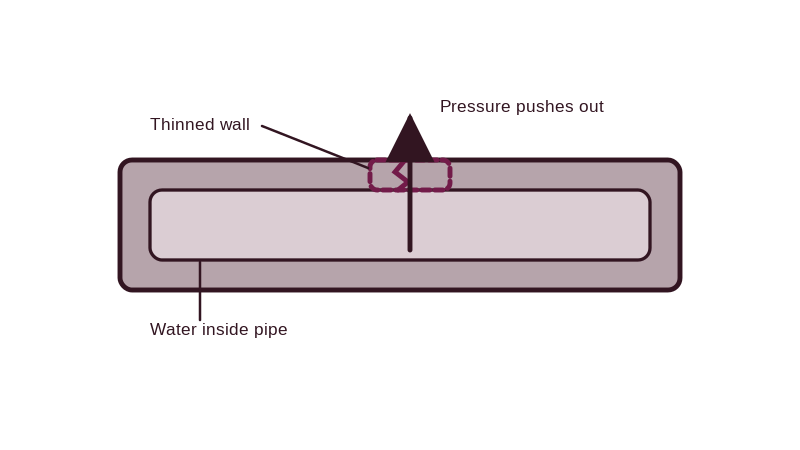
A pipe bursts when the stress on it is greater than the wall can hold. Four causes are common: excessive water pressure, corrosion that thins the metal from within, water that freezes and expands, and physical movement from settling, roots or an earthquake. In older homes, many bursts trace back to the first two. For the quick-response page, start from our home page and the quote form.
A burst is rarely sudden in the way it looks. The pipe was usually weakened for years: a pinhole here, a green crust on a fitting there. Pressure then did the final work. That explains why twin houses on one street can behave differently: one has a pressure regulator in good order and the other does not.
Which cause of burst pipes is the most frequent?
Corrosion and old age rank among the most frequent causes in older homes. Metal pipes thin from the inside over decades, then split at a weak point. High water pressure speeds that failure by pushing against already-thin walls on every surge.
Which pipe fails first depends on the material. Galvanized steel rusts inside and narrows. Copper can develop pinholes from water chemistry or from flux and installation damage. Older polybutylene plastic is known for giving out at its fittings. A plumber can read the pattern: once one section fails, the rest of the same age and material is often close behind. The two most common cases are covered by our page on galvanized pipe replacement and the pinhole leak guide for copper.
What makes pipes burst in winter, and in summer as well?
In winter, water in a pipe turns to ice and expands, which can split the pipe or its fitting once enough ice forms. Freezing needs sustained cold, so it hits exposed pipes in attics, outside walls and hose bib lines. In summer, bursts come from heat movement, pressure surges and pipes that were already weak.
Hard freezes are not the typical risk in the Conejo Valley, but unusual cold nights do come, and unprotected outdoor lines are the first to suffer. Summer is not safe either: irrigation runs raise demand, a ground shift can strain a line, and tree roots can crush or invade underground pipe. If you want prevention steps, see our page on burst pipe prevention.
Is it possible for high water pressure to burst a pipe?
Yes. Pressure beyond what fixtures and pipes are built for strains every joint, and a sudden surge may split a weak spot. A pressure regulator near the main limits this; when it ages and drifts, pressure climbs. Banging pipes, dripping fixtures and a relief valve that keeps weeping are common signs of too much pressure.
Pressure spikes also come from water hammer, when a fast-closing valve stops moving water abruptly. You hear it as a thud in the walls after a washing machine shuts off. Screwing a gauge onto an outside hose bib shows static pressure within seconds, and a plumber can swap a worn regulator; our page on water pressure regulator replacement has details.
What other causes are there, from roots to earthquakes?
Other causes include tree roots pushing into buried lines, ground movement from settling or earthquakes, damage from digging, and bad installation such as a kinked or poorly supported run. Each leaves a different trace: roots are a yard problem, shifting is a foundation problem, digging is a recent-work problem.
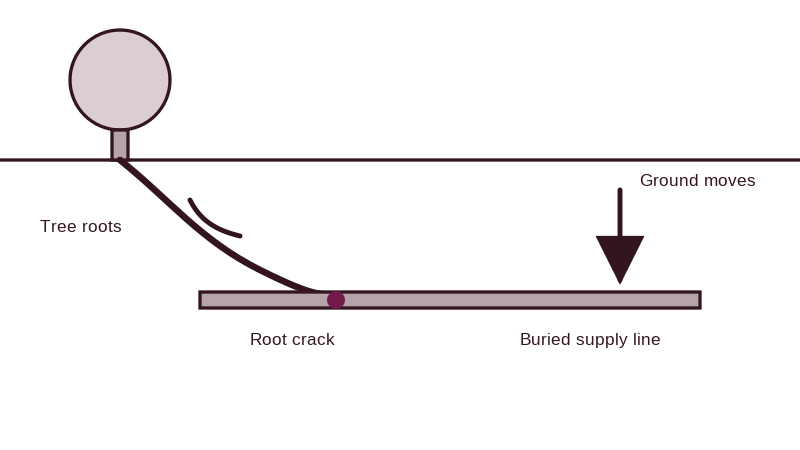
Large oak trees are a feature of the area, and roots can find a small crack and then widen it. If you are planning to dig near a tree, check city rules first, since protected trees often have limits. Slab foundations add a hidden risk: a line under the concrete can fail without a visible sign until the floor turns warm or damp. That situation, called a slab leak, is covered in slab leak: patch it or repipe.
Which warning signs show a pipe is near bursting or has burst?
Look for a sudden pressure drop, hissing or running water audible with every tap off, a spinning water meter, damp or bubbling walls, stained ceilings, a musty smell and a sharp rise in the bill. Stains on a ceiling or wall usually mean water is already escaping. Treat each as a reason to inspect and, if in doubt, shut the water off.
For the meter test, the EPA advises noting the reading, using no water for two hours and then checking again; a number that has moved points to a probable leak. Hissing inside the walls with no fixtures running can indicate a pressurised leak there. For ceiling-specific signs, read clues that the ceiling is leaking, and for what follows a burst, spotting a burst pipe and what to do first.
What should I do first when a pipe bursts?
Shut the main valve, drain the line by opening low faucets, cut power to wet areas where that is safe, and send a repair request. Leave the area if water is near electrical equipment. Photograph damage for your records before cleanup. Then arrange a plumber and, if needed, leak detection to find hidden sources.
A plumber's visit gets the failed section replaced and the line tested. If pressure is the cause, have the regulator checked. If corrosion is, ask how much of the line shows the same wear. The repair itself is described on our burst water pipe page, and leak detection costs explain what finding a hidden leak involves.
Common questions
Does a burst pipe differ from a leak?
Somewhat. A leak is any escape of water, often slow. A burst is a break large enough to release water quickly. A pinhole leak can become a burst if it is ignored, and the same causes drive both. Either way the fix is the same step: find the failed section and replace it.
Are older houses more prone to burst pipes?
Often, yes, since age brings corrosion and worn fittings. An older home may still have its original supply lines, and some use materials that are now known to fail. A newer home is not immune, since poor installation or high pressure can break any pipe. Age is a risk factor, not a rule.
Can a pipe break within a wall unnoticed?
Yes. Water can travel through a wall cavity for days before a stain or smell shows. Clues include a damp patch, peeling paint, a warm spot on the floor, a meter still moving with everything off and a bill higher than usual. A plumber can trace the source with leak detection tools before opening anything.
What prevents a repeat burst?
Fix the cause, not only the break. Check water pressure, replace worn regulators, insulate exposed lines, and replace corroded runs before they split. Learn where your main shutoff is and try it once a year. If a plumber says the whole line is tired, ask for a quote to replace the section, not only the failed fitting.
Is a burst pipe covered by homeowners insurance?
Sometimes, though the policy and the cause decide it. Many policies pay for sudden water damage but exclude gradual leaks or wear. Read your policy, document the damage and contact your insurer ahead of major repairs. Insurance and burst pipe damage answers the common questions.