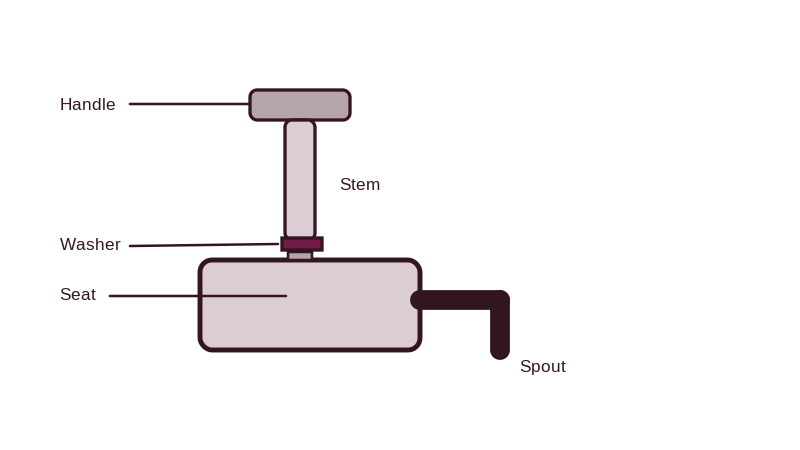
A bathtub faucet that will not shut off completely is a small problem with a steady cost, and it tends to get worse as the worn part wears further. A careful owner can handle the repair when the valve is a common type. This guide is part of our help with taps, sinks, showers and disposals for homes in Thousand Oaks and the Conejo Valley, and shows how to identify the valve, replace the part and recognize when the job is bigger than it looks.
Faucets and shower fixtures behind a tiled wall are where a simple repair can turn into a wall repair, so we flag those cases as we go.
Why is my bathtub faucet leaking?
A leaking tub faucet nearly always traces to wear inside the valve: a rubber washer or seat in an older two-handle faucet, or a worn cartridge or ceramic disk in a single-handle valve. Mineral scale can also stop the part sealing. The spout drips because the valve does not close all the way.
Where the water appears gives a clue. Dripping at the spout implicates the valve that controls that flow. Moisture around the base of a handle points to a worn stem seal. A diverter that is failing can make the shower head drip while the tub runs. A leak behind the wall or a stain on the ceiling below is a supply or connection leak and not a simple washer job; the plumber for shower leaks page covers those.
How do I tell which type of tub faucet I have?
Count the handles and feel the action. Two handles that turn several times to close are usually compression valves with rubber washers. One handle that moves up, down and sideways means a valve built on a cartridge, a ball or a ceramic disk. Quarter-turn handles are typically ceramic disk valves.
Remove the decorative cap on the handle and take out the screw underneath. Look at the stem or cartridge that comes out, and take a clear photo. Many brands use distinctive cartridges, and the shop will match the part from the old one. With an old faucet and scarce parts, replacing the entire valve may make more sense than hunting for one. For comparison with other fixtures, tub faucet drips: what to do shows common models.
How do I repair a leaky two-handle tub faucet?
Shut the water, drain the line, remove the handle and trim, undo the stem, swap the washer for an exact match and renew the seat when it is worn, then reassemble and test. A two-handle faucet drips from the worn washer, and this repair is a common first DIY plumbing job.
If the tub lacks its own shutoff, close the main valve, then run a tap at a lower level to drain the line. Cover the drain with a towel to keep small screws from falling in. Use a wrench with care, so you do not scratch the finish or damage the tile. Check the seat inside the valve for pitting. A rough seat can be reground using a seat dresser tool, or the whole stem can be replaced. Tighten gently, since cranking down damages new washers.
How do I repair a leaky single-handle tub faucet?
Single-handle faucets usually leak from a worn cartridge. Close the water supply, remove the handle, trim and retaining clip or nut, then draw the cartridge straight out, fit an exact replacement with new O-rings, grease lightly if the maker allows, and reassemble. Test slowly for leaks and a full range of temperature.
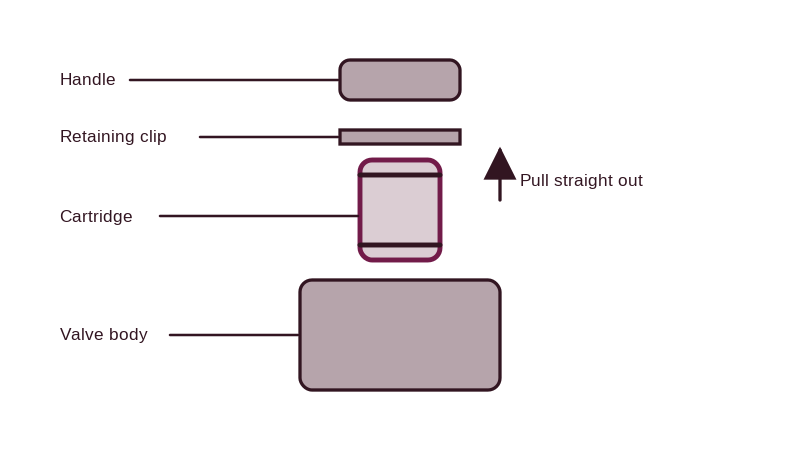
Cartridges can be stiff after years of scale. Wiggle gently and pull straight, and use a cartridge puller if the part will not move. Note the alignment of the old cartridge before removing it, since a rotated one reverses hot and cold. If the faucet shows hot and cold crossed, rotate the cartridge or its stop ring. A tub handle that is hard to turn or sprays out of the wrong place is a sign that scale has built up in the valve body. Related steps are in repairing a leaky shower faucet.
What should I do next?
Decide which repair applies, buy the exact part and shut the water before opening anything. A two-handle type needs new washers and a seat check. A single-handle type needs a new cartridge. Unsure of the type? Take a photo to the shop.
Before you start, protect the tub with a towel, and plug the drain. Keep screws in a dish. Once finished, run the water hot and cold, watch the spout for a few minutes and check around the handle. If the drip continues, the valve body or seat may be damaged. For an idea of what a faucet swap costs when you decide to replace, see our faucet replacement cost guide.
When should I choose a plumber instead?
Call one in if the water to the tub cannot be shut off, the valve is corroded or the screws are stuck, the repair did not stop the leak, water shows up within the wall or marks the ceiling below, or the fixture would need the tile opened.
Describe the job on the quote form, and a local plumber will be lined up to visit. Tell us the type of faucet if you know it, how long it has leaked and whether there is any sign of water elsewhere. Photos of the handle and the spout help. A plumber can also advise whether replacing the valve is smarter than repeating small repairs on old fixtures.
Common questions
How long does a leaky tub faucet repair take?
A washer or cartridge swap is often a short job for a careful owner, and quicker for a plumber who has the part. Stuck parts, corroded screws or a valve behind tile add time. The plumber can estimate on site once the faucet is opened and the type is clear.
What should I ask a plumber about a leaky tub faucet?
Ask whether parts and labor are both in the quote, what follows if the valve body proves damaged, whether wall or tile repair is covered when access is needed, and whether the plumber carries common cartridges. Get it all in writing, and confirm which business will do the work.
Must someone be there for the repair?
Yes. Someone has to open up the bathroom, confirm what is being done and agree on the price. The plumber also needs to test the faucet with you. If you cannot attend, name a trusted adult and tell us when you send the request.
How much water does a leaky tub faucet waste?
It varies with the drip rate, but a constant drip accumulates over a month, and a fine stream wastes much more. The cost shows on the bill and the constant wetting can stain the tub. Fixing it early is cheap compared with the water lost.
Can a tub faucet be repaired with the water on?
No. Always shut the water to the faucet first, using a local stop if there is one, or the main valve if not. Opening a pressurized valve floods the bathroom. Afterward, open a lower tap to drain the line, then restore the water slowly.