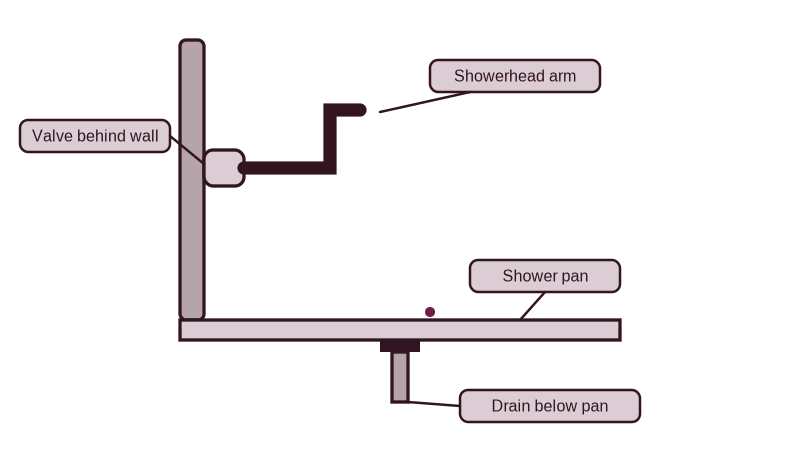
A leak in or around a shower rarely reveals its source. The stain may appear on the ceiling below, in the wall behind or around the tub base, and the cause may be a worn valve cartridge, a failed drain seal, a cracked pan or merely cracked grout. This page is part of the wider guidance from Conejo Plumbing Pros on fixtures such as faucets, sinks, showers and disposals. Below, we narrow down the source, then turn to one fixture with weak pressure and installing a disposal.
How can the source of a shower leak be traced?
Run the shower and inspect it one part at a time. A drip at the showerhead arm suggests worn thread tape, wetness at the handle implicates the cartridge or seals, pooling at the base once the shower stops suggests the drain, pan or door seal, and a ceiling stain below that appears only while the shower runs indicates a drain or supply pipe.
Test in steps. Run the shower with the water directed away from the walls and the door closed. Then run the tub spout alone. Then fill the tub or pan and let it stand for an hour with the drain plugged, checking whether the level falls. Each test separates one possible cause from the others.
Grout and caulk fail first on most showers, and cracked caulk at the tub edge lets water behind the wall. Re-caulking is a cheap fix, but if the leak has been letting water in for some time, the wall behind may be wet. If the stain is on the ceiling, the ceiling water leak guide applies.
What steps do I take when a pipe bursts in the shower wall?
Close the main valve immediately, then open a faucet to relieve the line, and keep people and belongings clear of the wet area. A burst pipe in a shower wall can spray water inside the wall cavity, so check the ceiling and adjacent rooms. Then arrange a plumber to open the wall and replace the section.
The warning signs and what comes next are explained in how to recognize a burst pipe and urgent steps for a burst pipe. A burst usually means an old pipe, a freeze or a pressure problem.
Do not run the shower until the pipe is repaired. If water is near electrical fittings, cut power to that area at the breaker, but only if you can do it without standing in water, and stay clear if you cannot.
Can a plumber repair a shower leak without tearing out the wall?
Often, yes. A leak at the valve or showerhead may be fixable from the front or via a panel in the wall behind, and a drain leak may be reached from below if there is a crawl space or ceiling. If the pipe in the wall is the problem, an opening is cut, repaired and patched.
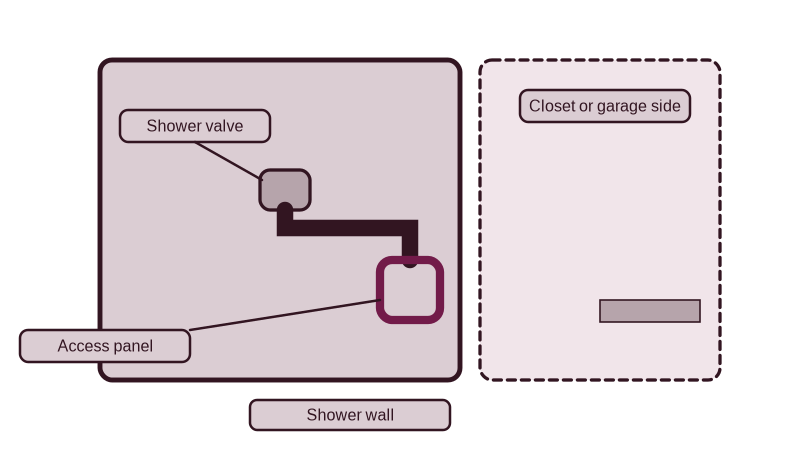
Many tub and shower valves can be serviced from the front: remove the handle and trim, and then replace the cartridge or seat. Note the model name or photograph the trim, since parts differ by maker. A cracked valve body has to be replaced, which means opening the wall.
Homes from the 1960s through 1990s around Thousand Oaks and Newbury Park often have valves that were never serviced, and a panel on the other side of the shower wall, in a closet or garage, makes repairs simpler. Ask the plumber how they plan to reach the pipe and who patches the wall.
When does a shower leak need a plumber rather than DIY?
Hire a plumber when the leak is inside a wall or ceiling, the valve body is cracked, the drain pan leaks, the pressure problem affects several fixtures, a gas or electrical connection is involved or a patch has not held. Work that needs a permit or opens walls is better left to a trade.
If gas smells near a water heater or appliance, leave the building and reach SoCalGas at 1-800-427-2200 once outside; 911 is for anyone in danger. Water mixed with electricity is also a bad combination, so keep power off around wet wiring.
When you are ready, describe the fixture and symptom in the quote form; we pass the request to local plumbing businesses. Form requests are read on weekdays from 9am until 5pm.
How do you install a garbage disposal?
Turn off the breaker, remove the old unit or the sink flange, seat the new unit on the flange with its mounting ring, attach the drain line and the dishwasher hose, and wire it to a switched outlet. If a dishwasher is connected, knock out its plug, then test for leaks. Your model's manual is the guide to follow.
Most disposal brands use similar mounting systems with small differences in how the ring locks and where the dishwasher inlet sits, so the printed instructions for your exact model matter more than a general guide.
People most often forget the knockout plug in the dishwasher inlet; leave it in place on a connected dishwasher and it cannot drain. A permit or an electrician may be needed for the wiring if the sink has no outlet below. See disposal repair for faults that are not installation problems.
Why is there low water pressure at one bathroom faucet, or in the tub only?
When only one fixture has weak flow and the rest work normally, the problem sits at that fixture: a blocked aerator or showerhead, a stop valve that is partly shut, a worn cartridge or debris in a single line. Start with the aerator at the tip of the faucet, unscrew it, rinse out grit and check the small screen.
For a tub with weak flow but plenty elsewhere, check the diverter valve, which sends water between spout and shower, and the cartridge in the mixing valve. Mineral scale and grit from old pipes can block the small openings. A stop valve under a bathroom sink may be only partly open after a past repair.
When several fixtures are weak, the cause is wider, such as corroded pipes, a main valve left half open or a pressure regulator that is failing. That wider case is handled in the low water pressure guide, and what a pressure regulator looks like shows you where to look.
What is different about mobile home sink plumbing?
A mobile home sink usually has lightweight plastic supply lines and a drain that connects to a pipe below the floor, with the vent and the trap sized for the unit. Space is tight, and the lines are exposed to cold and movement. The same repair steps apply, but access, support and insulation take more care.
Check under the sink for supports, since plastic drains can sag and leave a low spot that holds water and clogs. Flexible supply lines need room to bend without kinking. Tightening a compression nut gently stops many leaks, and a worn washer in a faucet is the same part as in any house.
For work under the floor, look for a plumber who is comfortable with belly access. We cover wider mobile-home basics on our page about stopping leaks from plastic pipe.
Common questions
How much time does fixing a shower leak need?
A cartridge swap or a showerhead fix is often finished in under an hour. A drain or pan repair can run longer, and a pipe inside a wall adds time for opening, repair, testing and patching. Have the plumber outline the plan, including whether drying time or tile work will follow.
Can I use the shower while waiting for repair?
It is better not to if water is leaking into a wall or ceiling, since each use adds to the damage. If the leak is at a showerhead or a small drip you can see, short use may be fine. If unsure, close the shower valve and hold off until the plumber arrives.
What should I ask about a shower leak before agreeing to a repair?
Ask how the source will be traced, if wall patching and tile are in the quote, how long the shower will be out of use and whether a permit applies. Also raise how extra damage found after the wall is opened would be handled, and get the answers written down.
Must I be at home during the repair?
Yes, an adult needs to be there to give access to the bathroom and the area below, explain how the leak began and agree to any changes. Plan to be available during the visit. Clear the shower and the vanity beforehand, and mention any pets or alarms to the plumber.