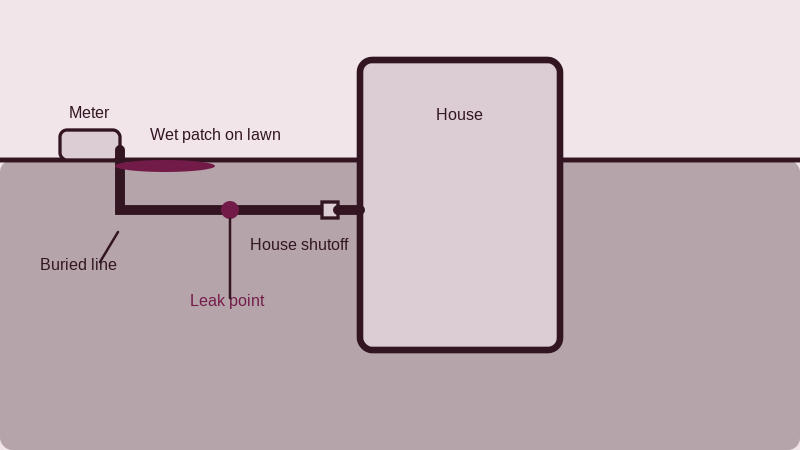
An underground burst may run for several days before any water shows. Often the first clue is the bill, a soggy patch of yard, or a sudden pressure drop. This guide is part of the help on our home page for Thousand Oaks and Conejo Valley homes, and it shows how to confirm a burst, what to do at once, and when to stop investigating and bring in a plumber.
Go through the signs, then run the meter test, the single check that tells you for certain whether water is getting out along the stretch from meter to house.
Which signs suggest a pipe has burst underground?
Common indicators are a soggy or sunken yard patch without recent rain, one strip of unusually green or lush grass, water running audibly with everything off, a sudden pressure drop, muddy or discolored water, and a bill far above normal. A single sign merits a check, and several at once suggest a burst.
Follow the line from the street meter to the house. Standing water, soft soil, or a spot that stays muddy while the rest dries are strong clues. Indoors, listen near where the water enters. A warm patch on a slab floor can mean a leak on a hot line beneath it, as are soggy carpet or lifting floors beside an outside wall. The indoor signs are listed in spotting a burst pipe and what to do first.
At what stage should a plumbing business be hired?
Hire one the moment the meter test shows water moving with the house valve closed, or once water appears in the yard, floors are wet or a slab hot spot appears. Underground work needs locating, safe digging and a pressure test afterward, and none of that is a casual DIY job.
If you cannot isolate the problem, or if the leak keeps flowing after you close the main, treat it as urgent. Our page on urgent help with a burst pipe in Thousand Oaks sets out how that works. Send the quote form and we hand the request to a local plumber, who then visits. Describe what the meter did, where the wet patch sits and if the water has been shut off.
How do plumbers locate and fix an underground leak?
A plumber uses a pressure test, listening gear, and sometimes a camera or tracer gas to find the leak without digging up the whole yard. Repair is usually a spot dig and a replacement section, or a new route if the pipe has failed in many places. The bigger the pipe run, the more that matters.
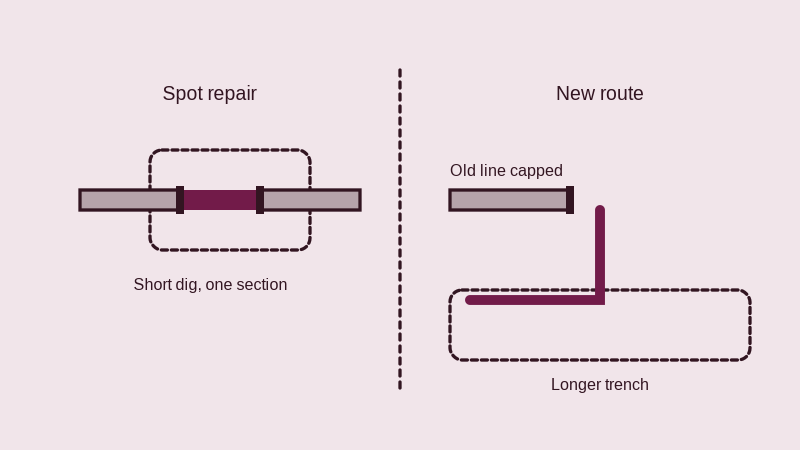
Locating first saves time and landscaping. Corrosion, ground movement, tree roots and old pipe material cause many underground failures. Old galvanized steel and some early plastics are known for failing, and repeated bursts in the same line argue for replacing it. For a leak beneath a concrete slab, you choose between a spot repair and rerouting the lines, a trade-off weighed in slab leak: patch it or repipe. For how finding a leak is priced, see our guide to leak detection costs.
How can the water meter confirm an underground burst?
Turn off every tap, appliance and sprinkler zone, then go to the water meter. If a small dial or leak indicator keeps turning, water is flowing somewhere. Record the reading, leave everything unused for two hours, as the EPA suggests, and look again. A change confirms a leak, and the next job is working out which side of the house it is on.
Then close the house's main shutoff, typically near the front spigot or in the garage, and check the meter again. If it stops, the leak is inside the house. A meter still moving with the house valve closed puts the leak on the underground line between meter and house. That distinction saves a lot of guesswork, and the plumber will ask what you found.
What are the immediate steps if I suspect a burst?
To limit damage, shut the water at the house main, and at the meter if you can. Turn off electric appliances in or near wet areas, and keep people out of any flooded part of the garage or yard. Then move valuables, photograph the damage and contact a plumber.
Where water is entering the house, treat electricity and water as a deadly mix: avoid outlets or appliances while standing in water, and flip the breaker off only if you can get to it with dry hands and feet. Never dig, by hand or machine, without first checking where gas, power and other lines run, and contact 811 before any digging. Our page on burst water pipe covers the first hour in detail.
What damage can an underground burst cause?
Escaping water can undermine soil, lift pavers and slab edges, flood garages and crawl spaces, and soak walls. Acting promptly matters because water damage grows fast: to prevent mold, the EPA advises drying wet areas within 24 to 48 hours, and a steady leak wastes water and lifts your bill. A hillside lot adds the risk of soil movement.
Photograph everything and keep the bills. Insurance cover depends on your policy and on whether the loss was sudden. The usual split between the water damage and the pipe itself is described in insurance and burst pipe damage. Do not delay the shutoff to wait for an adjuster. Limiting the damage is generally expected of you, so take reasonable steps first.
Common questions
How long does it take to find and fix an underground burst?
Locating a leak may take an hour or two, and the repair itself a few hours up to a day, depending on depth, access and pipe type. A reroute or slab job runs longer. The plumber should provide an estimate once the leak is found and outline each stage in the quote.
What should I ask a plumber about an underground burst?
Ask whether the quote prices locating and repair separately, what follows if the leak turns out deeper than expected, who restores landscaping or paving, and if a permit applies. Have the price in writing, and confirm which business will do the work.
Does someone need to be home for the leak repair?
Yes. Someone should point out the meter, the main shutoff and the spot where you first noticed signs, and agree work as it develops. The plumber may need the yard and garage. If you cannot attend, name an adult and tell us when you submit your request.
Can a burst pipe underground fix itself or stop on its own?
No. A burst pipe does not seal itself, though the flow may change as soil shifts. A wet patch that seems to dry up can come back worse. Keep the main closed until a plumber has checked it, and keep repeating the meter test to see if the leak continues.
Do tree roots or shifting ground burst pipes?
Yes, both can crack or crush pipe, especially older or shallow lines, and corrosion can too. Roots tend to enter at joints, whereas ground shifts stress rigid pipe. A plumber can tell the cause by inspecting the failed section, and the cause affects whether a spot repair will last.