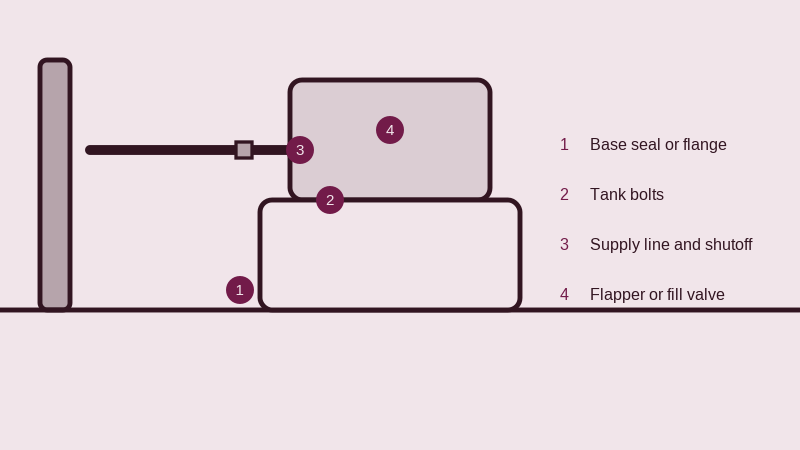
A toilet can leak in four main spots: the base, where the bowl sits on the floor; the bolts holding the tank, or the seal between tank and bowl; the supply line and shutoff valve; or inside the tank, where water slips into the bowl without leaving a puddle. The fixes differ, and a few suit a homeowner. Read on to locate the source, prepare before help arrives and see what the plumber's visit covers. The home page lists other jobs we arrange.
Which part of my toilet is the source of the leak?
Wipe the toilet and floor dry, lay a few paper towels around the base, then see where the first drops land. Water at the base suggests the wax ring or flange. Drips beneath the tank suggest tank bolts or the supply line. Moisture only after a flush hints at the base, whereas constant moisture hints at the supply.
An inner leak shows up with a dye test: stir a few drops of food coloring into the tank and wait ten minutes without flushing. If the bowl water changes color, the flapper leaks, which is a separate repair. See toilet flapper repair and a toilet that keeps running. Condensation on a cold tank can look like a leak in humid weather, and wetness on the tank's outside with no drip anywhere may simply be sweat.
What should I do first when a toilet begins to leak?
Turn the shutoff valve behind the toilet clockwise until it stops, then flush to drain the tank and wipe up the water. Keep the valve closed until the leak is fixed. If the valve is stuck or leaking itself, shut the main water valve for the whole house and then request a plumber.
Acting fast protects the floor. Water beneath a toilet can soak the subfloor, the flooring and the ceiling below, and damage often appears late. If the water has been running a while, lift a flooring corner to look for soft or dark patches. Do not use a leaking toilet while you wait. The EPA reports that a typical household can lose more than 9,300 gallons of water a year to leaks, so even a slow toilet leak deserves stopping. If water is coming through a ceiling, close the main and see dealing with a ceiling water leak.
How does a plumber repair a leak where the toilet meets the floor?
First the plumber closes the water and drains the toilet, then detaches the supply and lifts the toilet off the flange. The plumber fits a fresh wax ring or seal, inspects the flange and bolts, then sets the toilet back down and tests it. A damaged flange is repaired first. Water damage to the floor counts as separate from the plumbing work.
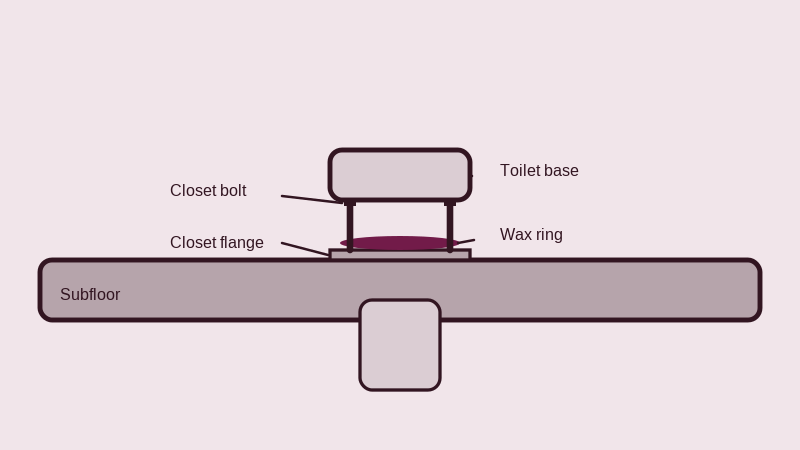
This is a common job that often takes less than an hour after the plumber arrives, though a broken flange or a soft floor slows it. Older ranch homes in neighborhoods such as Casa Conejo and Wildwood may have older flange materials needing extra parts. A rotten floor may lead the plumber to pause and advise a flooring repair before the toilet goes back. Some owners swap the toilet at this stage; for pricing, see the cost of replacing a toilet with a plumber.
Which toilet leaks can I fix myself?
Most homeowners can manage snugging loose tank bolts, fitting a new braided supply line, or exchanging a flapper or fill valve. A new wax ring is heavier work, since the toilet must be lifted off the floor. Leave old, corroded or seized shutoff valves to a plumber.
Take care with porcelain, which cracks if overtightened. Tank bolts need to be snug, not hard. Tighten a supply line by hand, then add a slight turn with a wrench. When swapping the supply line, bring the old one to the shop so the connection matches. Those parts are covered by guides on fill valve repair, the shutoff valve and the overflow tube. A toilet that rocks often has a loose bolt, as described in fixing a loose toilet seat.
What should I look for when picking a plumber for this?
Look for one who explains the cause before giving a price, quotes the whole job in writing including wax ring and supply line, and holds an active California contractor license, which you can look up on the state licensing board's site. Ask who deals with floor damage, because plumbers repair plumbing, not flooring.
Your request works best when it says where the leak appears, when it started, whether the shutoff works and what the floor is made of. A photo of the base and the shutoff valve can save a trip. Send these via the quote form; the communities we cover are on our areas page. Requests are checked on weekdays between 9am and 5pm, and we promise no response time for the plumber who visits.
Common questions
How much time does a toilet leak repair need?
Swapping a wax ring or a supply line often takes an hour or less once the plumber is on site. The time grows with a damaged flange, a seized shutoff valve or a soft floor. Ask for an estimate, and find out whether you can use the toilet again that day.
What should I ask a plumber before booking a toilet repair?
Ask what the price covers, whether the wax ring and bolts are replaced, how a damaged flange gets handled and who is responsible for floor repair. Get the contractor license number and check it with the state board before any work begins on site.
Can a leaking toilet cause floor damage?
Yes. Over time a base leak soaks the subfloor and flooring, and the damage often stays hidden until the floor feels soft or a stain shows below. Stop the leak early, dry the area, and have a plumber or flooring contractor inspect anything spongy.
Should I replace the toilet or just repair the leak?
Repair it when the toilet is sound and the leak traces to a seal, bolt or supply line. Replace it when the porcelain is cracked, the toilet wastes water, or repairs keep repeating. A plumber can quote both options so you can weigh them side by side.