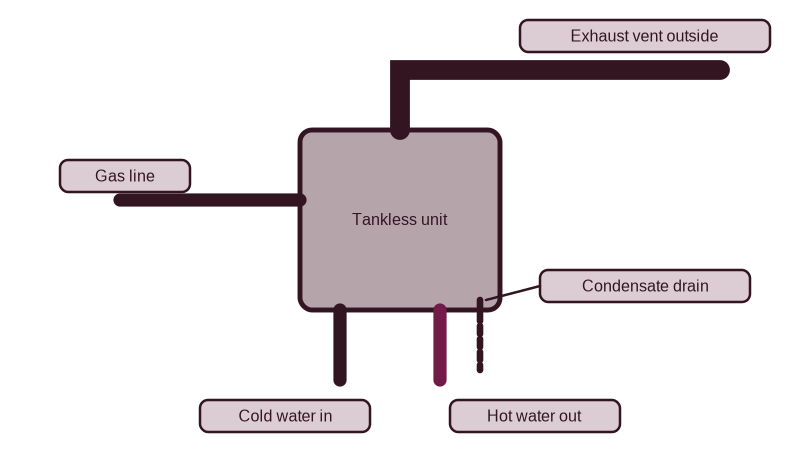
A Rinnai tankless installation means hanging a wall unit, linking gas and water, venting exhaust outdoors, draining condensate on condensing models, and obtaining a permit and inspection. The gas line is often the biggest variable, because a tankless unit draws far more gas in a burst than a tank does. If you are weighing tank against tankless, our page on water heaters is the hub, and the sections below cover the install itself for homes in Thousand Oaks and the Conejo Valley.
What is involved in a Rinnai tankless installation?
A plumber takes out the old tank, hangs the Rinnai on a wall, runs gas plus cold and hot water lines, fits the vent and, where the model needs one, a condensate drain, connects power and any control, then sets up and tests the unit. The permit and inspection belong to the job, and a plumber should explain each step.
Each part can be simple or complicated. If the new unit goes on the tank's old spot, the plumbing work is shorter. If it moves to an exterior wall, there is more piping. Models rated for indoor or outdoor use differ, and the choice of location affects venting and cost. Rinnai publishes installation manuals for each model, and a plumber should work from the one for your unit.
A tankless water heater delivers hot water on demand without storing it. That saves standby loss but means the gas burner must do all the heating when you open a tap, which is why gas supply size matters so much.
Why does the gas line matter so much?
A tankless unit can need several times the gas flow of a tank heater, so an older half-inch gas line often has to be upsized. Pipe size comes from the unit's input rating, the run length and the other gas appliances, as the plumber works out. Gas work calls for a permit and a contractor who holds the proper California license.
That is the commonest reason a quote changes after the visit. Many older houses were piped for a small tank heater and a few other appliances. Adding a larger tankless unit can exceed what that line can deliver. Undersizing causes error codes and shutdowns when you run a shower and the dishwasher at once.
Whether gas service reaches your street, and what meter you have, is a question for SoCalGas. If you smell gas at any point, go outdoors and call SoCalGas on 1-800-427-2200. The page on gas tankless installation goes further into the gas side.
How do venting and condensate work?
Gas tankless heaters need a vent to carry exhaust outdoors, and condensing models also need somewhere to send the acidic condensate they produce. Venting material, clearances and termination points are set by the manufacturer's instructions and local code. This is another reason the unit's position matters, and a poor vent plan is a safety problem, not a style issue.
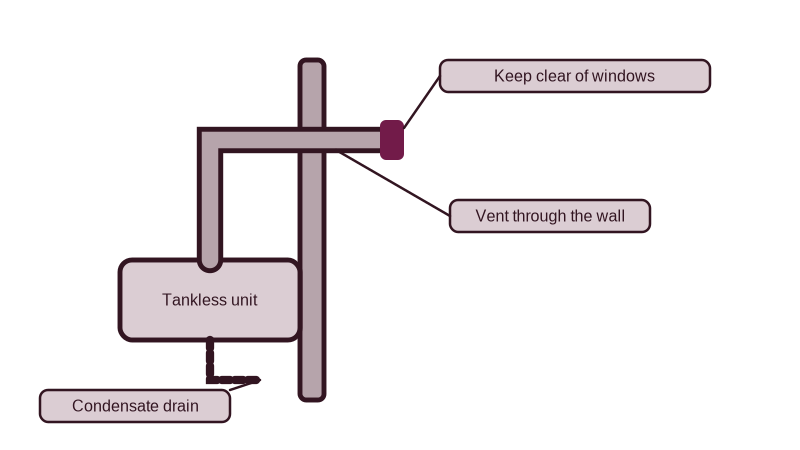
Condensing models are more efficient and use plastic venting, with a small drain to carry condensate to a suitable drain, often with a neutralizer. Non-condensing models vent through metal pipe and run hotter. Ask which type is being quoted and where the vent will exit the house.
Carbon monoxide is the safety reason. A tankless unit that is badly vented can put exhaust into the home. A CO alarm near sleeping areas and near the water heater is sensible with any gas appliance, and the plumber should explain testing at commissioning.
Does a tankless installation need a permit?
Yes. California generally requires a permit and an inspection for a water heater replacement, and for a gas line change as well. In the city of Thousand Oaks the permit goes through City of Thousand Oaks Building and Safety. Unincorporated areas such as Lake Sherwood and Hidden Valley go through the Ventura County Resource Management Agency.
Ask who will apply for the permit. Any plumber offering to skip it is a warning sign. The inspection protects you and matters when you sell. We have not confirmed office hours or fees for the Thousand Oaks office, so check with the building office directly. The county office lists counter hours on its website.
California expects the heater to be installed to current energy and safety rules, which may include things like the condensate, the venting and gas shut-off requirements. The plumber should know what applies to your address.
How much does a Rinnai installation cost?
We cannot give a sourced figure. The price depends on the model, whether the gas line is upsized, venting, condensate drain, permit fees, wall access and whether the unit replaces a tank in the same spot. Get written quotes from more than one plumber, itemized so that you can compare gas, venting and unit separately.
For a general idea of what drives tankless prices, read our tankless installation cost guide. For the tank versus tankless decision see tank vs tankless water heaters.
A tankless unit may qualify for utility or state rebates. Programs change, and we have not verified any for Thousand Oaks, so ask your gas provider and the plumber before you buy.
What maintenance does a Rinnai need?
Each year a tankless unit wants a flush to clear scale, and its filters and inlet screens need cleaning. Hard water speeds scale buildup, which can trigger error codes. The plumber should explain the flush schedule for your unit. Rinnai manuals describe it, and many installers fit service valves so flushing is simple.
For a unit that throws an error code or runs cold, our Rinnai tankless repair page lists what to check. We have not checked water hardness reports for any specific street, so ask your supplier or watch for scale.
Common questions
How much time does a Rinnai installation need?
Replacing a unit in the same spot often takes one day. A new location with gas upsizing and fresh venting can take longer, and the permit and inspection can add days. Ask the plumber for a schedule that includes the inspection, and expect the hot water supply to be interrupted for some of the day.
Which questions should I put to an installer?
Ask for the contractor license number and check it at cslb.ca.gov. Raise gas line sizing, venting, who applies for the permit, what the quote includes and what the manufacturer warranty requires. Get an itemized written quote before any work begins, and keep a copy for your records.
Must I be at home during the install?
Yes, at least at the start and the finish. The plumber needs access to the old heater, the gas meter area and the wall where the Rinnai goes, and you must approve any change to the quote. It is also wise to be there for the inspection if it is booked that day.
Will a tankless heater fit where my tank is?
Sometimes. It is smaller, but venting and gas sizing may change what is possible. Tight garage closets and attic spaces are common in older homes. A plumber has to check clearances, venting route and gas supply before confirming that a swap is practical.
Is tankless better than a tank heater?
The answer turns on your hot water habits. Tankless provides endless hot water within its flow limit and saves floor space, but costs more to install, especially if gas work is needed. A tank is simpler and often cheaper up front. Our comparison page lays out the trade-offs, and Conejo Plumbing Pros can arrange quotes for either.