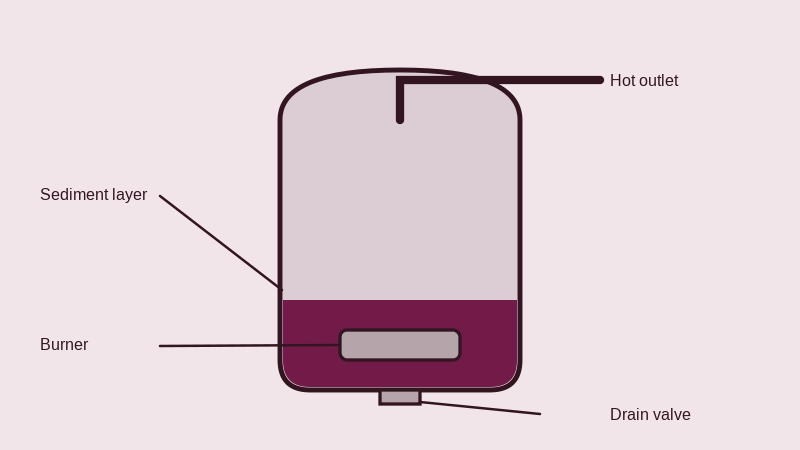
When a water heater stops heating, runs out too fast or makes noise, a plumber is rarely puzzled. Usually a handful of parts is to blame, and some checks are safe for any owner. This article belongs to our water heater repair and replacement section for homes in Thousand Oaks and the Conejo Valley, and follows the order of a real diagnosis: power or fuel, then heat source, then safety parts.
It covers tank heaters, gas and electric, and touches on tankless units. Whenever the law or safety requires a professional, as with gas piping, we say so and stop the DIY advice there.
How do I fix a heater that gives no hot water?
Begin with the supply. With an electric unit, check the breaker and the thermostat reset button first. On a gas heater, confirm the gas control is on and the pilot is lit. If those are fine, the fault lies in a heating element, thermostat, thermocouple or gas valve, which a plumber should test.
On an electric tank, flip the breaker off and on. Behind the upper access panel sits a red reset button; with the breaker off, push it once. A reset that keeps tripping signals a bad element or thermostat. A gas tank calls for the relight instructions printed on the unit; if the pilot goes dark the moment the knob is let go, suspect the thermocouple. Our page on replacing a thermocouple explains that part.
Why is my water heater not heating enough?
Lukewarm water suggests a weak heat source or a dip tube problem. Typical culprits are a failed lower element in an electric tank, a thermostat set too low, sediment insulating the bottom of a gas tank, or a broken dip tube mixing cold water into the hot outlet.
Compare the setting on the thermostat or gas control with the temperature at the tap. Keep the setting at a level that does not scald children or older people, and remember that hot water above a certain temperature can burn in seconds. Sediment is more of a problem where water leaves mineral deposits. A heater with years of service that now delivers short showers may simply be ageing out, and the water heater lifespan guide helps you judge.
What do strange noises and leaks from a water heater mean?
Popping, rumbling or banging usually means sediment baked onto the tank bottom, which traps steam. Hissing near the top or the relief valve can mean pressure or a failing valve. Leaks are more serious: a drip from a fitting may be fixable, but a tank that weeps through its body has failed.
Work out where the water is coming from. Wet connections, a loose drain valve or a weeping relief valve can be repaired. If the tank base is wet and the water seems to come from underneath the jacket, the inner tank has rusted through and needs replacing. Close the cold supply plus the power or gas, then follow the leak repair guide for the safe order of steps.
What maintenance keeps a water heater working?
Once a year, draw off several gallons through the tank's drain valve to flush loose sediment. Check the relief valve, look for rust at the fittings, and keep space around the heater clear. In some tanks the anode rod is the first part to wear, guarding the tank's steel, and replacing it can add useful life.
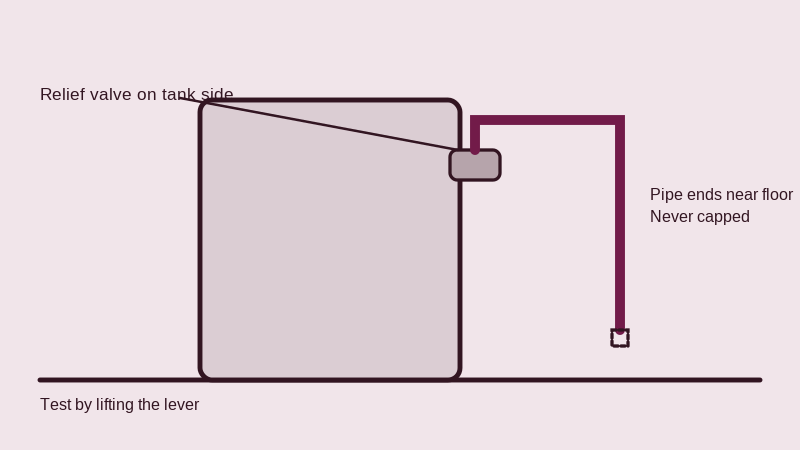
Test the temperature-and-pressure relief valve by lifting its lever briefly so water runs to the drain pipe, but only where you can see the discharge point and the test is safe. If it will not reseal, the valve needs replacement, and our guide on relief valve replacement shows what that involves. Our page on the anode rod explains how to tell when it has worn out. Earthquake strapping is worth checking too, and the plumber can confirm that yours is secure.
When is a plumber needed for a water heater?
Bring in a plumber for any gas smell, a leaking tank body, a relief valve that keeps discharging, an electric reset that trips repeatedly, a pilot that will not hold after a new thermocouple, or any work on gas piping. Gas and permit work is not DIY.
If gas is in the air, leave the building and reach SoCalGas on 1-800-427-2200 from outside, or 911 if someone is at risk. Do not relight a pilot in any room that smells of gas. For electric heaters, never open panels with the power on. For everything else, put the details on the quote form, and a local plumber will be lined up to visit. For urgent faults, see our emergency water heater repair page for what to do first.
When should I repair and when should I replace?
Repair when the heater is young and one part has failed. Replace when the tank leaks, is well past its normal lifespan, or the repair would cost nearly as much as a new unit. A leaking tank cannot be sealed, and an old heater tends to fail again soon after a fix.
Ask a plumber to give you both prices in writing when the choice is close. Costs of swapping a hot water heater in Thousand Oaks sets out the price drivers. If you are replacing anyway, think about tankless, since the venting and gas sizing differ. Check with the City of Thousand Oaks Building and Safety office whether a permit applies to a replacement, and ask the plumber to include it in the quote.
Common questions
How long does a water heater repair take?
Minor fixes like a new thermostat, element or thermocouple generally need one to two hours. Replacing a valve or fitting takes about as long. A full tank replacement occupies most of a morning or longer. Access, venting and code updates affect the time, and the plumber gives an estimate once the heater has been inspected.
What should I ask a plumber before a heater repair?
Ask whether the quote covers parts and labor, what warranty comes with the parts, whether repair or replacement is recommended and why, and what the total would be for each. Raise permits and disposal of an old tank, and confirm which business will do the work.
Must someone be home for the repair?
Yes. An adult has to answer the door, point out the heater, approve the price and confirm the finished work. The plumber also needs access to the water, power or gas shutoffs. If you cannot attend, name an adult and tell us when you send your request.
Can I relight a gas water heater pilot myself safely?
Often, if the unit carries instructions and no gas can be smelled. Follow the label exactly, wait the stated time before lighting, and stop if the pilot will not stay lit. A gas smell at any point means leaving and contacting SoCalGas from outside. Anything involving the gas line itself is for a contractor.
Is tankless water heater repair a DIY job?
An owner can handle basic upkeep, like cleaning the inlet filter, by following the maker's manual. Error codes, gas settings, venting and heat exchangers are specialist work. Our guide to tankless unit repair explains what the codes usually mean and when to stop. Beyond the filter, bring in a plumber who knows the model.