A gas tankless water heater means mounting a high-output burner on a wall, supplying it with enough gas, venting its exhaust safely, and often adding a drain for acidic condensate. Most of the quote sits in those four items, not in the unit itself. The water heater plumber page lists the other heater work we can arrange, and this guide covers gas units only.
Does a tankless water heater need a 3/4 inch gas line?
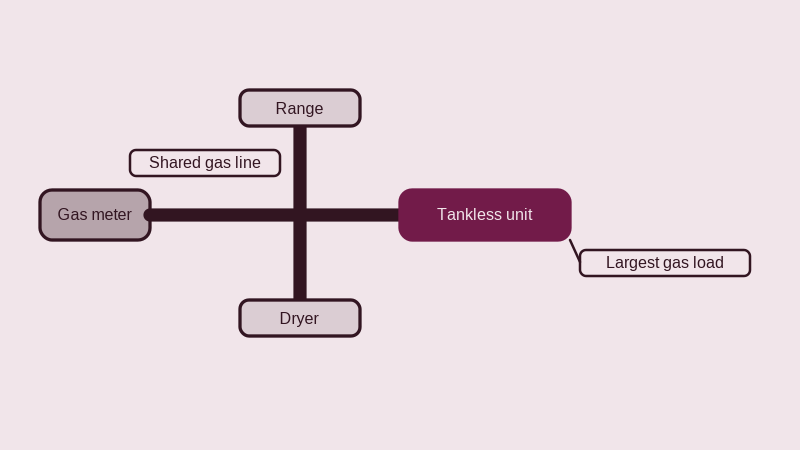
Often, though not always. At peak, a tankless unit draws much more gas than a tank model does, so a small line can starve it, and the heater will cut out or run cold. The correct size comes from the manufacturer's table, which weighs the unit's rating, the pipe length and any other gas appliances on the line.
The plumber measures the run from the meter to the new unit, totals the load of every gas appliance in the house, and compares that to what the existing pipe can carry. In many homes the tank heater used a half inch line that suited its small burner, and the tankless unit calls for a larger one over some or all of the run. Ask the plumber to demonstrate the sizing rather than just calling it fine.
The flexible connector at the unit must also be rated for the load. The guide to the flexible natural gas line shows why connector size matters. SoCalGas serves about 24,000 square miles of Central and Southern California, and if gas service reaches your street, it is the utility to contact about meter capacity or a gas-related emergency.
How does a gas tankless installation change your home?
Apart from the gas line, a tankless unit alters four other things in the house, and each shapes the quote. Venting, combustion air, condensate drainage and electrical supply all need a plan before work begins, so the plumber should go through them with you and write each into the scope.
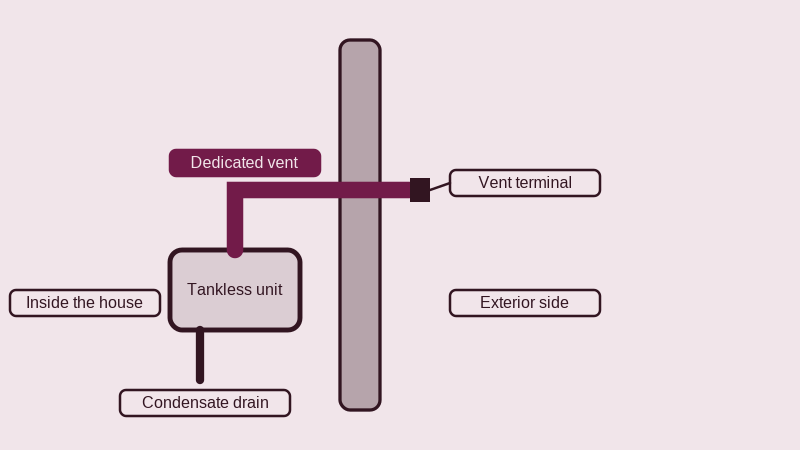
- Venting: many gas tankless models need a dedicated vent run, in stainless or approved plastic for condensing types, sized and sloped per the manufacturer. Existing tank vents are usually not reusable.
- Combustion air: indoor units need adequate air, while outdoor-rated units go on an exterior wall.
- Condensate: condensing models make acidic water that must drain somewhere, often through a neutralizer.
- Electricity: even a gas unit needs a power outlet for the fan and controls.
Location is where the Conejo Valley matters. In many homes the existing heater occupies a garage corner or a closet with a short roof vent, so a new vent path can mean cutting through a ceiling or heading to an exterior wall. Older homes in Thousand Oaks, Newbury Park, Casa Conejo and Wildwood may have older gas piping that a plumber wants to inspect before adding load. Newer homes in Dos Vientos and North Ranch may have a layout that fits more easily.
The unit also changes how hot water feels. Tankless heaters deliver hot water without limit in principle, though flow is capped, so two showers plus the washer at once can exceed the unit's rating. The plumber should size the model to your fixtures. The tank versus tankless guide covers that choice.
Does a tankless installation need a permit?
Water heater jobs normally need a permit, and a gas appliance with a new vent gets inspected. Inside Thousand Oaks that runs through City of Thousand Oaks Building and Safety, and in unincorporated parts of Ventura County through the county's Resource Management Agency. Ask the plumber which of you applies for the permit and whether inspection is covered.
Gas piping and gas appliance work belongs to a contractor, not a homeowner. Never move gas lines, loosen a union, or fit a connector yourself. Afterward the plumber should pressure-test the gas connections, check for leaks by an approved method, verify the vent, fire the unit, and show you the settings. Have the gas pressure and temperature setting written down.
If you ever smell gas, leave the building and contact SoCalGas at 1-800-427-2200 from outside. Use 911 if anyone is in danger or SoCalGas cannot be reached.
What to do next
Gather these details prior to requesting a quote: the age and size of the current heater, where it sits, the existing gas pipe's size if legible, the number of bathrooms and your typical peak use. A photo of the heater, its vent and the gas meter helps a plumber judge the job.
Then compare quotes on scope. One bid may include the vent, drain, permit and wall patching, while another leaves them out. For price drivers see installation tankless water heater cost and tankless water heater replacement cost. Brand pages cover Rinnai and Navien installs. Submit the job through the quote page.
A tankless unit also needs upkeep: flushing the heat exchanger on a schedule, which matters more in areas with mineral-heavy water. Ask the plumber to install isolation valves so flushing is simple, and leave the manual and settings with you.
Unsure a gas unit is the right choice? The gas tankless versus tank guide weighs the two against each other.
Common questions
How long does a gas tankless installation usually take?
Swapping a tank for another tank is shorter work than a tankless conversion. A larger gas line, a new vent and a drain can fill a day or more, with a permit inspection on top. Ask the plumber for a schedule and for the length of the hot water outage, and plan for a gap.
What should I ask before hiring someone to install a gas tankless heater?
Ask about the gas line sizing, the vent type, the condensate drain location, who applies for the permit, what the price includes, whether isolation valves for flushing go in, and the labor warranty. Ask to see the contractor's California license number too. If a plumber cannot explain the sizing, try another.
Does someone have to be home during the installation?
An adult needs to be present at the start to agree where the unit goes, and again at the end to watch it tested. Gas and water are off for part of the day, so schedule meals and showers around that. The plumber may need to reach the meter, the attic or the roof, so mention locked gates and pets.
Can I use my existing vent?
Usually not. Gas tankless units run hotter or wetter than a tank's flue, and the manufacturer specifies the vent material, diameter and length. Using an old flue can let condensate corrode it or let exhaust leak. The plumber should check the model's instructions and show you the planned vent route before work begins.