Anyone searching for a tankless price wants a number, and we would rather be straight than print one we cannot source. No published local price table we could open backs a figure for the Conejo Valley, so this page explains what the cost is made of, and the plumber's written quote carries the real amount. To see the wider set of options first, start from Conejo Plumbing Pros and our overview of fixing or replacing a water heater.
How much does a tankless replacement cost?
Add the unit, the labor and whatever has to change around it. Swapping in the same model and fuel type, reusing the existing gas, water, venting and electrical connections, sits at the cheap end. A gas line upgrade, a new vent, a different fuel, a water treatment device or a relocation pushes it up.
A quote breaks down into four lines: the heater itself, installation labor, parts like valves and fittings, and the permit plus disposal. Even a plumber who gives one lump figure should be able to say what each of those covers. A price that does not mention venting or the gas line on a gas unit deserves a question.
Because we cannot print a verified range, the useful comparison is between written quotes for the same model and scope. Describe your unit on the quote form, and compare what comes back line by line.
What moves the price of a tankless swap?
Price is affected by fuel type, unit size, venting, gas line size, where the unit sits, any recirculation loop or condensate drain, and how old the current installation is. A bigger home with more fixtures needs a bigger unit, and relocating from indoors to outdoors needs new connections.
Gas units need combustion air and a vent suited to the model, while condensing units require a drain for their acidic condensate. A previous installer's shortcuts, such as the wrong vent material, mean extra work to bring the install to a safe standard. Electric units draw a lot of current, so a panel with no spare capacity changes the job.
Brand and flow rating matter, but they matter less than the install conditions. A flush-and-service on an existing unit costs far less than replacement, so confirm replacement is needed first. Our page on what water heater replacement costs compares tanks with tankless and shows a like-for-like swap in detail.
Does replacing a tankless unit require a permit?
Usually, yes. A permit and an inspection are common for water heater swaps, and a tankless install with venting or gas changes certainly needs them. The office that issues the permit depends on your address: City of Thousand Oaks Building and Safety, City Hall in Westlake Village, or the Ventura County Resource Management Agency in unincorporated areas.
The plumber normally applies, and the permit cost shows on the quote. If a quote lists no permit and the job involves gas or venting, ask why. An unpermitted install can complicate a home sale or insurance claim, and a failed inspection means paying for corrections.
Ventura County's Resource Management Agency posts counter hours of 8:00 AM until 4:00 PM on Monday, Tuesday, Wednesday and Friday, and 9:00 AM until 4:00 PM on Thursday. Confirm with the office serving you before relying on them.
Does a tankless swap include a gas line upgrade?
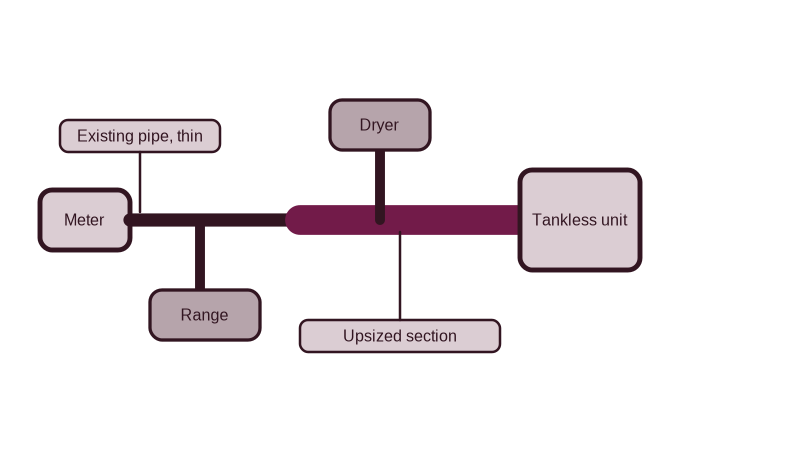
Often it does. A tankless unit burns a lot of gas at once, so the pipe that fed a tank heater may be undersized. The plumber measures the run, counts the other appliances sharing the line and sizes the pipe to the manufacturer's data. An undersized pipe has to be replaced.
Gas piping is work to leave to a contractor, and a permit is common. Do not attempt it yourself. Our page on what a plumber gas line costs explains what is involved.
If you notice gas near the heater, step outside and contact SoCalGas on 1-800-427-2200, or 911 when anyone is at risk. SoCalGas is the utility to contact on streets with gas service; the bill you pay will show which provider applies to your address.
How do tankless units and tanks compare over time?
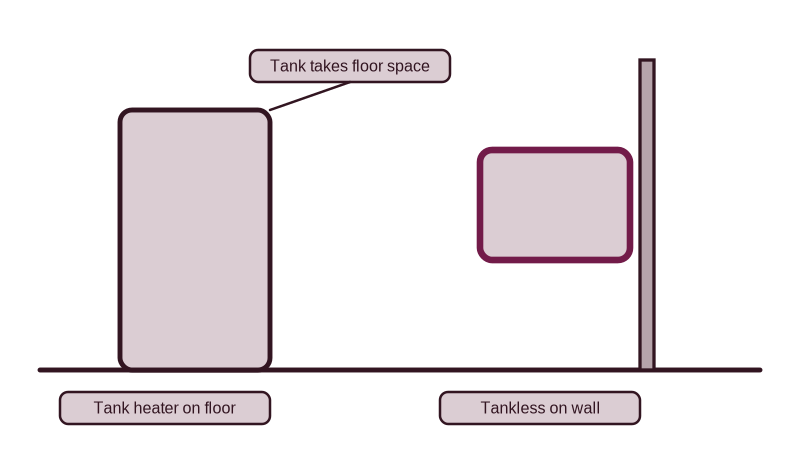
A tankless unit is pricier to buy and install, yet saves space, supplies hot water continuously and has no tank to rust. Tanks are cheaper up front and simpler to swap. Which wins on lifetime cost depends on usage, gas or electric rates and how long you stay in the house.
A tankless unit still needs care. Where water is hard, scale accumulates inside the heat exchanger, so the unit needs descaling on the maker's schedule. Skipping that is a common reason a young unit fails. Tanks, by contrast, need their anode rod checked, which you can read about in our guide to anode rods.
For a clear side-by-side, see tank versus tankless. Lifetime cost also depends on which gas or electricity provider serves your address and what they charge, so ask for the numbers before trusting anyone's claim of savings.
How do you compare tankless quotes fairly?
Ask every plumber to price the same model or specification, with separate lines for the unit, labor, venting, the gas line, electrical work, the permit and haul-away. Ask what the quote assumes about the existing connections and what happens if something else turns up. A quote that cannot say what it covers cannot be compared.
Be wary of unusually low prices that omit the venting or permit, and of vague quotes noting that extras may apply. Ask who pulls the permit, if the old heater is taken away, and whether the manufacturer's registration is handled for you.
Keep the quote in writing, dated, with what it includes. The general plumber cost page explains how to compare any plumber's rates, and the form is the fastest way to begin.
Common questions
How much time does a tankless replacement need?
A straightforward swap for a similar unit can take part of a day. Relocating the unit, running a new vent, upsizing the gas line or adding electrical work can push the job past a day, with water and sometimes gas off for part of it. Ask the plumber how many hours you will be without hot water.
Is it cheaper to repair a tankless heater than replace it?
Often, when the fault is a single part like a sensor, igniter or filter, or the unit just needs flushing. Replacement is reasonable if the heat exchanger has failed, repair parts are scarce, or an aging unit keeps racking up repair bills. Ask for both quotes in writing.
What do I ask before hiring for a tankless replacement?
Ask which model is recommended and why, what the quote covers, whether the gas line and venting get checked, who pulls the permit, how long it should last and what the plan is if something unexpected turns up. Also ask which manufacturer registration is needed and whether the old unit is hauled away.
Does someone have to be home for the swap?
Yes, an adult should give access, agree any changes and listen to the safety instructions at the end. The plumber needs the water off for a time and may have to enter a garage or closet. Move stored items away from the unit and its vent before the visit.