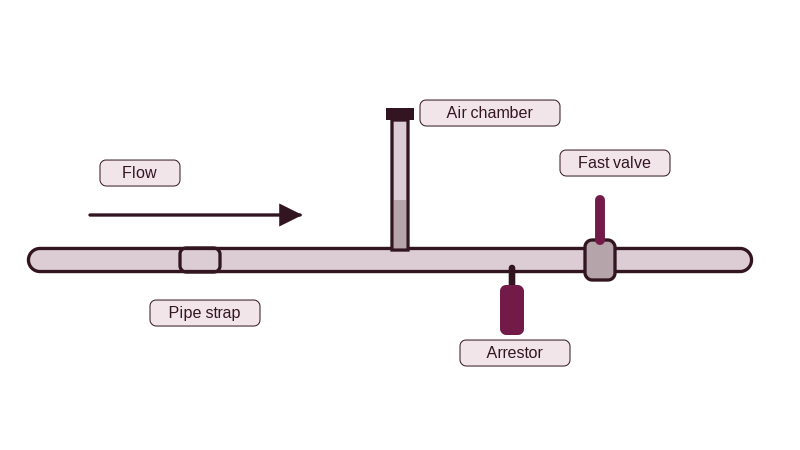
The water hammer sound is a sharp bang, thud or rattle in the pipes that comes right after you close a faucet or an appliance valve shuts. Flowing water carries momentum, so when a valve snaps shut, the water hits the stopped end and the shock runs along the pipe. It is common, usually curable, and worth fixing. Begin at Conejo Plumbing Pros to arrange a plumber visit, or send a price request.
What does water hammer sound like, and what causes it?
Water hammer sounds like a single hard knock, a series of rapid bangs, or a shudder in the wall, often just after a faucet, dishwasher or washing machine stops. It is caused by flowing water stopping suddenly. Usual triggers are fast-closing valves, high water pressure, loose pipes and air chambers waterlogged to the point that they no longer cushion the shock.
Learn the pattern, since it points at the cause:
- One bang when a single tap shuts: a fast-closing faucet, or a lost air chamber at that fixture.
- Banging when the washing machine fills or stops: the machine's solenoid valves close fast. See washing machine pressure regulators.
- Bangs everywhere at any time of day: high supply pressure, or a failed pressure regulator.
- A rattle without a bang: loose pipes tapping against framing as the pressure surges.
It is different from the sound of a gurgling drain or the ticking of pipes expanding as hot water runs through them, both of which are normal and harmless.
Can water hammer damage my pipes?
Over time, yes. Pressure spikes strain joints, fittings, washing machine hoses and valves, and can shorten the service life of the water heater and supply lines. Often it is merely a nuisance, but repeated hammering has been known to loosen fittings and start leaks. Act on it rather than ignore it.
Treat the noise as a warning light. A spike strong enough to shake a wall is working on every joint along the run. The danger is slow: a joint weeping for months behind a wall, or a supply line that bursts years sooner than it should. If you see damp spots near the noisy pipe, read our guide to knowing if a pipe has burst.
How do I locate where the noise starts?
Test one fixture at a time. Shut each tap off quickly and slowly, run each appliance, and note which action makes the noise. Read the water pressure by attaching a gauge to an outside hose bib. Check where pipes run through framing and whether they are strapped. This takes about half an hour and narrows the problem a lot.
A simple routine:
- Close every tap, then open and quickly close one tap at a time. Listen for the bang.
- Repeat with the dishwasher and washing machine.
- Screw a pressure gauge onto an outdoor hose bib and note the figure while nothing runs.
- Look over the pipes in the crawl space or garage for loose runs.
- Find the main shutoff and check whether a pressure regulator sits beside it, a brass fitting shaped like a bell.
A failed regulator is a frequent cause in homes with older fittings. Our page on water pressure regulator replacement explains the part and when to swap it.
What cures water hammer?
Fit the cure to the cause. Bring high pressure down with a regulator, install water hammer arrestors at the offending fixture or appliance, restore or replace air chambers, and strap loose pipes with cushioned clamps. Slowing a fast valve helps too. A plumber can install arrestors on the supply stops under a sink in a short visit.
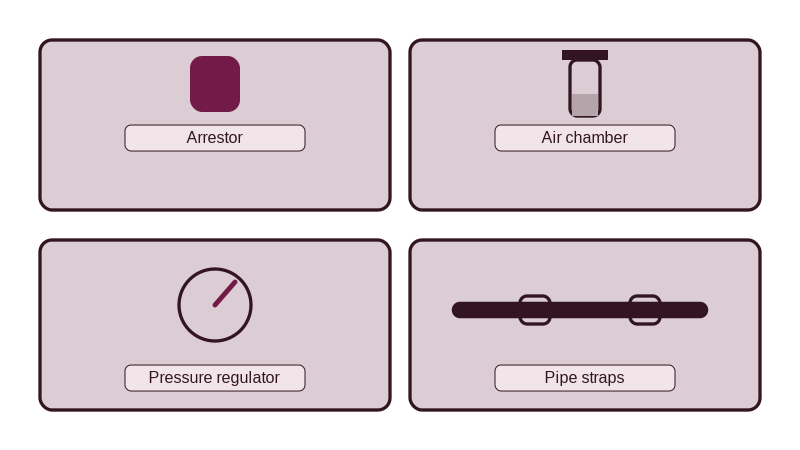
Taking each fix in turn:
- Arrestors. A small sealed device with a piston or bladder that absorbs the shock. They screw onto the supply near the fixture. They work for years, unlike a plain air chamber, which can fill with water.
- Air chambers. A capped length of vertical pipe above a fixture supply. Over time the trapped air is absorbed, and the chamber stops cushioning. Draining the system can recharge it: close the main, then open the taps at the top and bottom of the house so the pipes empty, shut those taps and bring water back slowly.
- Pressure control. If the incoming pressure is high, a regulator with a gauge at the main brings it down. Ask the plumber what setting they chose.
- Pipe supports. Add straps where pipes can move.
If you have to open a wall for any of these, a plumber should do it.
Can a pressure regulator reduce water hammer?
Yes, a good one often cures it. High supply pressure makes every closing valve hit harder, and a regulator at the main holds pressure inside a safe band. Many homes also fit an expansion tank at the water heater, which soaks up the pressure growth from heating. A failed regulator or a missing expansion tank often shows up first as noise.
Whether your house has a regulator depends on its age and history, since one may have been replaced, removed or never fitted. Hillside lots can see higher static pressure at the lower end of a slope, so a reading on your own hose bib is more helpful than assuming. Our pages on low water pressure and regulator sizes go further.
When is it time to bring in a plumber for hammering pipes?
Hire one if the hammer is loud, affects several fixtures, began suddenly, or comes with leaks, a spinning meter or pressure that seems too high. Hire one as well if you cannot find a pressure gauge or are unsure about closing the main. Any fix that involves cutting pipe, or any work near the water heater's gas line, belongs to a contractor.
To request a visit, say when the noise occurs, which fixtures are involved and what you already tried. A precise description means less time on site. We read the form on weekdays from 9am until 5pm.
If your neighborhood is on our list, the where we work page shows the areas, from Westlake Village to Oak Park.
Common questions
Will the hammering stop on its own?
Rarely. Water hammer usually continues and can worsen as air chambers lose their cushion and fittings loosen. A temporary fix is to drain the system so air returns to the chambers, which may calm it for a time. For a lasting fix, find and treat the cause, whether that is pressure, a fast valve or loose pipe.
Is water hammer the same as pipes knocking when the heater runs?
No. Ticking and creaking while hot water flows is thermal expansion of pipes rubbing against supports, which is normal. A bang that happens when a valve closes is hammer. A rumble from the tank itself is sediment boiling at the bottom, and that points to a flush, as covered in our water heater timing guide.
Can I fix a hammering washing machine myself?
Often yes. Hammer arrestors made for washing machines screw between the wall valve and the hose, and take minutes to fit. Turn off both valves first and check for drips afterward. If the valves themselves are stiff or leaking, or if the noise continues, have a plumber check the pressure at the main.
Does a tankless water heater cause water hammer?
It can, because the unit's internal valves open and close quickly, and flow stops abruptly when you shut a tap. A tankless installation also removes the buffer a tank provides. Arrestors near the unit or at fixtures usually solve it. See our tank vs tankless guide for other trade-offs.
What is the price of stopping water hammer?
It varies with the fix. Arrestors are cheap parts, while swapping a regulator or reworking pipe runs inside walls costs more. We hold no sourced prices, so numbers are left out. The real figure comes in a written quote once someone has seen the site. Weigh quotes item by item, and start at the price request page.