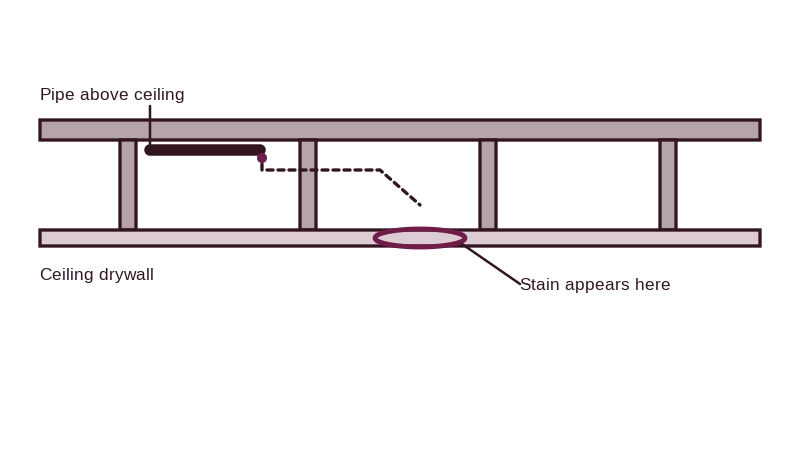
Textbook marks of a ceiling leak include a brown or yellow stain, peeling or bubbling paint, a patch that sags, drips and a musty smell. Subtler ones include the sound of running water with every tap closed and a bill that keeps climbing. Spotting any of these means finding the source and closing the supply. Our home page holds the request form for when you need a plumber.
The ceiling shows where water came out, and that is often far from where it got in. Water follows joists and pipes before it finds a place to drip. Read the stain as a clue, not an address.
How do I recognize an early ceiling leak?
Watch for a discolored patch with a ring, soft or sagging drywall, peeling paint, bubbling texture, a damp or musty smell, and small drips or drops on the floor. A stain that grows after a shower or wash cycle points to plumbing. One that appears after rain points to the roof. A stain that stays the same size could be an old leak that has dried.
Press a stain gently with a dry hand. Cool, damp or spongy means it is active. Mark the stain's edges with a pencil and a date, and recheck. A moving edge means a live leak. Look in the attic or crawl space above when you can do so safely. Our ceiling water leak guide covers the response.
What noise does a burst pipe make?
Expect running water or hissing behind a wall with every fixture off, rapid dripping in the ceiling, or banging when pressure surges. A thump or hammering after a valve closes is water hammer, which is a different problem. Silence does not rule out a leak, because pressurized pinholes can be quiet.
Stand in a quiet house with the water heater and appliances off and listen along walls and under ceilings. Hold an ear against the wall near pipes. A water meter spinning with no use confirms flow somewhere. A fuller checklist is on our page about knowing if a pipe burst.
What are the typical reasons a ceiling drips?
Common reasons include a supply or drain pipe leaking above the ceiling, a failing shower pan or tub, a bad toilet seal on the floor above, a roof leak, a clogged air conditioner drain and an attic water heater. Condensation on cold ducts also drips and mimics a leak.
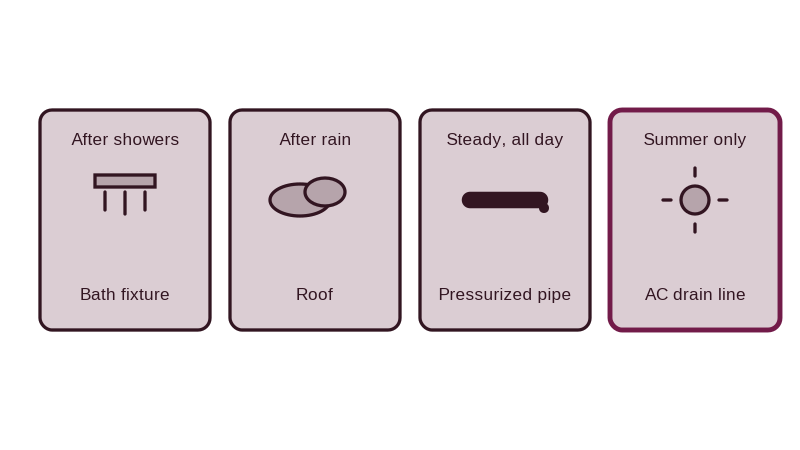
Sort them by timing. Water after upstairs showers suggests a bath fixture; after rain, the roof; steady with no pattern, a pressurized pipe; only in summer, possibly the AC drain. Before opening anything, a plumber follows the path using a moisture meter or a thermal camera. If the stain sits under a light, treat it as an electrical hazard first; see water leaking through a ceiling light.
Why do copper pipes develop pinholes?
Copper pinholes form from corrosion on the inside or outside of the pipe, often from water chemistry, high velocity, soldering flux left inside or contact with other metals. Pinholes start tiny and spray a thin jet. They are common in copper that is decades old.
To spot one, look for a green or white crust along the pipe, damp insulation and a thin line of water. A clamp can hold briefly, but the section should be replaced. Several pinholes mean a tired line, and replacing a longer run may be wiser. Read how to fix a copper pinhole leak for the repair, and why a pipe bursts for the causes.
A stain does not always mean an active leak; ceiling spots that are not leaking explains the dry-stain cases.
How do I know if a pipe has burst outdoors?
Outdoors, watch for soggy ground in dry weather, grass greener or lusher than the rest, pooling water, a pressure drop and a damp spot near the meter or foundation. Sinkholes or cracks in a driveway over a buried line are a late sign.
A break in the line between the meter and the house is usually the owner's responsibility, while the supplier covers its own side, so confirm with yours. Close the main, then watch the meter for movement. Check local rules before digging near large trees. On big lots, long underground runs mean a leak may take a while to show. For buried lines, see spotting a burst pipe underground.
Why would a water bill be high with no leak in sight?
A hidden leak is the usual reason: inside a wall, beneath a slab, in an irrigation line or in a toilet that runs silently. According to the EPA, a typical home loses upwards of 9,300 gallons annually to leaks, and the meter test it suggests is simple: use no water for two hours and see if the reading changes.
Try the toilet dye test too: put food coloring in the tank, and if color reaches the bowl within 10 minutes, the flapper leaks. Check irrigation timers and hose bibs. A meter that still moves means the leak is in the house line. Follow the steps in a high bill with no leak in sight.
Common questions
Does every ceiling stain come from plumbing?
No. Roof leaks, duct condensation, a blocked air conditioner drain and a leaking upstairs fixture can all leave the same stain. Timing helps: rain points at the roof, showers at a bath fixture, and a steady drip at a pressurized line. A plumber can narrow it down further.
What is the first move on seeing a stain?
Outline the stain's edge, check whether it is wet, close the supply to the fixture above if you know which one it is, and take photos. A bulging ceiling or a stain under a light means staying clear and switching off the breaker. After that, send a repair request.
Can a ceiling leak cause mold?
Yes. Damp drywall and insulation can grow mold within days to weeks if it stays wet. Drying fast matters more than hiding the stain. If the area stays damp or smells musty, tell the plumber so the wet material is removed.
Is a ceiling leak covered by homeowners insurance?
Often only sudden damage is covered, not slow leaks from wear. Read your policy and record the damage with dated photos. Contact your insurer ahead of major repairs. Policies differ in what they include and exclude, so the insurer's own wording matters more than any general rule. See insurance and burst pipes for what to ask.
How much time does tracing the source take?
An easy case can be traced in under an hour. A hidden leak that calls for a thermal camera, meter test or pressure test runs longer. Expect the plumber's estimate once the first look is done. Our leak detection page shows how detection is priced.