Repiping a house is a one-time event, triggered by supply pipes that are failing or that are a material with a record of failure, rather than by the calendar. For a newer home that might mean never, and for a 1970s tract house perhaps once in its lifetime. The better question is whether your pipes are close to wearing out. Our repiping page explains the job itself. Here you can decide when to consider it, using pipe type, age and the symptoms that signal trouble, with notes for homes in Thousand Oaks and the Conejo Valley.
How long does each pipe material last?
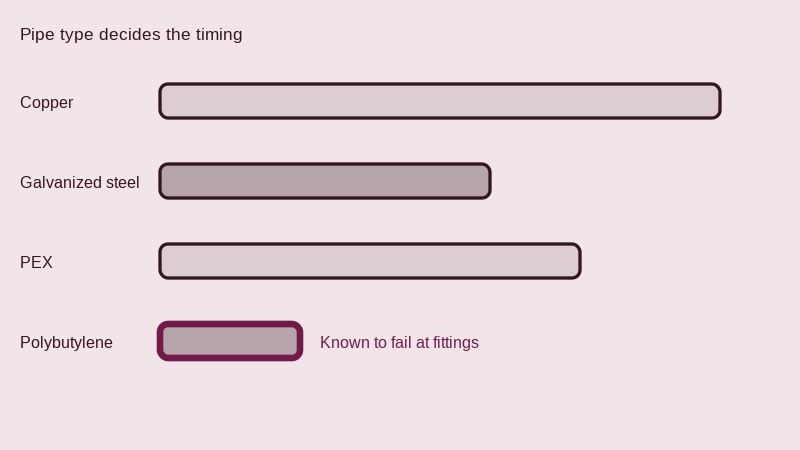
Lifespans depend on material and water conditions. Copper frequently lasts for decades, galvanized steel tends to fail after several decades, and polybutylene, found in many homes constructed from about the end of the 1970s into the mid 1990s, has a poor record and is usually replaced. PEX is newer, with manufacturer-rated long lives but a shorter history.
These are rough guides, not promises, and water chemistry, pressure and installation quality can shorten or stretch them. A copper system in good condition can outlast the house's paint. The same copper in aggressive water can develop pinholes much sooner.
Check what you have. Copper is reddish brown or green, galvanized is dull gray and magnetic, polybutylene is gray, blue or black flexible plastic, and PEX is red, blue or white flexible tubing. Inspect the spots where pipes meet the water heater, run under sinks and reach the main. The two problem materials each have a guide: one on galvanized pipe replacement and one on polybutylene pipe replacement.
What age of house usually needs repiping in the Conejo Valley?
There is no cutoff year, but the pattern is consistent. Older ranch homes in places like Casa Conejo and Wildwood may have original copper that is aging. Tract homes from roughly the 1960s to the 1990s around Thousand Oaks and Newbury Park may have copper that is pinholing or, in some, polybutylene. Newer homes in Dos Vientos and North Ranch rarely need it.
That is a general picture, not a survey of any street. Certainty comes only from examining your own pipes, checking the water pressure and getting a plumber's opinion. We have not confirmed the plumbing materials used in any specific Thousand Oaks development, so treat the eras above as clues rather than facts about your house.
What symptoms mean it is time to repipe?
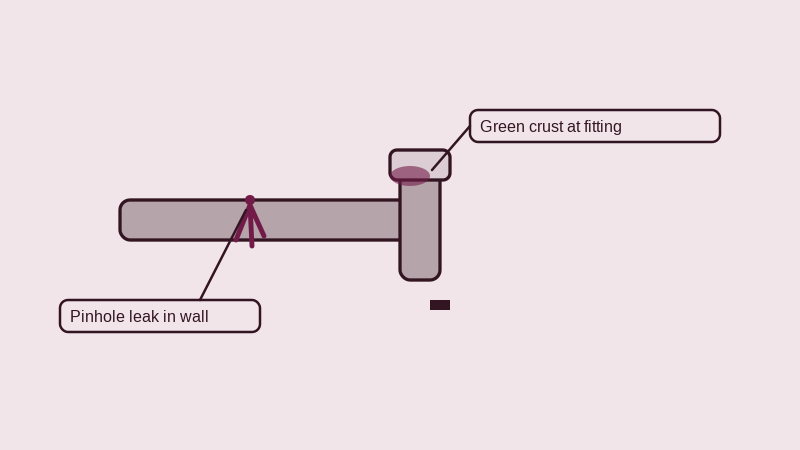
Main signs include repeated pinhole leaks, discolored or metallic-tasting water, pressure falling in several rooms, visible corrosion on pipes or fittings, and a plumber saying the material is failing. One leak does not mean a repipe. Two or three in a year on different lines often does.
Watch for patterns rather than single events:
- Leaks in different spots within a short time, not one failed joint.
- Water that runs brown or orange after sitting, especially from the hot side.
- Pressure that has slowly dropped across bathrooms and the kitchen, not just one tap.
- Green crust at copper fittings, or flaking on galvanized elbows.
- A water bill that keeps climbing though no leak is visible. Our page on the causes of a high water bill includes the meter test.
Wet drywall, stained ceilings and running water heard overnight are the more urgent signals. If you see them, shut the main and ask for a leak check first, since a leak location can decide whether a spot repair is worth doing.
Which is better, a spot repair or a full repipe?
Repair when one failed section sits in otherwise sound pipe. Repipe when failures keep appearing, the material has a bad record, or the total of repeated repairs and wall damage nears the cost of replacing everything. A plumber should show you where the pipe is failing, ideally with photos, before recommending the bigger job.
Think about drywall as well as plumbing. Each leak means a hole, a patch and a paint match. If the pipes are in your attic or slab, access matters too. A plumber who can fish PEX through walls with small openings may change the numbers. Our PEX vs copper comparison explains the trade-off.
Ask what is being replaced. Some repipes cover only the lines inside the house; others also include the line from the meter. Some leave old shut-off valves in place, which is a missed chance, since valves at each fixture and a new pressure regulator are cheap to add while walls are open.
What are the benefits of repiping, and what does it involve?
The benefits are fewer leaks, steadier pressure, cleaner water from corroded lines, and less worry about hidden damage. The job involves shutting water off for a day or more, opening walls in several rooms, running new lines, testing and patching. Plan for appliances such as the dishwasher and washer to be disconnected and reconnected.
A permit is generally part of a repipe. In the city of Thousand Oaks that is City of Thousand Oaks Building and Safety. For unincorporated areas the Ventura County Resource Management Agency handles it. Find out from the plumber who pulls the permit and which inspection follows.
We do not do the plumbing. Conejo Plumbing Pros arranges for a local plumber to visit your home with a written quote. For jobs of $1,000 or more, California generally requires a contractor license, and you can check one at the state board's site, cslb.ca.gov. Then you can compare bids on the same scope.
Can a repipe be postponed?
Sometimes. With no active leaks and a sounder pipe material, you can wait and monitor. Active pinholes, or polybutylene, make waiting a gamble with water damage that can cost more than the repipe. A plumber can run a pressure test and a camera check to judge how much time you have.
Insurance matters here. Many policies pay for sudden water damage but exclude slow leaks or wear, and an insurer may ask the age and type of your piping. A general picture is sketched in our explainer on insurance and pipe bursts.
If you want a plumber's view on your pipes, send a note through our quote form with the home's age, the pipe material if you know it, and the symptoms.
Common questions
How many days will a repipe take?
Most houses need between one and several working days, depending on size, floors, access and pipe material. Water is usually off for much of each working day. Drywall patching and painting are often separate trades and can run longer. Request a schedule showing when water returns each evening.
What do I ask before hiring for a repipe?
Get the contractor license number and check it at cslb.ca.gov. Also get a written quote that lists materials, permit and wall repair, says who handles patching, and describes how the system is tested. Ask what remains of the old pipe afterward. Compare at least two bids on the same scope.
Do I have to be home during a repipe?
Someone should be there at least at the start and the end, to open every room, the water heater and the shut-off, and sign off on the finished work. Many people keep out of the way during the day. Before the crew arrives, shift furniture and valuables clear of the walls to be opened.
Does a repipe add value to a house?
It can help in a sale, since buyers and inspectors worry about old or problem piping, and a new system removes that worry. No figure can be given here for any Thousand Oaks home. Keep the permit record and paperwork, since they show the work was inspected.
Is it normal to repipe a 30-year-old house?
Not automatically. A thirty-year-old home with sound copper and steady pressure may never need it. If it has polybutylene or repeated pinholes, repiping becomes worth serious thought. Start with an inspection and a pressure reading before you decide. Age alone is a weak guide, since pipe material, local water and the quality of the original work count for more than the calendar.