A two handle faucet drips because a rubber washer, an O-ring or a cartridge inside one of the handles has worn out, or because the valve seat it presses against has been scored by minerals. Replace the part and the drip ends. The steps below suit kitchen, bathroom and tub faucets. For the rest of the sink area, see plumber for garbage disposal and sink repair; the home page lists the other jobs.
Which design is your two handle faucet?
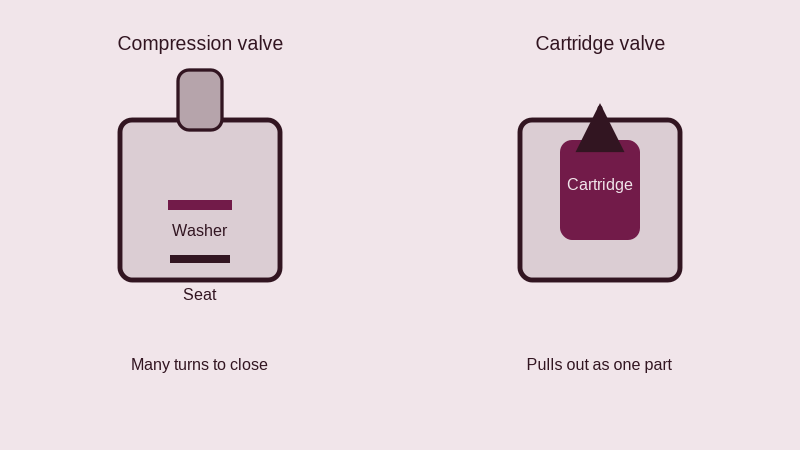
Two handle faucets are either compression type, where the handle makes many turns and a rubber washer closes against a seat, or cartridge or ceramic disc type, where the handle moves a quarter or half turn. Count the turns from fully off to fully on. Many turns means compression, and a short turn means cartridge or disc.
The type decides which parts to buy. Compression faucets take washers, O-rings and sometimes a new seat. Cartridge faucets take a replacement cartridge matched to the brand. Ceramic disc faucets take a cartridge with discs inside. Photograph the faucet and the old part when shopping, since parts differ even between similar-looking models. A faucet from the 1960s or 1970s, common in older tract homes in Thousand Oaks and Casa Conejo, is often compression type with a worn seat.
How do you replace the washer, O-ring or cartridge?
On a compression faucet, remove the rubber washer from the stem's bottom, press on a matching one, and replace the stem's O-ring too. A cartridge faucet works differently: pull the old cartridge directly out, then push the new matching cartridge in with the same orientation. Put it together and test.
Match the size exactly, because a washer slightly too big or small will leak again. If the washer came out flattened or cut, inspect the seat inside the faucet body. A rough seat shreds a new washer. A seat dressing tool from a hardware store can smooth it, or a seat wrench can replace a removable seat. Silicone plumber's grease on O-rings helps them slide and seal. Hand-tighten the packing nut, then a small turn with the wrench, and no more.
When should I stop and ask a plumber?
Get a plumber involved if the stop valves refuse to shut, corroded parts snap under a wrench, water shows up behind or under the sink, or you are unable to tell which faucet type you have. Do the same if you are not confident turning the water off and on safely.
Plumbers can replace the faucet and the valves in a single visit, which is often better for an old fixture. In your request, describe where the faucet is, its brand if known, how it leaks, and attach photos. Use the quote form, or look through the areas page to see where we arrange visits.
How much water does a dripping faucet lose?
A surprising amount, since the drip never stops. The EPA notes that leaks in a typical household can lose upward of 9,300 gallons of water a year, and a faucet is one common source. Ending a drip saves water and prevents staining in the sink.
Noise is another cost, as is wear on the sink finish from constant dripping. If replacing the faucet is starting to make sense, our page on the price of installing a faucet shows what drives that figure. Other drips have similar causes; see the pages on single handle faucets and an outdoor faucet.
How do you shut off the water and dismantle the handle?
Close the two small stop valves under the sink, then open the faucet to drain the line. Pop the decorative cap off the handle, take out the screw below it, lift the handle away, and loosen the packing nut or bonnet with an adjustable wrench. The valve stem or cartridge then slides out.
Spread a towel across the sink basin to cover the drain and catch any dropped screws. If the stop valves below the sink are stuck, stop and close the house's main water valve instead, or have a plumber replace them. Never force a seized valve; it can snap and leave the water impossible to shut off. Set the parts out in the order removed so reassembly runs in reverse.
What if the drip continues after a new washer?
Most often the cause is a damaged valve seat, the wrong washer size, a loose packing nut, a worn O-ring, or a handle that does not close fully. Mineral scale on the seat can also cause drips. Pull the stem again and inspect the seat for scoring.
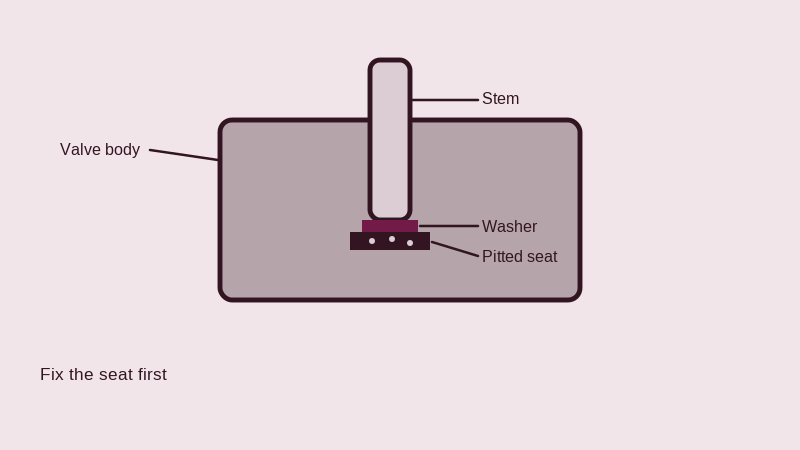
Imported water carries minerals that can crust over metal surfaces, and the amount depends on your water supplier; the water quality report from your supplier lists what your water contains. If scale is stubborn, soak small metal parts in vinegar for a while. If the seat is pitted, dressing or replacing it solves the drip. A faucet that keeps leaking at the base after all of that may have a cracked body, and replacement is cheaper than repair.
Common questions
How much time should a two handle faucet repair take?
A confident beginner usually needs about an hour per faucet, counting a hardware store trip for parts. A seized valve or damaged seat adds time. A plumber often finishes faster, though the visit includes travel and a minimum charge.
Which questions should I put to a plumber about a faucet repair?
Ask whether repairing or replacing the faucet is the better value, what the price includes, whether the stop valves will be checked, and what the contractor license number is. The state board lets you look that number up. Get the quote in writing.
Do I need special tools?
Most repairs need only an adjustable wrench, a screwdriver, a towel and a bucket. A seat wrench and seat dressing tool help with compression faucets. A replacement washer set and O-rings cost little. Carry the old parts to the hardware store for matching.
Should I replace the faucet instead of repairing it?
Go for a new faucet if the body is corroded or cracked, replacement parts are discontinued, the finish is worn, or repairs keep failing. A repair is the better choice when the faucet is otherwise sound and just a washer or cartridge has worn. You can ask a plumber to quote both routes.