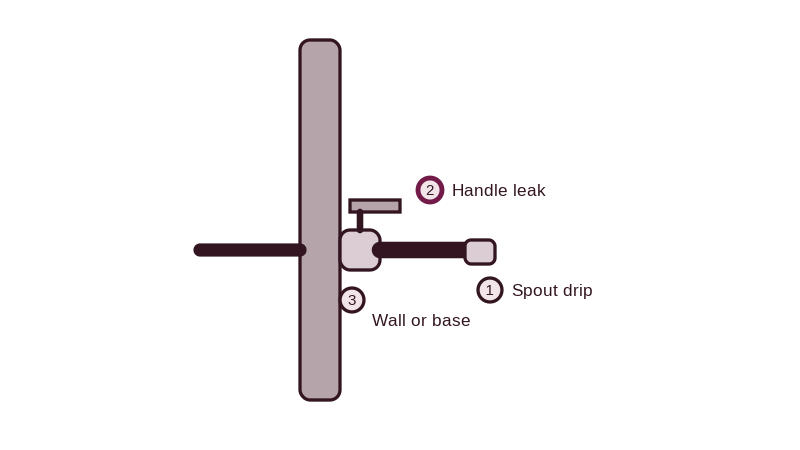
Sometimes called a hose bib or sillcock, an outdoor faucet is a simple valve, so most leaks trace to a worn rubber part. The skill lies in reading where the water appears. If the spout drips while the valve is shut, suspect the washer or seat. Dampness around the handle means the packing. Moisture inside the wall or beneath the house means the pipe or valve body, which is a bigger job. This page sits alongside our sink and fixture repair guide, and the full range of work we arrange is on the home page.
What part of my outdoor faucet is leaking?
Close the faucet, wipe it dry, leave nothing attached, and watch it for a while. A worn washer or seat is the cause when the spout leaks. When water comes from the handle or stem while the faucet is open, the packing or packing nut is loose or worn. Water at the base or inside the house means the valve body or pipe is failing.
Test it both open and closed. A leak that shows only when open almost always comes from the stem packing, while a leak when closed comes from the seat or washer. Take off any attached hose first, because a hose left on can hold pressure and make the drip look worse. Check the crawl space access or garage wall behind the faucet for dampness. A wet wall is the cue to stop and hire a plumber. For dripping sounds with no visible leak outside, see the guide to reasons a water bill jumps.
What stops a leak coming from around the handle?
Turn off the supply first, either at a separate shutoff inside the house if one exists, or at the main. Using a wrench, tighten the nut behind the handle slightly. Should it keep leaking, remove the handle and the packing nut and then swap the packing washer or O-ring, or wrap new graphite packing around the stem.
Overtightening stiffens the handle and can strip the stem, so avoid it. Take the old packing parts to the hardware store to find a match. Reassemble in the opposite order, bring the water back on slowly, and check for drips with the handle both open and closed. Replacing the whole stem is another option when the stem is worn or corroded, and the stems are inexpensive and sold by faucet brand.
How do I stop a drip at the spout?
Shut the water off, remove the handle and packing nut, and pull the stem out. On its end, install a rubber washer that matches exactly, along with the small screw that holds it. If the seat inside the faucet is rough, a seat dressing tool can smooth it, or the stem assembly can be replaced.
An indoor faucet repair follows the same steps, as laid out in our guides to two-handle faucets that leak and dripping faucets in general. Outdoor stems are longer and may carry a coarser washer. A faucet that will not shut off at all has probably lost its washer to wear, and a new one restores the seal. Exposure to sun and minerals from sprinklers speeds wear.
What is the vacuum breaker, and why does it leak?
Many outdoor faucets carry a vacuum breaker, a little cap-shaped device on the spout that keeps dirty water from running back into the house pipes when pressure drops. When it spits water from its vent while the faucet is running, that is normal. When it drips after the faucet is closed, it may be worn.
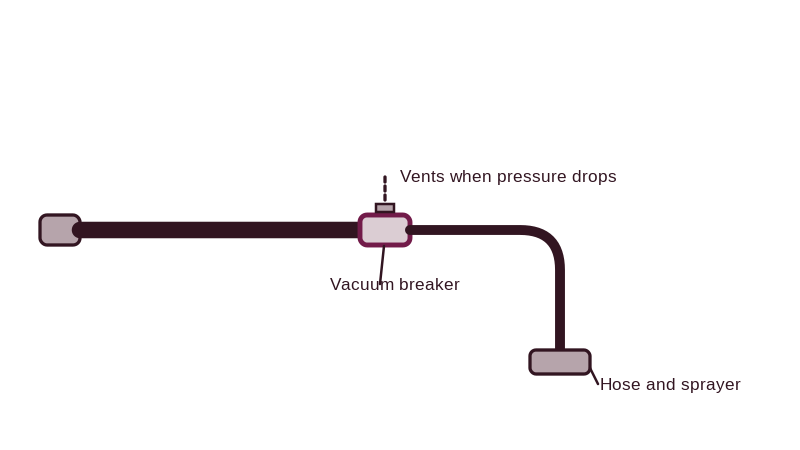
You can often unscrew and replace a vacuum breaker, and they are sold at hardware stores. Do not remove it and leave the faucet without one, since the backflow protection matters for drinking water safety. If you want to understand why, read backflow prevention testing, which explains devices and testing. Hose-end attachments such as sprayers, fertilizer feeders and a hose left in a pool are the usual risk the device guards against.
When does the whole faucet need replacing, or a plumber hiring?
Swap in a new faucet if the body has cracked, a corroded stem refuses to come out, or repairs have failed more than once. Hire a plumber when water shows inside the wall, the pipe moves or feels loose, or you cannot shut off the supply to the faucet.
A leak in the wall can rot framing and stucco, so do not wait. Old homes sometimes have galvanized pipe at the faucet that snaps when twisted, turning a small job into a larger one. A plumber can replace the faucet and, if needed, the shutoff. The faucet installation cost guide lays out what drives that price. Send details and photos through the quote form. The EPA says an average home can lose over 9,300 gallons of water a year to leaks, and an outdoor leak that runs into a planter bed is easy to miss.
Are there permit rules for outdoor faucets?
A simple repair, or swapping a hose bib for an identical one, does not normally need a permit, but changes to the water line, new lines to a yard or work behind finished walls might. Check with the local building office. Rules differ between the City of Thousand Oaks and unincorporated Ventura County areas.
Watering rules and drought conditions are a separate topic, set by your water supplier. Check with your supplier for current restrictions, since they change. Digging near mature oak trees may have its own rules in the city, so check before trenching a new line. Our areas page shows the communities we cover.
For a hose bib that drips at the spout or the handle, the steps in fixing a leaky faucet outside cover the same repair from another angle.
Common questions
How long will repairing a dripping hose bib take?
A beginner can usually swap a washer or packing in under an hour, parts run included. A seized stem or a leak in the wall can take far longer. If a first try fails, stop and get help rather than forcing parts.
What do I ask before hiring for outdoor faucet work?
Ask whether repair or replacement makes more sense, what the price covers, whether the shutoff will be checked, and whether the vacuum breaker gets replaced. Get the contractor license number and look it up with the state board before the work starts.
Why is my outdoor faucet dripping when it is off?
A worn washer or damaged seat is the usual cause. Replace the washer, and check the seat for pitting. If it still drips with a new washer, the seat needs dressing or the stem assembly needs replacing. A drip is small but never stops, so it is worth fixing.
Can I leave a leaking outdoor faucet until later?
A slow drip outside the wall can wait briefly, yet it squanders water and can harm planters, paving or stucco. Water inside a wall should not wait. If you cannot repair it soon, turn off the supply to that faucet.