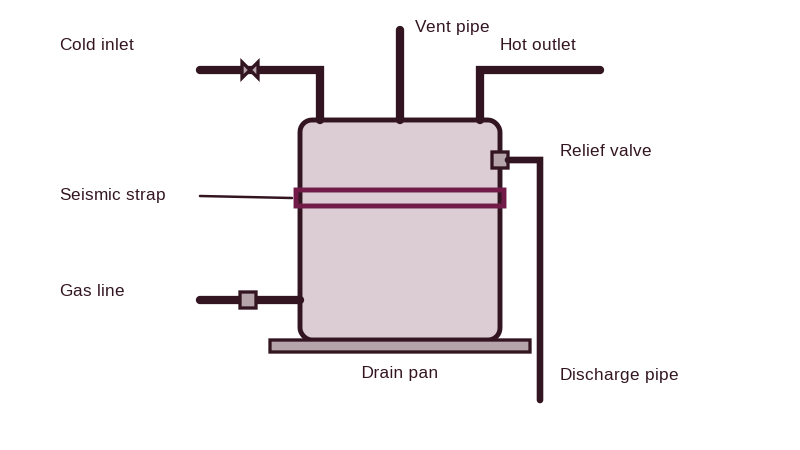
Replacing a water heater looks simple from the driveway: one tank out, one tank in. In practice it joins water lines, a gas or electric supply, a vent, a safety discharge pipe and local rules, and a mistake in any of them can cause a leak, a gas problem or a failed inspection. This page belongs to the section on fixing and replacing water heaters for Thousand Oaks and Conejo Valley homes.
You will learn why a plumber ought to do the swap, what happens on the day, and which decisions are yours before anyone turns up.
Does a water heater swap really call for a plumber?
Mostly, yes. Replacing a heater touches gas piping or a dedicated electric circuit, a vent and the water connections, and part of that work is regulated. A permit might apply, and gas work generally goes to contractors. Before leaving, a plumber also checks for leaks and gas tightness.
To learn whether the replacement needs a permit, ask the City of Thousand Oaks Building and Safety department or, in an unincorporated area, the county, and have the plumber add it to the quote. Gas work done yourself is risky and can leave an unpermitted installation that causes trouble at a sale or insurance claim. A heater that is only faulty may not need replacing at all, so start with hot water heater repair first.
What does the plumber do on replacement day?
First the plumber shuts off the water along with the gas or power, drains the old tank, disconnects the lines and vent, and removes the unit. The new heater goes into place, and the water, gas or electric and vent connections are remade. The tank is filled, leak and gas tightness tests are run, the heater is lit, and the safety valve and discharge pipe are checked.
Extras often join the swap: new flexible connectors, a fresh shutoff valve, a drain pan where the heater sits over living space, an expansion tank for a closed system, and seismic strapping that steadies the tank in an earthquake. Have the plumber confirm bracing is included, since a tank that can topple in a quake is a real hazard. Expansion tanks get their own page, expansion tank replacement. Hauling away the old heater usually comes with the job, but confirm it.
Which choices should I make ahead of the visit?
Begin with type and size: a replica of the old tank, a bigger tank or a tankless water heater. Decide whether it stays in the same spot. Know the fuel, and write down the model and age of the current heater. Whatever you settle early makes the quote quicker and clearer.
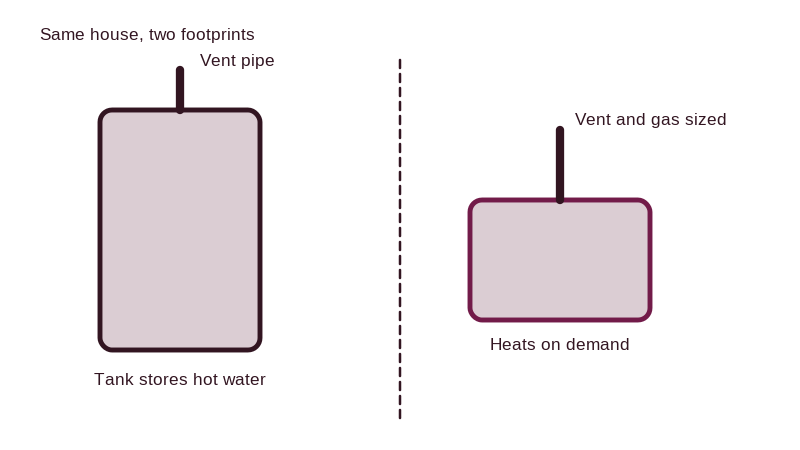
Tank versus tankless is the biggest decision, because tankless units need different gas sizing and venting and may cost more to install. The tank versus tankless comparison sets out the trade-offs, and the guide to gas tankless installation shows what the upgrade requires. Weigh your household too: bathroom count, simultaneous use and how many years you expect to stay.
What should a quote contain, and how does it work?
A solid quote names the heater make, size and fuel, then itemizes the labor; new parts like connectors and valves; code work such as venting or strapping; the permit; and haul-away of the old unit. It should also state what is left out and how surprises are handled. We do not set the price, because the plumber who comes does.
Insist on a written quote prior to the start of work. Weigh competing quotes item by item rather than by the bottom line alone, since a low figure can omit the permit or haul-away. Price drivers are discussed in the cost guide for replacement heaters. A mobile or manufactured home has different access and venting, and our page on mobile home water heater replacement covers that case.
What if my water heater fails with no warning?
Sudden failure is stressful, yet the first steps are simple: shut the tank's cold supply, switch off the power or gas, and mop up the water. A leaking tank or a gas smell should be handled as urgent. A replacement can often be set up quickly, though we cannot promise a date.
Should you smell gas, get out of the building, then reach SoCalGas on 1-800-427-2200 from outside; use 911 when anyone is in danger. Other urgent faults are handled in the first ten minutes described on emergency water heater repair. Keeping the heater's model number and fuel type to hand helps the plumber arrive with the right part or unit, which speeds up a same-visit replacement.
At what point should a plumbing business get involved?
Call one whenever the old tank leaks, the heater has outlived its normal lifespan, you want a new fuel or tankless, or the swap touches gas, venting or permits. That describes nearly every replacement.
Describe the job in the quote form; we pass the request to a local plumbing business. Mention the fuel type, tank size, location (garage, closet, attic, outdoors) and what is wrong. A photo of the tank label helps. Keep the paperwork for the new unit, since warranty terms and any permit record matter later.
Common questions
How much time does a water heater replacement need?
Swapping one tank for another commonly takes a few hours, from emptying the old unit to testing the new one. Relocating the heater, changing the venting, converting to tankless or fixing code issues stretches it, sometimes beyond a day. The plumber can estimate the time once the existing setup has been seen.
What should I ask before a water heater replacement?
See if the quote includes the permit, venting, strapping, new connectors, haul-away and a drain pan where one is needed. Ask for the warranty on parts and labor, the size and efficiency of the proposed heater and how extra work gets priced. Confirm which business will actually do the job.
Does someone have to be home for the replacement?
Yes, an adult should be present to give access to the heater, agree the price and approve the finished work. The plumber needs the water off and sometimes entry to the house. If you cannot attend, name a trusted adult and say so when you send the request.
Is a DIY water heater swap a good idea?
Some home work is legal for owners in some places, but a water heater means gas or high-amperage electric, venting and often a permit, and errors are dangerous. Gas piping especially belongs with a contractor. Ask the building office before taking on any part of it.
Should a water heater be replaced before it dies?
Often, yes, once it is past its normal lifespan or starts leaking, rumbling or running short. A planned swap gives time to compare quotes and choose the unit, instead of rushing after a flood. The usual age ranges are set out in the guide to water heater replacement intervals.