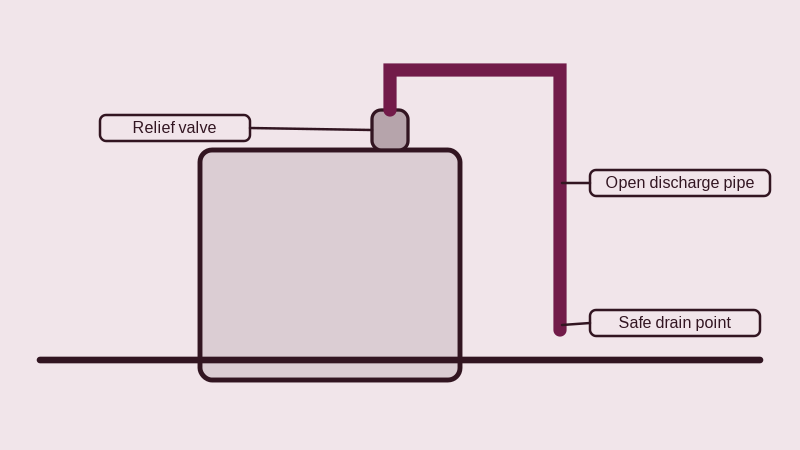
Heat or pressure beyond safe limits makes the valve on a tank open and send the excess down a pipe, so the tank never ruptures. A valve that drips nonstop, sprays when the burner fires, or has a stuck lever is either worn or responding to a fault in the system. Replace the valve, but also learn why it opened. Broader background sits on the water heater repair page, and Conejo Plumbing Pros takes requests through the quote form if you would like a local plumber to visit.
Why does a water heater relief valve drip?
A drip has one of three causes: the valve is worn and no longer seats, thermal expansion is pushing pressure past its rating, or the water or tank is genuinely too hot. A valve that drips only while the heater is heating points to expansion. A valve that drips all the time, even cold, is probably failing.
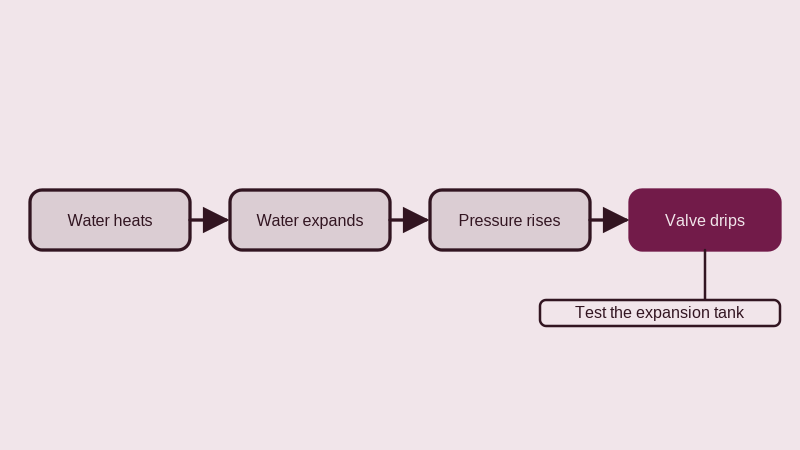
Water expands as it heats. If the house has a check valve, a pressure reducing valve or a backflow device on the supply line, the extra volume has nowhere to go, so pressure spikes and the relief valve lets some out. That is the reason an expansion tank is frequently required, as the page on water heater expansion tank replacement describes. Code does not always demand one, and a plumber is able to test whether yours has lost its air charge.
Mineral buildup can also stop the valve sealing. An old valve that has never been moved may have crusted over. Replacement cures that, but it should not be the only step.
Is replacing the relief valve a DIY job?
It can be swapped by someone happy to shut off water and power or gas, drain part of the tank and handle hot water, yet plenty of homeowners hire a plumber for it. The valve is a safety device, the discharge pipe must be right, and a mistake can scald or leave the tank unprotected. Never cap or plug a relief valve.
If you try it, follow the manufacturer's instructions for your model. In outline, the steps are:
- Set the thermostat low or off and disconnect the heater's electricity or gas. On a gas unit, do not relight it until the work is finished.
- Close the heater's cold water inlet.
- Open a hot tap elsewhere and drain enough from the tank to drop the level beneath the valve.
- Unscrew the old valve from its port, apply thread sealant, and fit a new valve with the same temperature and pressure rating and port size.
- Reconnect the discharge pipe, then refill with a hot tap open until sputtering stops, and only afterward switch the electricity or gas back on.
Never guess the rating: it is printed on the old valve and on the tank label. A corroded, loose or capped discharge pipe should be replaced too. Heater work involving gas or any venting change is regulated, and replacing the heater itself generally needs a permit, so contact City of Thousand Oaks Building and Safety, or the county when you live outside the city.
When does a relief valve leak point to a bigger fault?
A valve that opens often, shoots out very hot water or steam, or keeps dripping after replacement signals an underlying problem: a failed thermostat, a faulty control, high incoming water pressure or a lost expansion tank charge. Treat it as a safety fault until a plumber has checked it.
Steam or scalding water at the discharge pipe means the tank is overheating. Switch off the heater's electricity or gas, stay clear of the discharge, and keep the pipe unobstructed. Smelling gas near a gas heater? Go outside and reach SoCalGas on 1-800-427-2200; use 911 if anyone is in danger.
High house water pressure can also stress valves and fixtures. If you suspect it, read about a water pressure regulator replacement and where the regulator sits. An older tank leaking from the body rather than the valve is a different problem: see plumber for water heater leak and the steps for repairing a water heater leak.
Does the relief valve matter on a tankless water heater?
With no storage tank, a tankless water heater lacks the usual tank relief valve. Some models carry their own pressure relief or a valve on a recirculation or buffer tank. Read the installation manual for your model. To compare the two types, see tank vs tankless water heater.
Tankless units still need correct water pressure, venting and gas supply. Faults on them show up as error codes, cold slugs or no hot water, not a dripping relief valve, unless the system includes a storage component. The page on hot water pressure low helps if the problem is flow rather than a leak.
How should the relief valve discharge pipe be set up?
The valve must discharge through a pipe that runs downward to a safe point and is not capped, threaded at the end or reduced in size. A drain line that ends right at the floor or outside in a clear place lets a hot discharge escape without scalding anyone. Follow the water heater manufacturer's instructions and the plumbing code that applies to your home.
Inspect the pipe while you are working on the valve. A pipe that has a loop or a rising section can hold water, and a pipe that is too small can slow a discharge. If the pipe goes into a drain, the plumber may need an air gap. Do not extend it with flexible hose.
Garage water heaters on the hillside homes of Thousand Oaks and Newbury Park often discharge into a driveway or a slab, and a hot discharge at a door is a hazard. When the heater is also strapped to the wall for earthquakes, check that neither the strap nor the pipe hold the valve from moving.
Common questions
How often should the relief valve be tested?
Many manufacturers suggest lifting the test lever briefly once a year to confirm it moves, with a bucket beneath the discharge pipe. Check your manual for its advice. If the lever sticks or the valve will not stop dripping afterward, replace it. Do not test a valve if you suspect the tank is overheating.
Why does the relief valve still leak after being replaced?
Pressure is usually the cause, not the valve. A new valve that drips immediately points to thermal expansion, high incoming water pressure or a failed expansion tank. A thread leak where the valve screws in is another possibility. Testing the pressure and the expansion tank lets a plumber tell which.
Can a leaking relief valve be dangerous?
It can. Either the valve is working as designed or it has failed, and in both cases the heater's safety function is compromised. Do not plug it. The EPA estimates that over 9,300 gallons a year are lost to leaks in the average household, so fix a drip promptly.
How much time does a relief valve swap take?
Often a short visit: a plumber drains some water, fits the valve and refills the tank. If the discharge pipe or the expansion tank needs work as well, the visit runs longer. Tell the plumber about any drips or hot water problems when you send the request.