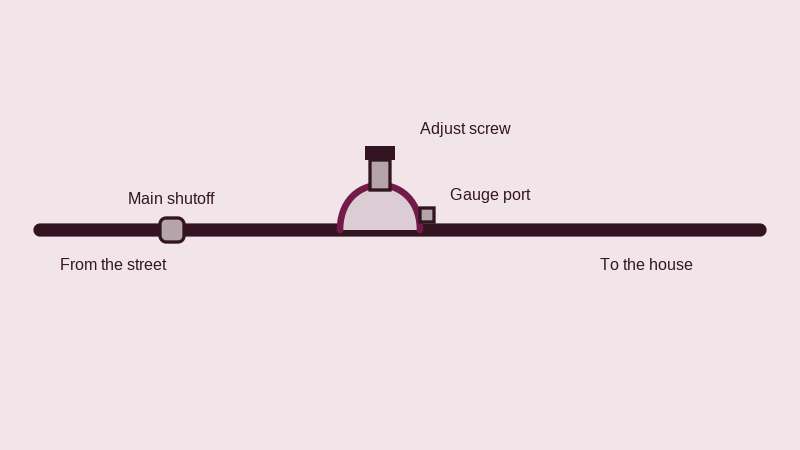
Sized for pipe of that diameter, a half-inch regulator is a valve that lowers incoming pressure to a steady level for the fixtures downstream. Choose one by pipe size and connection style, then install it where water enters the house or on a branch. For the broader pressure picture, see water pressure and valves.
Many homes put a larger regulator at the main and keep small ones for a single appliance. The half-inch size appears most on a branch line or a small supply, so measure your own line before buying.
Which regulator size fits your home?
The regulator has to fit the pipe it connects to. In many houses the incoming main measures either 3/4 or 1 inch, and a half-inch valve on it restricts flow. The smaller size belongs on a branch, a laundry or irrigation tap, or in a compact home whose main is half an inch. Measure the pipe, or read the label.
Wrap string around the pipe, measure its circumference, and divide by 3.14 for the outside diameter. Copper sizes refer to nominal inside size, so a 3/4 inch pipe measures slightly more outside. Also check the connection style: threaded, sweat or compression. A plumber can confirm size and connection in minutes, so ask when unsure. Related pages cover three-quarter inch units and one inch units.
Does a small regulator help on an irrigation, laundry or shower line?
Yes, as a local fix. Fitted to one branch, a half-inch regulator can calm a washing machine hose, protect a single fixture or limit pressure to a drip irrigation zone, with no change elsewhere in the house. It does not replace a regulator on the main, and it adds one more point that can fail.
In the laundry, a regulator near the machine eases hose strain, and the page on washing machine pressure regulators covers that setup. For a shower, a regulator or a pressure-balancing valve can steady the flow and the temperature; read the shower regulator page before buying. Whichever you choose, install a shutoff on each side so the unit can be serviced without turning off the whole house, and record the pressure you set so the next person knows what it should be.
Which signs show a regulator has failed?
Watch for banging pipes, a relief valve that keeps dripping, dripping faucets and noisy toilet refills, a washing machine hose that sprays, very high or very low pressure and pressure that fluctuates. A failed regulator can let pressure creep up with no change at the tap.
Too much pressure wears out fixtures, hoses and the water heater sooner, and it can contribute to burst lines. Our page on why pipes burst has the detail. If your test reads well above what the fixtures call for, replace the regulator rather than waiting. An old regulator is a wear item, like a tap washer.
Where is a regulator installed, and how do you recognize it?
Right past the shutoff, where the supply line enters the house, is the usual spot for a main regulator. Garages, utility closets and boxes near the front hose bib are common places. Expect a brass body shaped like a bell, with an adjusting screw or bolt on top and a gauge port. Branch regulators are smaller.
Descriptions in words are on the pages about finding the regulator and its appearance. If you find none, your home may have none, and the pressure is whatever the street delivers.
How can you measure water pressure at home?
Screw a pressure gauge to an outdoor hose bib, make sure nothing is running indoors, then open the tap and look at the dial. Pressure varies, so take readings at several times of day. A high or swinging number points to a failing regulator. Low numbers have more causes: scale, a valve left partly shut, or the regulator again.
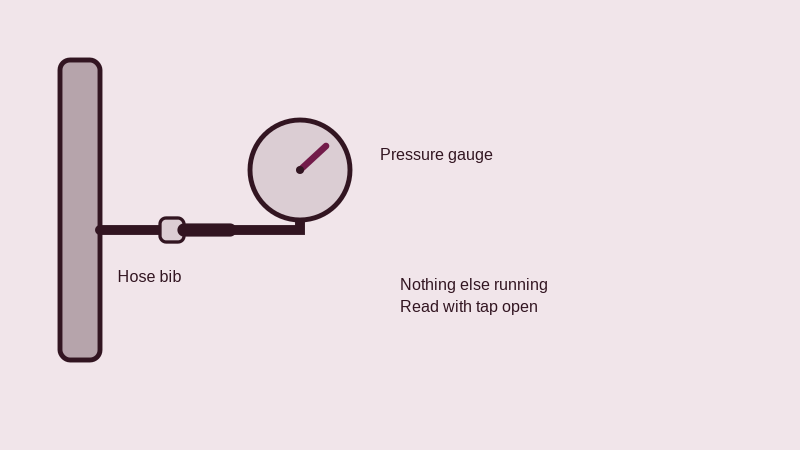
Gauges are cheap at hardware stores. Record the number. Many fixtures and appliances list a recommended pressure, and a plumber can say what suits your home. Some plumbing codes cap pressure. We have not verified that number, so it is omitted here, and the plumber will know the local rule.
Is regulator replacement a DIY job, or should you hire out?
A confident DIYer can swap a matching regulator by closing the main, draining the line, unscrewing the old unit and fitting the new one, then setting pressure with a gauge. Bring in a plumber when the pipe is corroded, unions are missing, soldering is required or the main shutoff refuses to close.
Cutting a new regulator into a main line often needs soldering or push fittings, and a leak there floods a house. Once a regulator is installed the line becomes closed, so an expansion tank may be needed; see expansion tank replacement. The regulator replacement page goes through the job.
Common questions
How many hours does replacing a regulator take?
A straight swap with clean unions is often a short visit. Soldering, rerouting or freeing a stuck shutoff adds time. The plumber also sets and tests the pressure at the end. Ask for an estimate when booking, since pipe access and fitting age change the pace. Expect the water to be off for part of the visit.
What should I ask a plumber first?
Ask whether the regulator size fits your line, what pressure the plumber intends to set, whether the quote includes a gauge test and, where needed, an expansion tank, and what happens if the old pipe turns out to be corroded. Get the price in writing.
Will a 1/2 inch regulator serve a whole house?
Rarely. A whole-house regulator is matched to the main pipe, commonly larger than 1/2 inch. A small regulator on the main can restrict flow and reduce pressure at the fixtures. Measure the main line before choosing. A half inch unit suits a single branch or an appliance, so match the size to what it serves.
Does the regulator control low pressure too?
A regulator only lowers pressure from above. It cannot raise a weak supply. If pressure is low at the street, a booster pump or a different fix is needed. A plumber can test both sides of the regulator. Testing both sides tells you whether the problem is the supply or the regulator itself, so it comes before any parts are bought.
Can a regulator cause a leak?
A failing regulator can leak at its body or at the connections, and it can allow pressure to climb until another part gives way. The EPA estimates that a typical household loses more than 9,300 gallons yearly to leaks, which makes any drip worth checking.