Showers seldom come with a dedicated pressure regulator. Shower pressure comes from the main regulator, the showerhead's flow restrictor and the valve behind the wall. Start by measuring pressure with a gauge, then clean the showerhead, then inspect the valve. Related fixture jobs are on the fixtures and plumbing repairs page.
Readers who wonder about adding a regulator to a shower will find the difference between pressure and flow here, what to inspect at the head and the valve, and when the main regulator is the true cause. Other kinds of work we can set up appear on the home page.
Does a shower need a separate pressure regulator?
Normally no. A house with a working whole-house regulator already has controlled pressure, and each shower carries a flow restrictor or a pressure balancing valve. A separate regulator on a single shower is rare. If the reading at a hose bib is high or low, fix it at the main. If only one shower misbehaves, inspect the head and the valve.
Pressure is the force of water in the pipe, measured in psi. Flow is the volume delivered, measured in gallons per minute. A showerhead can limit flow without altering pipe pressure. That is why one tap can feel strong while a shower on the same line feels weak.
The main regulator is covered in whole house water pressure regulators.
Why does shower pressure shift when someone flushes or opens a tap?
A sudden hot or cold swing while another fixture runs shows the shower valve cannot balance pressure, because the cartridge is worn or the supply pressure is uneven. A pressure balancing cartridge smooths it out. If the cartridge is old or scale-clogged, replace it.
Pressure that dips when a toilet flushes is common in older homes with small supply pipes. A plumber can inspect the pipe size and the valve. If the swing is large, test the main pressure. A failing regulator can let pressure rise and fall.
Some showers have a thermostatic valve, which holds the temperature set on the dial. A faulty thermostatic cartridge also drifts. Mention the valve brand in your request if you know it.
What if the shower pressure is too high?
A harsh spray or banging pipes suggest high water pressure in the house. Screw a pressure gauge onto an outdoor hose bib to test. A high reading may mean the main regulator is failing or missing. A plumber adjusts or replaces it, protecting the toilets, the water heater and the shower valve as well as the spray.
High pressure wears out cartridges and seals, so faucets and showers drip sooner. It can also cause water hammer, the thump heard when a valve shuts. See water hammer sound. Fixing the cause at the main is better than choking each shower with a restrictor.
If you want a softer spray, a showerhead with a lower flow rating is a simple fix. It changes the feel without touching the plumbing.
How can you tell whether pressure or the showerhead is to blame?
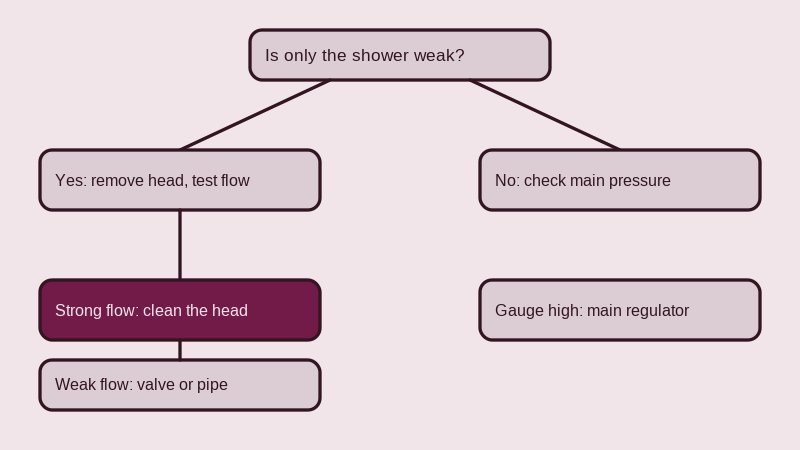
Compare the shower with another tap. If a bath sink or hose bib flows well while the shower alone is weak, the fault lies in the head or valve. Take the showerhead off and run the shower bare. Good flow then points to a clogged head or one with a restrictor, whereas weak flow points to a valve or pipe problem.
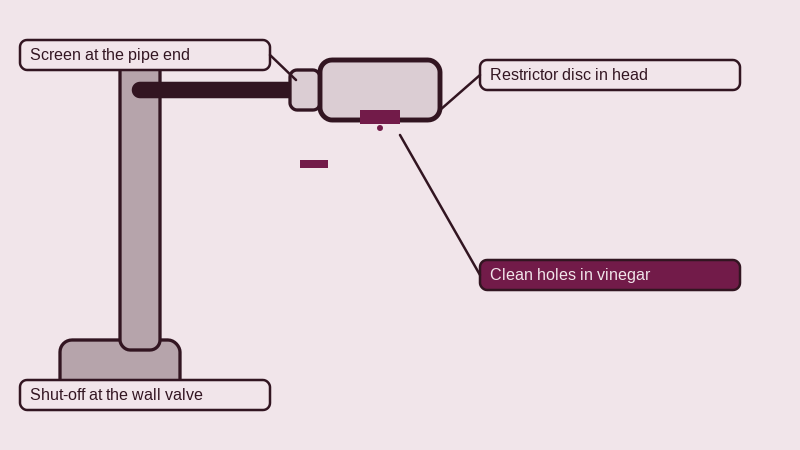
Hard water scale clogs the small holes. Soak the head for an hour in white vinegar, scrub the nozzles with a brush and rinse. Take out the small screen at the pipe end and rinse it too. A plastic flow restrictor disc in the head may limit flow by design. Newer heads are built to use less water. For comparison, the EPA's WaterSense program states that labeled bathroom sink faucets use at most 1.5 gallons a minute, at least 30 percent below the standard 2.2, which shows how widely flow limits vary by fixture.
A guide to better heads is on the best low water pressure shower head.
When is a plumber needed for shower pressure?
Submit a request if the gauge reads high, the shower valve leaks or drips, hot water fades suddenly, the wall bangs or the shower stays weak with the head removed. These point to the main regulator, the valve or the pipes, and call for tools and parts you may lack.
Homes on hillside streets can see pressure that varies with elevation. Give the plumber your street position, the home's age and the gauge reading. A pressure visit can be paired with a leaky tub faucet repair; see fixing a leaky tub faucet.
How can you request a quote for shower pressure work?
Give the quote form the symptom, the shower type, the gauge reading, the house age and whether other taps are affected. We pass requests on to local plumbing businesses, which pay us a fee, and we read them between 9am and 5pm on weekdays; no response time or price is promised.
Have the plumber write down the price and its scope: test, parts, labor and any wall opening. A quote naming the valve or cartridge model is easier to compare. If a leak is active, shut off the supply to the shower or the whole house before anything else.
Common questions
How long does shower pressure work take?
A showerhead cleaning fits in under an hour. A cartridge swap runs an hour or two. A main regulator replacement takes one to two hours when accessible. Opening a wall to reach the valve adds time. Ask the plumber for a time window and for what the price includes.
What should I ask before booking shower work?
Ask which test would reveal the cause, whether the price includes both parts and labor, whether any wall opening is included in it, and who repairs tile or drywall afterward. Ask what happens if the valve brand is discontinued. Get the answers in writing first.
Does someone have to be home for the visit?
Yes, an adult should open the door, show the plumber the shower and the main valve, and approve the price. Clear items out of the bathroom beforehand. The water is off for a short while during the work. You need not stay in the room.
Will a flow restrictor calm a harsh shower?
Yes, a restrictor or lower-flow head softens the spray, but it masks high pressure rather than curing it. If the gauge shows a high reading at the outdoor hose bib, have the main regulator checked, since high pressure also wears fixtures, valves and appliances.