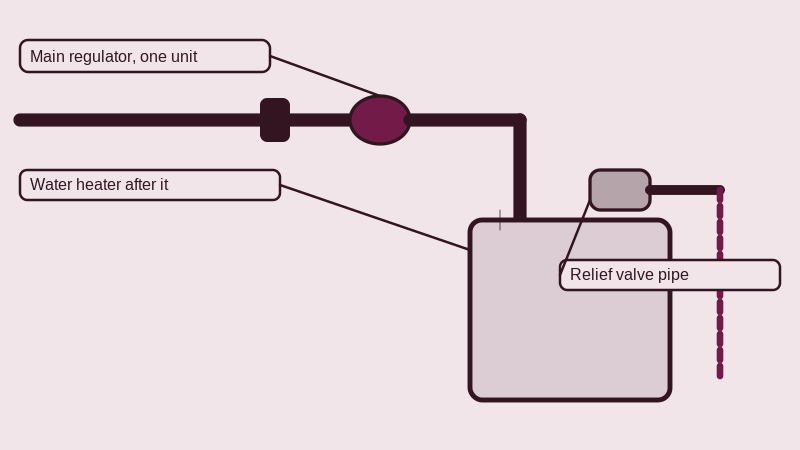
Most houses have no dedicated regulator for the hot side. A lone pressure-reducing valve is installed on the main water line where it enters the property, and it sets the pressure for hot and cold together. The water heater then depends on its relief valve and often an expansion tank for protection. When hot water pressure seems off, the culprit is usually the main regulator, the heater's controls or a clogged pipe. This page, part of the water heater section, explains the parts and the checks.
Is there a separate regulator for the hot side?
Usually not. At the incoming supply, one pressure-reducing valve does the job for the entire home, so everything downstream, water heater included, gets the reduced pressure. Specialty setups sometimes add a second regulator on a particular branch, but a hot-only regulator is unusual in an ordinary house. If a plumber proposes one, ask why and which pressure it is meant to hold.
The logic is simple. Hot water begins as cold water passing through the heater, so pressure is already controlled upstream. A hot-only regulator would be one more part to wear out and fail. For that reason, the safety devices on the heater, rather than a regulator, protect the hot side.
If a store part is labeled for hot water, check its temperature rating and its purpose. A mixing valve or thermostatic valve is a different component, one that blends hot and cold to a set temperature and prevents scalding.
Which checks can a homeowner do?
Screw a water pressure gauge to an outside hose bib, close all the taps, and note the reading. Check the heater's relief valve for drips, and look for a valve that has stuck. Leave a regulator alone unless you know the target pressure, and never cap a relief valve. Main-line work belongs to a plumber.
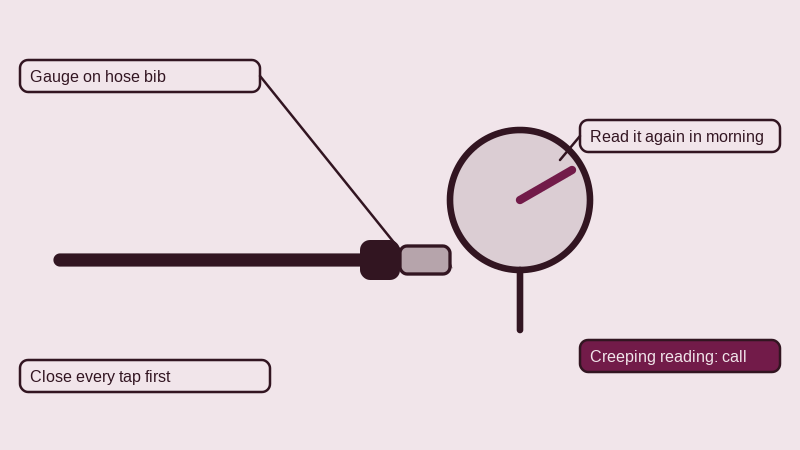
A high gauge reading makes a worn regulator likely. Low pressure at the hose bib with normal flow elsewhere points to the valves. A half-closed main valve is a common culprit after other plumbing work. Open it all the way.
Swapping a water heater generally takes a permit, and gas work is best left to a contractor. If you smell gas, go outdoors first and then reach SoCalGas on 1-800-427-2200.
How do I recognize a failing regulator?
Warning signs include banging pipes with very high pressure, weak flow that nothing else explains, dripping fixtures, a relief valve that discharges, and pressure creeping up while every tap is closed. Within seconds, a hose-bib gauge reveals which it is. A failed regulator often drives up water bills as well.
Over the years regulators wear out, and the internal diaphragm or spring can fail. Fixtures, supply lines, the water heater and appliances all suffer under high pressure. A stuck valve or clogged strainer can instead cause weak flow. For banging pipes, see the guide to water hammer sound.
Replacement means the plumber installs a new valve and adjusts it to the target pressure while watching a gauge, which can involve cutting into the main. Details are on the pressure regulator replacement page. California plumbing code sets an upper pressure limit, and the plumber will know it. We do not quote it here because we have not re-checked it.
When should a plumber take over?
Book one if the gauge reads high, the relief valve discharges, pipes bang, every tap runs weak, or you cannot find your regulator. A single visit can cover testing, regulator replacement and an expansion tank check. Send the details through the quote form.
We do not do plumbing ourselves. Conejo Plumbing Pros passes your request to a local plumbing business that visits your home and quotes the work. Jobs of $1,000 or more in labor and materials need a California contractor license, and you can look one up at cslb.ca.gov. A tankless water heater also needs the right pressure and flow, so mention it if you have one.
How is a water heater shielded from excess pressure?
Safety on the tank falls to its temperature and pressure relief valve, which vents water whenever heat or pressure rises beyond a safe point. On the cold line, an expansion tank absorbs the added volume while water warms up. Together with the main regulator, these hold the heater inside safe limits.
A discharge pipe runs from the relief valve down toward the floor. If it drips or runs, never cap it. A dripping valve points to high pressure, heat-driven expansion with no outlet, a worn valve, or an overheated tank, and each calls for a plumber. Capping or plugging the valve is dangerous.
A closed system, created once a regulator or check valve is in the line, is where expansion tanks tend to be necessary. Code does not always require them, so we avoid saying they must be fitted. A plumber can test yours by tapping it and checking the air charge. The pages on repairing a water heater leak and on low hot water pressure cover related symptoms.
Where does the house pressure regulator sit?
Look for a bell-shaped brass valve on the main line just inside the property. Common spots are the front hose bib, a garage wall, the area beside the water heater, and occasionally a box at the meter. Locate the main shut-off valve and trace the pipe onward, because the regulator normally follows right behind it.
Our page on finding the pressure regulator gives more detail. In many Thousand Oaks and Newbury Park homes from the 1960s through the 1990s, it is found in the garage or along the side of the house. Newer homes in Dos Vientos and North Ranch may position it differently. We have not confirmed standard placements for any development.
Some homes have none. Older homes may depend on the supplier's pressure, which can run high on hillside lots. If there is no regulator and fixtures bang or leak, have a plumber read the pressure on a gauge.
Common questions
How long does a regulator replacement take?
Commonly one to a few hours, depending on access and on cutting into the main line or moving fittings. Expect the water to be off during the swap. Ask for an estimate when booking, and expect the plumber to set the pressure and test it with a gauge before leaving.
What should I ask before hiring for pressure work?
Ask for the contractor license number and verify it at cslb.ca.gov. Also ask which pressure setting is planned for the regulator, if an expansion tank is advised, what the price covers and if a gauge test is part of the visit. Get the quote in writing.
Does someone need to be home?
Yes, at least at the start and the end, so the plumber can reach the main valve and water heater and you can approve the price. Mention it if the shut-off is hard to reach. The regulator spot, often in a garage, also needs to be accessible.
Does high pressure harm a hot water heater?
Yes. Excess pressure strains the tank and its valves, can make the relief valve discharge, and wears out fixtures sooner. A properly set regulator, a working relief valve and an expansion tank where needed protect the heater. Have a plumber look at a leaking relief valve soon.
Is a regulator needed with a tankless heater?
Each tankless model has a pressure range set by its manufacturer, and the house regulator keeps supply within it. Enough flow is also required before the burner ignites. Check the manual for your model, or ask the plumber to confirm pressure and flow before and after installation.