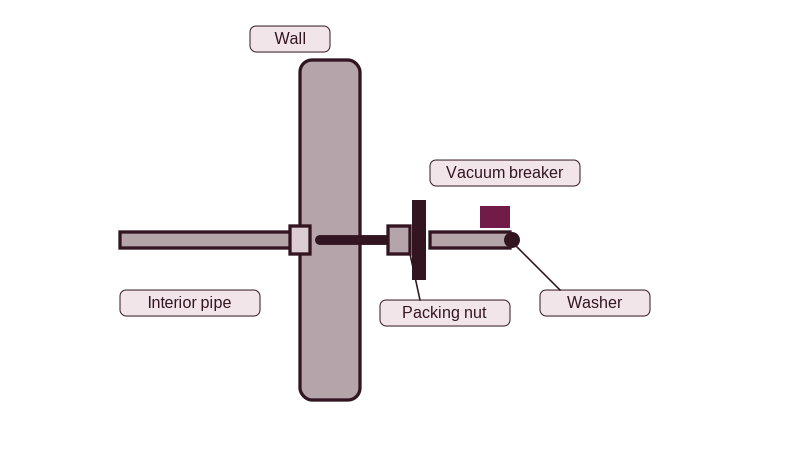
Start by finding where the water escapes from an outdoor faucet. A spout that drips while shut points to a worn washer or seat. Wetness around the handle stem means the packing nut or packing is loose or worn. Water showing up within the wall, or under the house, means the pipe behind the faucet has failed. This guide sits with other faucets, sinks, showers and disposals pages.
Where is my outside faucet leaking from?
Check the spout, the handle and the wall. Dry the faucet with a towel, cycle it open and shut, then watch. A slow drip at the spout while closed is a washer or valve seat problem. Wetness at the stem while the faucet runs points to the packing. A damp wall, soggy soil or the sound of water inside indicates a pipe fault.
Do the checks in order:
- Close the faucet fully and look at the spout for a slow drip.
- Open the faucet and watch the stem area for wetness or a spray.
- With a hose attached, look at the hose connection. Leaks there are often just a cracked rubber washer in the hose end.
- Look below the faucet and inside the wall, garage or crawlspace on the other side for damp spots.
The EPA puts the loss from a faucet dripping once every second at more than 3,000 gallons per year. An outdoor drip often goes unnoticed because nobody sees it, and it keeps going day and night.
What stops a dripping spout?
Turn off the supply at the interior shutoff when there is one, or else at the main valve, then run the faucet open until it drains. Loosen the packing nut and pull out the stem. A rubber washer sits on its end, held by a small screw; replace it. Inspect the seat inside; if it feels rough, a seat dressing tool or a new valve is needed.
Take the old washer and stem to the store to match them. Washers come in several sizes. Wrap the new washer in place, reinstall the stem, tighten the packing nut snugly, turn the water on and test. A drip that survives the new washer means seat damage or a worn-out faucet. Swapping a basic hose bib is often easier than repairing a tired one, because the valve is inexpensive.
Never crank the handle down to stop a drip, since that chews up the washer and makes things worse.
What if the water leaks around the handle?
Wetness around the stem while the faucet is open traces back to the packing nut or the packing material. Try tightening the nut by a quarter turn with a wrench while the pressure is on. If it keeps weeping, close the supply, remove the nut, and replace the packing washer, a graphite packing string, or the O-ring.
If the stem is corroded or the handle wobbles, a replacement faucet is simpler. A hose bib screws into a threaded fitting or is soldered, and the style depends on the house. A plumber can swap one with a few tools, and a sweat connection needs a torch. Do not attempt soldering near wood framing without fire precautions.
What if the leak is hidden within the wall?
Close the supply to the faucet and inspect the wall. A leak behind the faucet is a pipe or fitting problem, and reaching it may mean opening drywall, siding or a crawlspace. Water that escapes unseen can rot framing and stain finishes, so do not leave it. When water shows in the garage or inside the wall, have a plumber take a look.
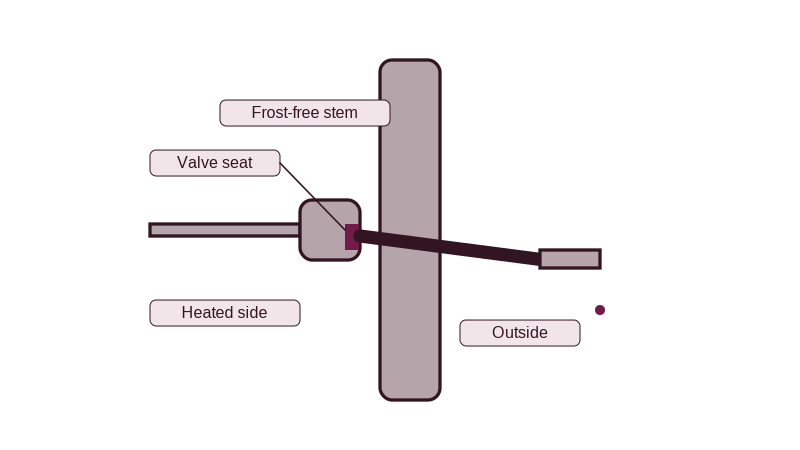
Frost-free hose bibs use a long stem passing through the wall, with the working valve sitting in the heated space. They can leak inside the wall if the stem or seat fails, or if a hose left attached let water freeze and crack the barrel. Check yours after any cold snap. Corroded fittings usually turn up in pipes on exterior walls of older hillside tract homes in Thousand Oaks and Newbury Park, dating from the 1960s through the 1990s.
Should I add a vacuum breaker or other fixes?
Many outdoor faucets have a vacuum breaker, a device on the spout that blocks dirty water from running back into the house plumbing. A leaking breaker drips from its cap when the faucet is on, and it can be replaced separately. If you see water spray from under a small cap on top, that is the breaker doing its job or failing.
Keep a hose off the faucet when you are not using it, because pressure on the hose end strains the spout. A pressure regulator for the house, discussed on our water pressure regulator replacement page, protects outdoor fixtures from high pressure that wears washers quickly. Related steps appear in fixing a leaky outdoor faucet and repairing a leaky exterior faucet.
When should a plumber be brought in?
Ask for a plumber if the faucet will not shut off, the shutoff valve inside is stuck, the pipe is wet behind it, you cannot find the leak, or the faucet is corroded to the wall. Washers that keep wearing out can also signal high pressure in the house, which is another reason to bring someone in.
Gas, drain and permit work are separate. A hose bib swap is usually simple plumbing, but any work that opens walls or moves piping belongs with a plumber. In California, a contractor license is required once a job's labor and materials reach $1,000 or more. Leaking pipes under the sink are covered in fixing a leaking pipe beneath the sink, and other faucet repairs in fixing a leaky faucet.
What to do next
A spout drip or a stem leak is a weekend fix, since it costs only a washer or a nut. If the leak is in the wall, or the water will not shut off, describe where it shows up on the quote page and send a request. A local plumber business can quote a replacement of the faucet or the pipe behind it.
Common questions
How long does fixing an outside faucet take?
A washer or packing swap takes about half an hour when the parts match and the water can be turned off. Replacing the entire faucet is quick for a plumber. A leak inside the wall that needs access takes longer, so ask to see the plan before work starts.
What should I ask before booking an outdoor faucet repair?
Ask if the price quoted covers the faucet and parts, whether the wall would be opened when needed and who repairs it afterward, and how the fix is tested. Also ask for the contractor license number the plumber holds in California. Mention any preference for an anti-siphon or frost-free type so the quote matches.
Must someone be home while the work is done?
Yes, an adult has to be present to open the door and show the leaking faucet and the water shutoff. If the faucet is at the back of the house, unlock the gate and secure any pets. The plumber may also need to enter the garage or crawlspace on the far side of the wall.
Why does my outside faucet drip only when the hose is on?
That points to the hose connection or the vacuum breaker, not the faucet valve. Inspect the rubber washer within the hose end, and swap it out if it has gone flat or cracked. Also check the cap of the vacuum breaker. If the hose still leaks at the faucet threads, a bit of thread tape can seal it.