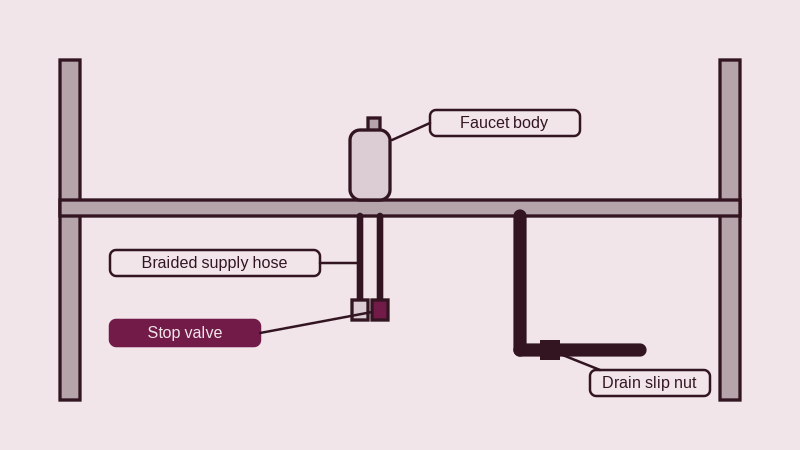
Fixing a leaking sink faucet starts with finding where the water comes from, because the part that has failed changes with the place. Spout drips mean an internal valve part, base puddles mean spout seals, handle seepage means a packing or cartridge, and a wet cabinet may be hoses and nuts below. Sort that out first, shut off the stop valves, and the repair is straightforward. Our fixture repair page lists what a plumber can do alongside, and Conejo Plumbing Pros takes requests through the quote form.
Where is the water coming from, and what does that tell you?
Link each wet spot to its part. Spout drips come from a tired internal valve. Moisture at the spout's base means a tired swivel seal. Moisture around the handle means a tired cartridge seal or a loose nut. Water appearing only beneath the sink comes from a supply hose, a stop valve or the drain.
| Where it leaks | Likely cause | First fix |
|---|---|---|
| Spout drips when off | Worn washer, seat or cartridge | Swap in a matching internal part |
| Base of the spout | Worn O-rings on the swivel | Replace the O-rings |
| Around the handle | Loose nut or worn seal | Tighten, then replace the cartridge seal |
| Under the sink, only when running | Faucet hoses or the drain | Check hose nuts and slip joints |
| Under the sink, constantly | Stop valve or supply line | Replace the valve or hose |
Towel everything dry, run the water, and follow it with a flashlight. If a drip cannot be traced, lay a dry paper towel beneath each suspect joint and look after ten minutes. That cheap trick tells a faucet leak from a drain leak far better than guessing.
How do I fix a spout that drips?
Shut the stop valves and open the faucet to drain it. Remove the handle and retaining nut, pull out the cartridge or stem, and install a washer, seat or cartridge that matches exactly. Reassemble in the opposite order, then turn the water back on slowly and check. Nearly every dripping spout traces back to one of these wear parts.
The faucet style determines the part. Older compression faucets press rubber washers against a metal seat; washerless designs rely on a cartridge, a ball or a ceramic disc. When unsure, the guides for two-handle faucets and single-handle faucets cover each, and kitchen faucet leaks deal with the kitchen set.
Bring the worn part along to match the replacement, and install it clean: wipe grit out of the valve cavity before you put the new part in. A speck of mineral can stop a new seal from seating, so it drips again within a day.
How do I handle a leak at the faucet base or handle?
A leak at the base means the O-rings on the spout have worn: lift the spout off, slide the old rings away and fit fresh greased ones. Leaking at the handle shows a loose retaining nut or a failed cartridge seal: tighten the nut a quarter turn and, if water still escapes, replace the cartridge.
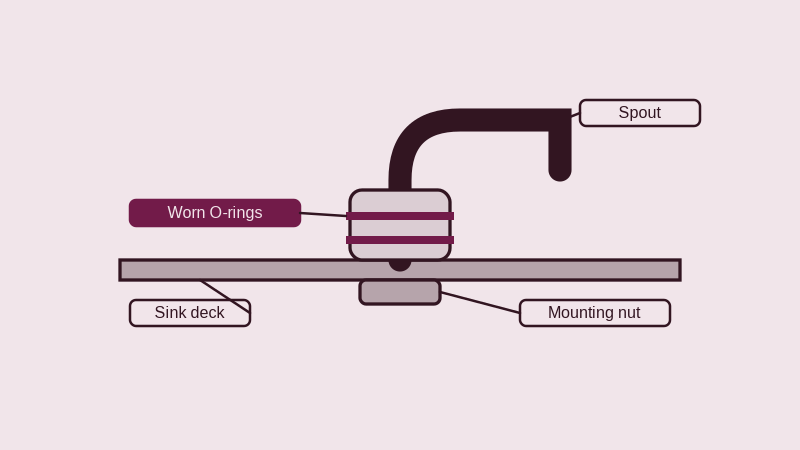
Do not overtighten: forcing a nut on a brass body can crack it. On pull-down kitchen faucets, a leak at the base can also come from the hose connection below the sink, so check both. The O-ring kits are inexpensive and sold by brand and model.
Scale on the swivel can scratch new rings and make them leak. Wipe the faucet body clean and use a soft cloth with vinegar to loosen it. If the surfaces are pitted or the body is cracked, replace the faucet rather than fight it. See faucet replacement cost for what that involves.
What if the water collects below the sink?
Inspect the braided supply lines, the nuts at the faucet and the stop valves, then the drain and trap. Snug slip nuts by hand, then add a quarter turn with a wrench. Replace any hose that is frayed, kinked or rusted at the crimp, and replace a stop valve that weeps at the stem. A wet cabinet floor is a warning to act quickly.
Under-sink water rots particleboard cabinets and can grow mold within days. Dry the area, fix the leak and use a fan. If a drain pipe weeps, the page on fixing a pipe that leaks beneath the sink walks through it.
Hoses are cheap to swap and worth renewing every few years, especially in older Conejo Valley homes. Homes dating back to the 1960s, 70s, 80s and 90s may still have their original angle stops, which stiffen and drip. Never force a stop valve that refuses to turn; close the main valve and bring in a plumber.
Is it better to repair or replace the faucet?
Choose repair when the faucet is in decent shape and a replacement part is simple to find, which covers most drips. Choose replacement when corrosion or a crack has hit the body, parts are discontinued, repairs keep failing or you simply want a new style. A swap takes roughly the time a repair does and removes the guesswork.
Consider the fixture's age and finish. A faucet that has been repaired twice in two years is telling you something. Hard water and a worn valve body shorten a faucet's life, which is where a scale prevention approach helps; see removing hard water scale.
If you replace, check the sink's hole count and the stop valves before buying, and keep the receipt. A plumber installing a new faucet will usually replace the supply hoses as well. For the numbers, read what it costs to install a faucet.
A bathroom vanity tap is covered by fixing a leaky bathroom faucet.
Common questions
What makes a sink faucet drip only on hot?
The hot side valve, cartridge or seat has worn, or heat has softened a rubber seal. A hot-only drip can also come from high water pressure combined with a worn seat. Replace the hot side part and check the pressure if drips persist. See hot water pressure low for hot-side issues.
How can I distinguish a faucet leak from a drain leak?
Dry all parts and set paper towels beneath the faucet connections and the drain, separately. Run the faucet with the plug open, then fill the basin and let it empty. A leak showing only as the basin empties is the drain. A leak showing while water runs is the faucet or its hoses.
Does a dripping faucet add to my water bill?
Yes, slightly each month, and more if the drip is steady. The EPA reports that household leaks can waste upwards of 9,300 gallons of water per year, so even small drips count over time. A prompt repair is usually worthwhile and spares the cabinet below.
Should a leaking faucet be treated as an emergency?
Usually not, though water under the sink can ruin a cabinet, so fix it soon. A burst hose or spraying joint is urgent: turn off the fixture's stop valve, falling back to the house main if that valve fails, and arrange a plumber. We read form requests on weekdays between 9am and 5pm.