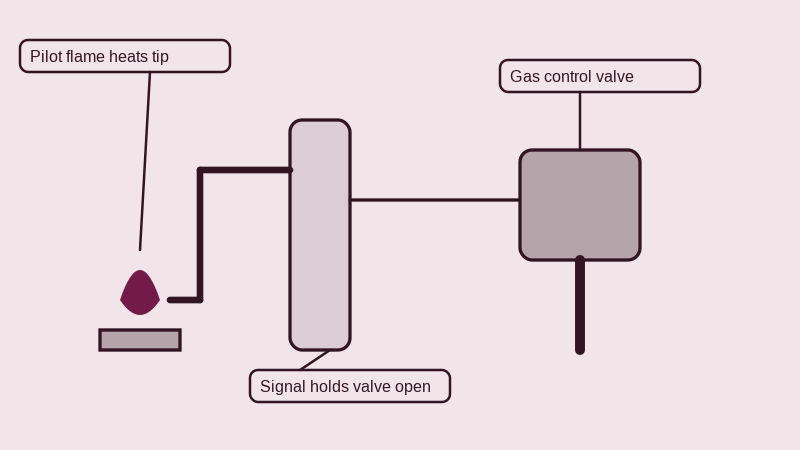
A thermocouple is a small metal probe placed in the pilot flame of a gas water heater, and its job is to keep the gas valve open. When it wears out, the valve shuts the moment you release the pilot button, so the heater keeps going out. The swap is a short job for a plumber. It forms part of our water heater repair work.
Below you will find how the part works, how to tell it is at fault, what happens during the swap, and where a safe do it yourself limit lies. Older tank heaters in Thousand Oaks and Newbury Park homes may still have pilot lights, so this can be a frequent fault. For the other plumbing jobs we arrange, visit our home page.
What role does a thermocouple play in a water heater?
Think of a thermocouple as a safety sensor. Its tip warms in the pilot flame and generates a small electric current that holds the gas valve open. When the flame dies, the current stops and the valve closes, so no gas reaches an unlit burner. That is why a failed one stops the heater even though the pilot looks fine.
Most standing pilot heaters use a thermocouple on a copper tube that screws into the gas control. Larger or newer units use a thermopile, which makes more current and also runs the gas valve. Direct ignition heaters have no pilot and use a flame sensor instead. If your heater clicks and starts without a pilot light, it has no thermocouple.
How can you tell a thermocouple has gone bad?
The classic sign is a pilot that lights while you hold the knob and dies seconds after release. Other signs are a heater that works for a spell and then shuts off, a small or yellow pilot flame, and a probe tip that is blackened or bent. No hot water follows from any of these.
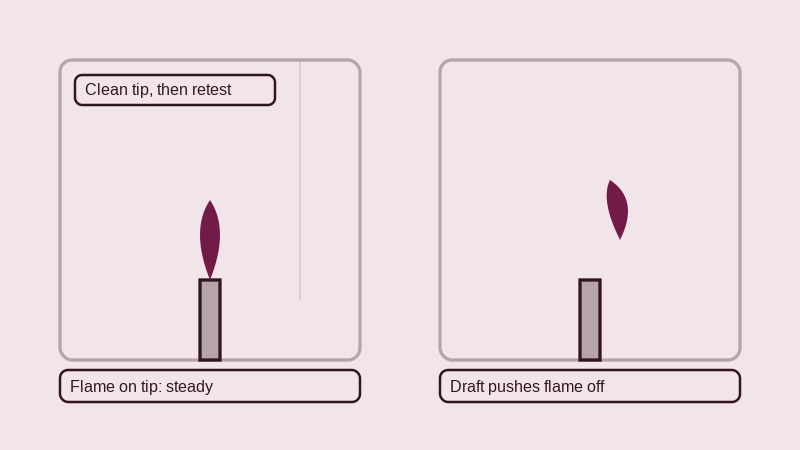
Before you blame the thermocouple, check the cheaper causes:
- The pilot flame is not touching the probe because of a draft or dirt in the pilot tube.
- Soot on the tip, which you can wipe off.
- The gas control valve itself is failing, which makes the pilot go out for the same reason.
- The vent is blocked or backdrafting, which blows out the flame.
If cleaning the tip does not help, the thermocouple is worn. If a new one does not fix it, the gas control is the likely cause. A wider list of reasons hot water stops appears in why you have no hot water.
Is it safe to replace a thermocouple yourself?
Many homeowners do it, but a gas appliance is involved, so it suits only someone comfortable with that who follows the heater maker's manual. Stop the moment you smell gas. Gas piping and gas valve work is regulated work for a plumber or gas fitter, and a poor connection is a safety risk.
With a gas smell, avoid switching on lights or using any electronic device near the heater. Leave the house and call SoCalGas on 1-800-427-2200 once you are outside, as its gas leak emergency page advises, or use 911 if anyone is in danger.
Our advice is simple. If the heater is under a manufacturer's warranty, a self repair may affect it, so read the paperwork. If you are in any doubt, send a request and have a plumber do it, because the visit is short and the job includes a leak test at the connection.
How is a thermocouple replaced?
The plumber turns the gas control to off, closes the gas supply, removes the burner access panel, unscrews the old thermocouple nut from the gas control and from its bracket at the pilot, fits a matching new one, tightens the nut snugly, and relights the pilot. The connection is then tested with a leak solution before the heater is put back to normal.
Steps are broadly the same on most brands, but the details vary, so a plumber follows the model's manual. Two points matter most:
- Get the right length and fitting. Thermocouples vary in length and tip shape. A mismatched one will not sit in the flame.
- Do not overtighten. The nut screws into the gas control and needs only a quarter turn past snug.
After the swap, the plumber checks that the flame is blue with a steady cone, that the heater holds the pilot, and that the vent draws properly.
What affects the cost of thermocouple replacement?
The part itself is inexpensive. What you pay depends on labor, the visit charge, whether the gas control also needs attention, and the age of the heater. A tank that has already aged can make replacement better value than one more repair. We have not checked a published local price, so we give no figure here.
Ask the plumber for a flat price for the part and the labor, and whether a leak test and relight are included. If the quote also includes a new gas control, ask why. A heater near the close of its life can fail again soon after a cheap repair.
Repair suits a heater that is sound in every other respect. Pricing a replacement is worthwhile once the tank leaks, rusts or ages. For lifespan, see how often a water heater needs replacing; for costs, see hot water heater replacement cost.
At what point should you buy a new water heater instead?
Buy new when the tank leaks, the heater nears the end of a normal tank lifespan, or the repair bill comes close to a big portion of a new unit. Fitting a thermocouple to a rusty or noisy heater only buys a little time. Have the plumber quote repair and replacement side by side.
In California a tank replacement usually requires a permit, and state law also requires the heater to be braced against earthquakes. City of Thousand Oaks Building and Safety handles city addresses, while the Ventura County Resource Management Agency covers unincorporated areas such as Oak Park, Lake Sherwood and Hidden Valley. Confirm with the right office prior to purchase. When weighing a tankless unit, see our page on tank versus tankless for the trade-offs.
To get a repair or replacement priced, use the quote form.
Common questions
How long does a thermocouple swap take?
With the right part on the truck, the swap and relight are usually quick. Time rises if the access panel is awkward, the pilot tube is dirty, or the gas control is also failing. Request an estimated time and a list of what the visit includes.
What should I ask a plumber before a thermocouple repair?
Find out the total price covering parts, labor and any visit charge, whether the leak test is included, and what the plumber would do if the gas control is the true fault. Also ask if the repair is worthwhile given the heater's age, and get the answer written down.
Does an adult need to be home for the repair?
Yes. An adult should let the plumber in and point out where the heater is. It often stands in the garage or a closet, so clear the space around it. Since the repair involves gas, children and pets should stay out of the work area.
Why does the pilot go out again after a new thermocouple?
When a new part fails to cure the problem, look elsewhere: a draft or blocked vent blowing out the flame, a pilot tube clogged with dust, or a failing gas control. A plumber can test the control and vent. Never keep relighting if you smell gas.