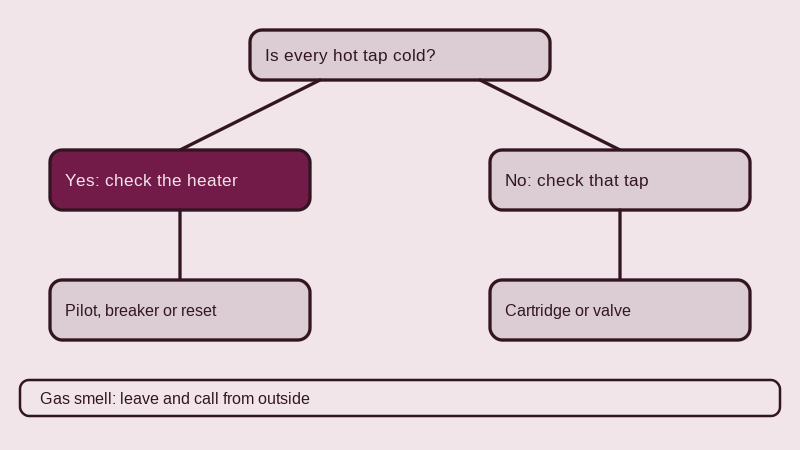
Start with the simple things: does the problem affect every faucet or just one, is the heater getting fuel or power, and did the pilot light or the breaker cause the stop? Cold at every hot tap implicates the heater, while a single cold tap means the problem sits in that fixture. For repair help, see our water heater repair page.
This guide works through the causes in the sequence a plumber would use, then says when to stop and set up a visit. Gas and electric tank heaters and tankless units are covered, along with sharing a boiler or living in a building with central hot water. Everything else we offer is listed from the home page.
What should I check first when the hot water disappears?
Find out whether all hot taps run cold or just one. Then look at the heater: on a gas model, is the pilot lit and the control on a heating setting; on an electric model, has the breaker tripped or the reset button popped. Make sure the inlet valve for cold water, on top of the heater, is open all the way.
A few quick checks before anything else:
- Run hot water for a minute at both the kitchen sink and the shower.
- Look at the heater's temperature dial or display. A dial left on vacation mode or the minimum is a frequent cause.
- Check the panel for a tripped breaker, which for electric heaters is usually a double breaker.
- Feel the pipes on top of the tank. If both the hot outlet and the cold inlet feel icy, the heater is not heating.
When just the shower runs cold, a worn mixing cartridge may be responsible, and why a shower has no hot water explains it. If only the kitchen sink is cold, see no hot water at the kitchen sink.
What causes a tankless heater to go cold?
A tankless heater can stop for a lack of flow, a bad igniter or flame sensor, a blocked intake or vent, a scale buildup in the heat exchanger, or an error code from the control. Most units show a code on the display. The manual explains what each code means, and many are cleared by a reset or a descaling flush.
Check the gas supply valve and the power outlet, then read the code. Rinnai, Rheem, Navien and Noritz each publish their own code lists, so pick the list that matches your brand. A unit that turns cold only while two taps run together may be undersized for demand rather than broken. For brand repairs, read about Rheem tankless repair or Navien tankless repair.
Hard water scale is a real maintenance issue for tankless units. USGS notes that heating hard water forms calcium carbonate deposits that can shorten equipment life, so a descaling flush at the interval in the manual helps.
How can I tell a water heater is starting to fail?
Look for a tank that rumbles or pops, lukewarm water that appears sooner than it used to, hot water tinted with rust, a small puddle at the base and a sour or metallic smell. A tank that is beyond its normal life and has any of these needs a plumber's opinion, because a failed tank floods rather than just stops.
Further signs are a gas or power bill that keeps rising when use has not changed, hot water that is slow to arrive, and a dripping relief valve. Tank heaters wear out from the inside as sediment builds up and the lining corrodes. In a home with hard water, scale builds faster. We have not checked a local hardness figure, so ask whichever provider bills you for its water quality report.
If water is pooling at the base, shut off the heater's cold supply and its gas or power, then send a request. A leak is more urgent than a lukewarm shower. For age guidance, read the guide on water heater lifespan.
Who do I contact if the whole house has no hot water?
A house with its own heater needs a local plumber experienced with water heaters. In a rented apartment with central or shared hot water, start with the landlord or building manager, and put the report in writing, keeping a copy. For a boiler, the same plumber or a heating contractor can help.
In the quote form, state the fuel (gas or electric), the heater's age and brand, any error codes and the steps you have already taken. That lets whichever plumber accepts the job bring suitable parts. We handle requests Monday to Friday, 9am to 5pm, and cannot promise a same day visit. Begin at the quote form.
Why does an electric tank heater stop heating?
A tripped breaker, a popped high limit reset, a burned-out element or a failed thermostat can each stop an electric tank heater from heating. Most have two elements, upper and lower. A failed upper element can leave you with no hot water at all, while a failed lower one gives a short supply that runs out quickly.
Turn off the breaker before opening any access panel. Behind it, the upper thermostat has a red reset button. Press it once. A tripped unit may start again, but one that trips repeatedly points to a failed element or thermostat. Water mixed with electricity is a serious danger, so send for a plumber rather than test elements yourself unless you know how to do it safely.
A heater that pops, or that delivers lukewarm water briefly before turning cold, is a reason to look at element replacement.
What makes a gas water heater stop giving hot water?
Gas tank heaters usually go cold because the pilot has gone out, the thermocouple no longer senses the flame, the burner is dirty, or the gas valve has failed. Many units will not relight if the thermocouple is worn, even if the pilot lights while you hold the button.
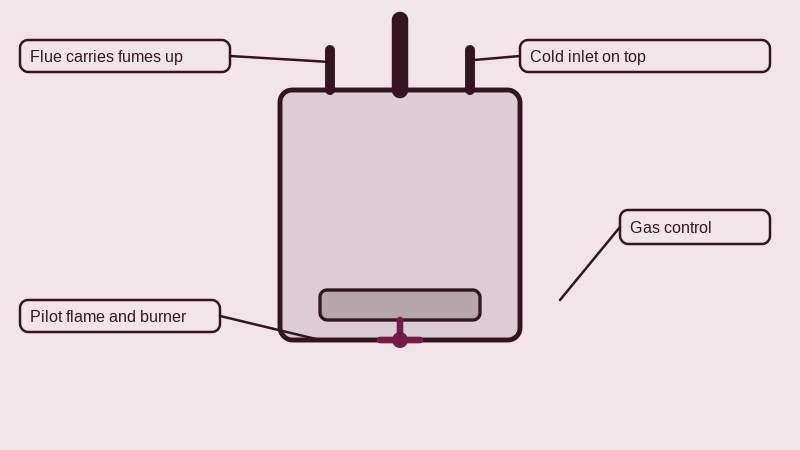
Follow the relighting instructions printed on the heater, but only when there is no gas smell. If you smell gas, touch no switches. Walk out of the house, call SoCalGas on 1-800-427-2200 from outside, and use 911 if someone is in danger. SoCalGas publishes that number for gas leak emergencies on its safety page.
If the pilot lights yet dies as soon as the knob is released, a worn thermocouple is almost always the cause. Our guide to thermocouple replacement explains what the part does. Gas lines and gas valves are regulated work, so work on the gas side belongs to a plumber or gas fitter, not to you.
Newer heaters with electronic ignition have no pilot to relight. They show a blink code instead, which the manual decodes.
Why do plumbers not like tankless water heaters?
Some plumbers prefer tank heaters because tankless installs need a gas line upgrade, new venting and sometimes an electrical outlet, and because scale and error codes bring service calls. Many other plumbers install tankless units happily. It is a choice about house fit and maintenance, not a flaw in the product.
Tankless heaters do not run out of hot water on long showers, and they take less space. The trade-off is a higher install cost and more upkeep in hard water. Tank heaters are simpler and cheaper to replace. Our comparison of tank and tankless heaters side by side gives the full picture.
Common questions
How much time does a no hot water repair need?
A relit pilot, a reset, or a new thermocouple, element or thermostat is often finished within an hour or two of the plumber arriving. A tank replacement normally takes about half a day, while a tankless install or gas line change takes longer. After seeing the heater, the plumber can quote a time window.
What should I ask before booking a water heater plumber?
Confirm that the quote covers parts and labor together, what the age and condition of your tank mean for repair versus replacement, and whether a replacement needs a permit. Have the price written down before work begins, and ask if the plumber hauls away the old heater.
Must I be at home for a water heater repair?
Yes. An adult should be home to let the plumber in and show where the heater and shutoff valves are. The plumber will usually need clear access to the heater, so clear the area and keep pets away. Staying beside the unit during the work is not necessary.
Does a lukewarm shower mean the heater is failing?
Possibly. Water that used to run hot but is now lukewarm can come from a failed lower element, a dip tube problem, a thermostat turned down too far or a tank full of sediment. When the heater is over ten years old, request an inspection before the tank leaks.